
If you’ve ever woken up to a chorus of clucks, quacks, and the occasional goat bleat and thought, “Right, I really need to organize this lot,” then you’re in the right place. There’s something oddly peaceful about watching hens scratch around or ducks waddle through a morning puddle—but when your feathered (and sometimes hoofed) friends start multiplying faster than your coffee refills, it’s time for a proper setup.
I remember when I first started my own small poultry pen—it looked more like a playground designed by toddlers than a farm layout. Fences that didn’t match, nesting boxes that doubled as hide-and-seek zones, and a duck pond that was, well, an old bathtub. But somehow, it worked. That’s the beauty of small-scale poultry farming—it’s forgiving, full of trial and error, and endlessly satisfying when you see it come together.
So whether you’re raising layers, broilers, or a mixed flock with goats and ducks joining the fun, these breeding pen ideas blend function, charm, and a touch of DIY creativity. Let’s build something your birds will love (and that makes your morning chores a bit easier too).
1. The Classic Split-Level Chook Pen Layout
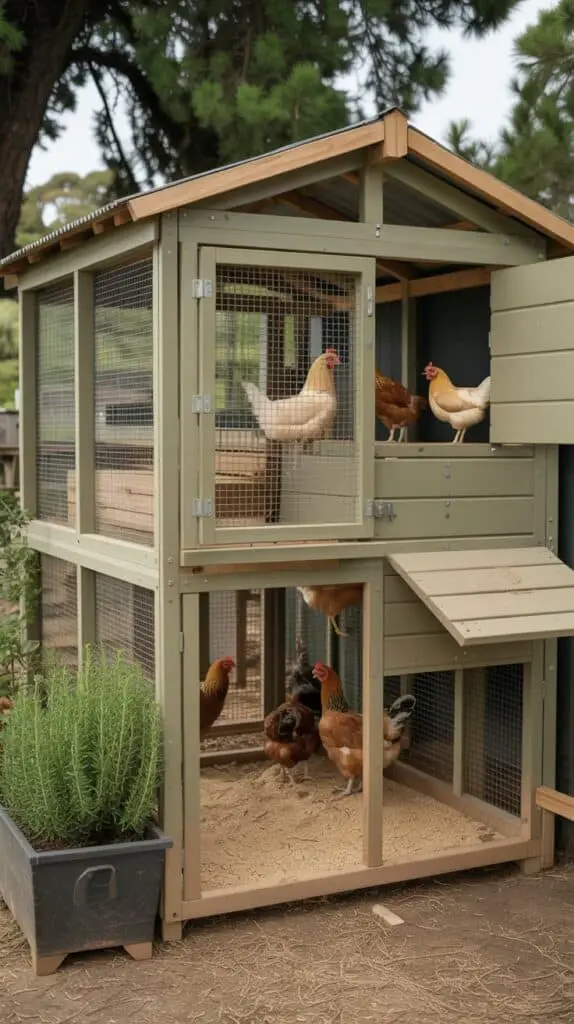
This design is a staple for anyone starting out in poultry farming. Think of it as the “open-plan apartment” for chickens—simple, versatile, and easy to clean. The lower level can serve as the run, complete with sand or fine gravel flooring to prevent mud, while the raised coop above keeps nesting boxes dry and safe from predators.
To make it practical, separate the interior into zones: one for nesting, another for feeding, and a roosting bar section for nighttime. The trick is good ventilation—wire mesh panels on opposite sides let air circulate without creating a draft. Add hinged panels for easy egg collection, and you’ve got a layout that’s both functional and surprisingly chic. For Pinterest-worthy charm, paint the frame muted olive or rustic cream and plant climbing herbs like rosemary or thyme along the run.
This type of pen suits smaller flocks (under 10 hens), and if you’re thinking of hatching chicks, you can easily partition one section for brooding—keeping everyone close but not crowded.
2. Duck and Chicken Combo Pen with a Mini Pond
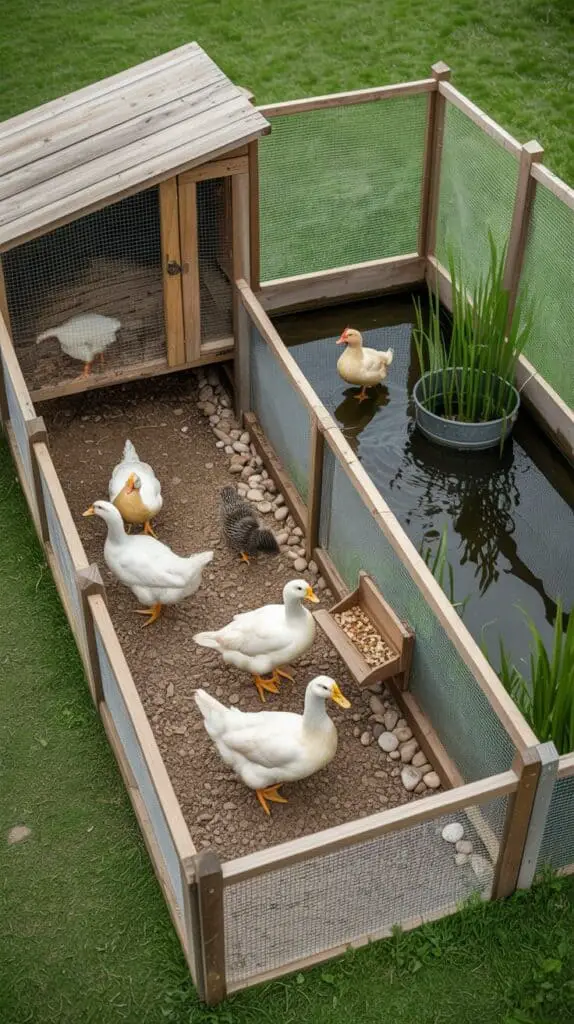
If your backyard is blessed with both quacks and clucks, this design keeps everyone happy. Ducks love to splash, chickens prefer to stay dry—so a clever layout solves that. Picture a rectangular enclosure divided diagonally by a mesh fence: one side gravel-based for chickens, the other featuring a small raised pond (even an old metal trough works) for ducks.
Use gently sloped ground or add a small ramp for easy pond access. Ducks are messy with water, so a drainage trench filled with pebbles helps redirect runoff and keeps things clean. The shelter at one end can be shared—a wooden structure with two entry points, one lower for ducks and one higher for chickens.
This type of setup is brilliant for families managing a mini mixed flock and doubles as an educational spot for kids to learn about animal behavior. Add a few plants like bamboo or reeds around the pond for shade and to give it that natural, peaceful vibe.
3. Goat and Chicken Shared Pen with Elevated Coop
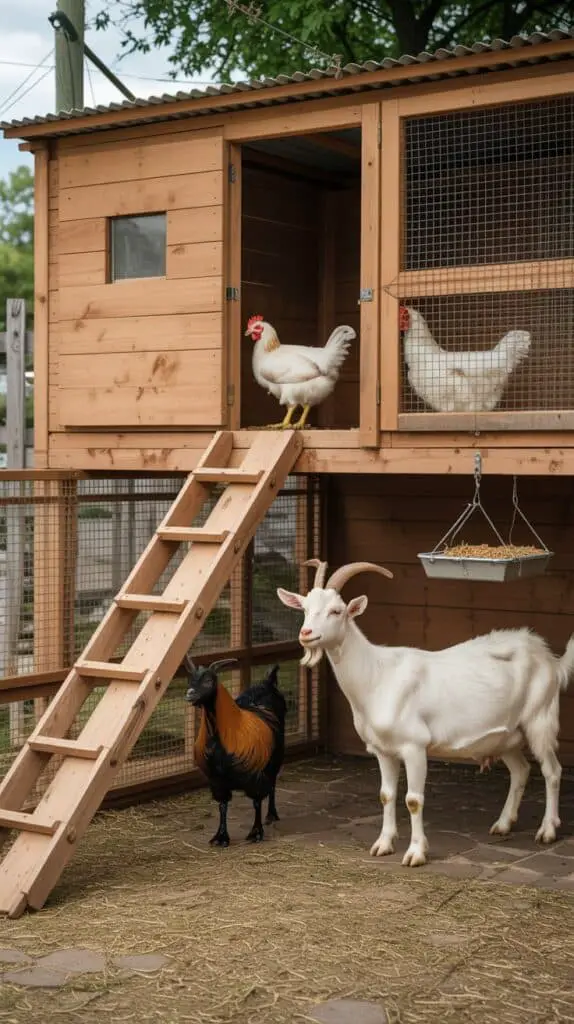
Yes, goats and chickens can coexist—if you plan it right. The trick is in height. Chickens like to be above the ground, while goats prefer the space below for grazing and shelter. Build a sturdy elevated coop using timber posts (at least 1.5 meters high) with a ramp for the chickens. Underneath, create an open pen area for goats with durable fencing and a shaded corner for rest.
The flooring should be easy to sweep and hose down—packed earth or textured concrete works well. Keep feeders elevated and enclosed so goats don’t raid the chicken grain. It’s a surprisingly harmonious setup that saves space and adds visual interest to a small hobby farm.
Bonus idea: add hanging toys for goats and a dust bath area for hens. Both species benefit from stimulation, and it turns the space into something more than just functional—it becomes lively, full of personality.
4. A Modular Poultry Cage System for Breeding
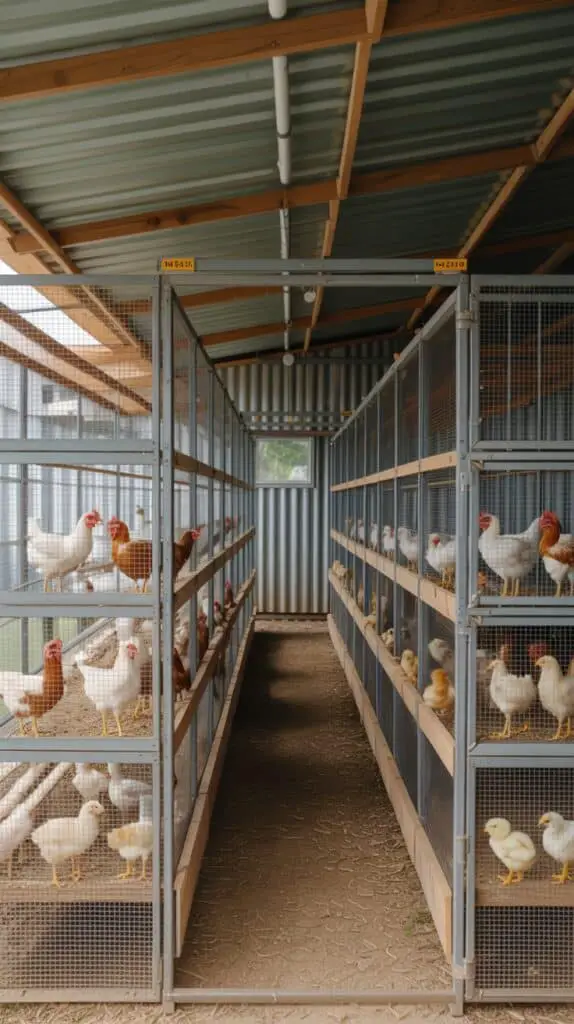
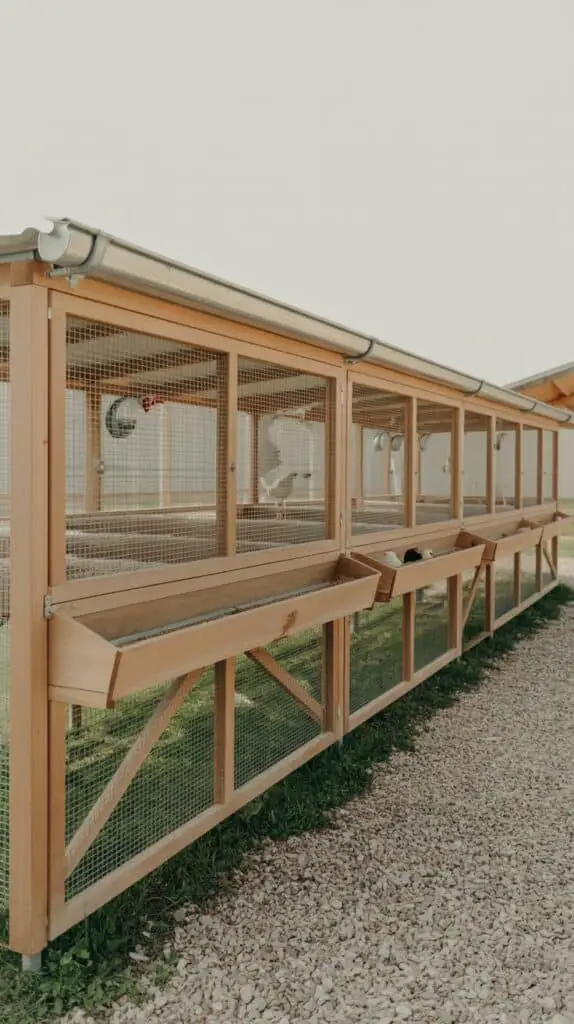
For those running a more structured poultry business or small-scale breeding setup, a modular system keeps everything organized. Imagine a series of adjoining pens—each about 2×2 meters—framed with metal mesh and lightweight roofing. Each unit can house a breeding trio or a batch of chicks, and you can easily expand as your flock grows.
This type of poultry cage system works beautifully indoors (like in a converted barn or shed) or outdoors under a shaded roof. Use sliding mesh doors for quick cleaning and feeding. Mark each section with tags to track lineage, age, and laying performance—ideal for breeders aiming to manage productivity efficiently.
Add a central aisle so you can walk through and inspect easily, and use LED strip lighting on a timer to maintain consistent day lengths during breeding season. While it’s more technical, it doesn’t have to look industrial—soft paint colors and tidy layout can still make it aesthetically pleasing.
5. The Rustic Farmyard Breeding Pen with a Courtyard Feel
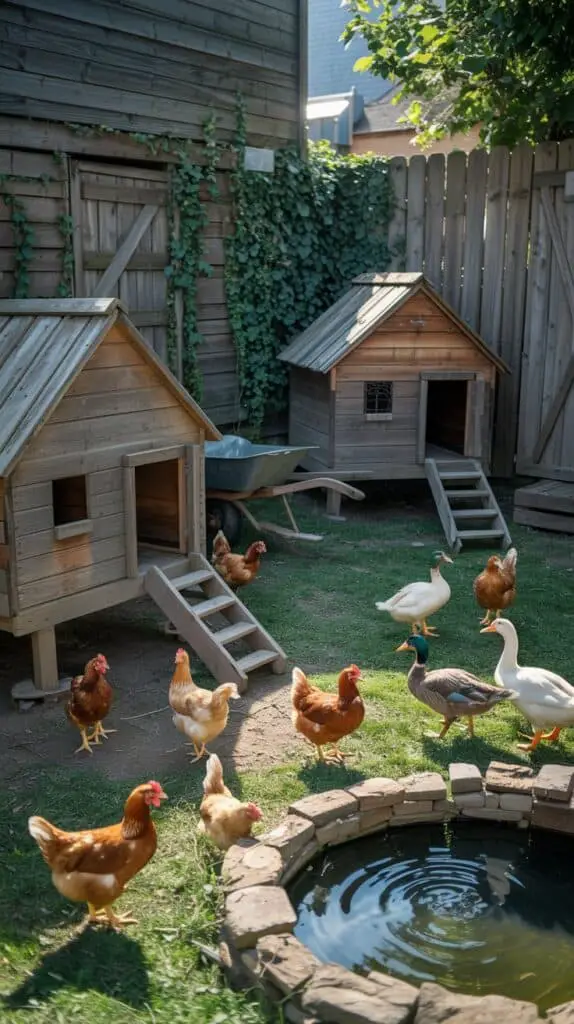
This design is where charm meets practicality. Think of a small enclosed courtyard surrounded by wooden fencing, with several small coops or hutches placed around the perimeter. The center area remains open for dust baths, feeders, and a few rustic touches like a wheelbarrow planter or an old trough turned waterer.
It’s perfect for small poultry farmers who enjoy the visual appeal of a traditional homestead setup. Each coop can be designated for different breeds or stages—layers, broilers, or brooding hens—creating a system that feels natural and organized at the same time.
To elevate the look, use mismatched wood finishes and small stone pathways. Add wire arches or low trellises with climbing plants like ivy or wisteria for shade. It’s an environment that feels alive—where you could spend an entire morning just watching your flock scratch and chatter in the sunshine.
6. The Walk-In Chicken Run for Easy Maintenance
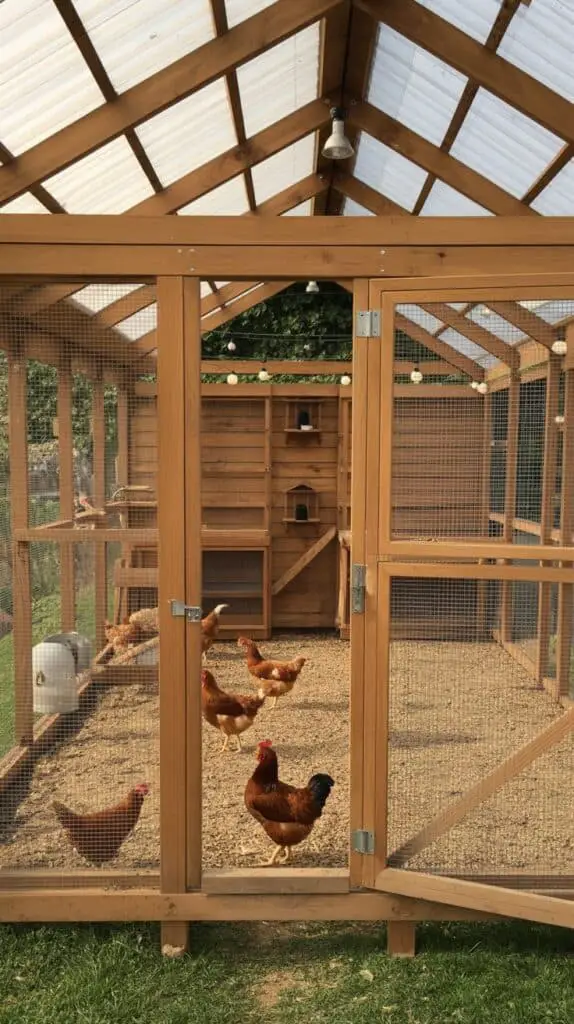
If you’ve ever found yourself crawling on hands and knees just to refill a feeder or rescue a runaway hen, you’ll understand why a walk-in design feels like pure luxury. This style of poultry pen is tall—usually around 2 meters—allowing you to move freely inside while keeping the birds secure.
The best layout starts with a solid wooden or metal frame, wrapped in predator-proof welded wire mesh. Divide the interior with low wooden borders to separate feeding, nesting, and dust-bathing zones. A covered section at one end shields against rain, while the open mesh area lets in plenty of light and fresh air.
You can make it as rustic or modern as you like. For a cozy farmhouse feel, hang small lanterns or fairy lights (battery-powered ones, of course). If you’re in a hot climate, shade cloth over the roof keeps temperatures down. The biggest advantage is hygiene—easy to hose down, no awkward bending, and the birds get space to stretch and roam. It’s a design that genuinely improves both your daily routine and their comfort.
If you’re thinking of expanding later, you can attach modular panels to lengthen the run or connect it to other coops. It’s flexible, practical, and stylish enough for your next Pinterest board.
7. The Compact Urban Poultry Pen with Vertical Space
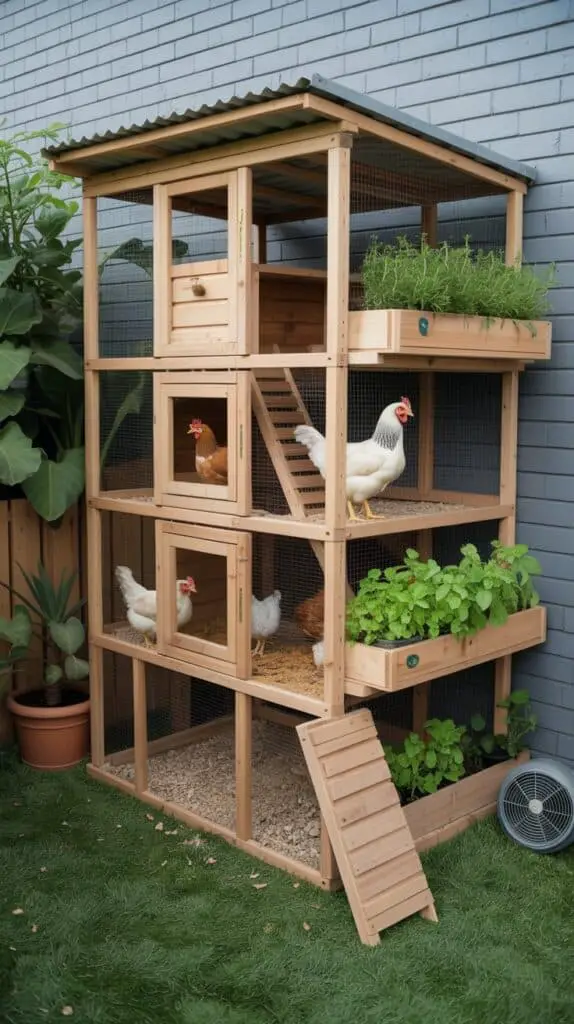
For city or suburban farmers, space is often the biggest challenge. But you don’t need rolling fields to raise a small flock—just creativity. The vertical poultry pen is designed like a multi-level townhouse for your chickens, perfect for narrow backyards or rooftop setups.
Start with a sturdy base—about 1.5 meters by 2 meters—then stack functionality upward. The ground level can serve as a foraging area with sand or pea gravel, while the second level houses nesting boxes, and a small third-tier roost can be added with lightweight wood. Use ladders or ramps to connect each level, and make sure the sides have wire mesh for ventilation.
A bonus trick? Mount planters with herbs like mint and parsley along the outer walls—natural insect repellents that also make the pen feel lush. Solar-powered fans or small vents keep airflow steady in hot months.
This compact design works best for small poultry cages or for people who see chicken-keeping as both a hobby and a lifestyle aesthetic. It’s minimal, smart, and definitely city-chic without losing its farmhouse heart.
8. The Greenhouse-Inspired Poultry Pen
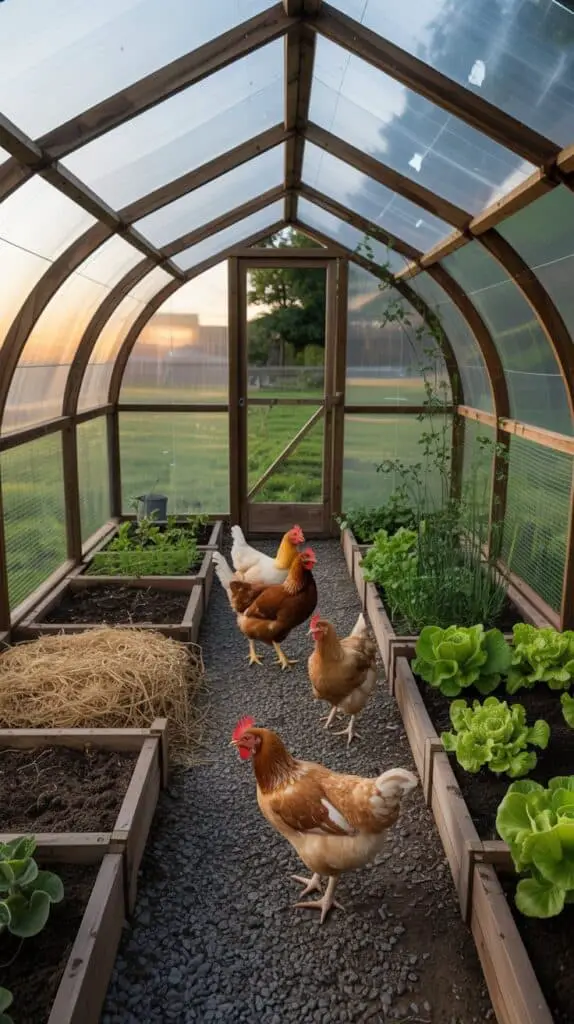
Ever dreamt of combining your garden and chicken run? This idea turns that dream into a cozy, productive ecosystem. The concept is simple: a structure shaped like a greenhouse—arched or A-frame—with transparent polycarbonate panels on top and wire mesh sides for ventilation.
Chickens benefit from the warmth and protection in winter, and you can grow plants like lettuce or herbs along the borders that thrive on the natural fertilizer your flock provides. Just keep plants in raised planters or behind mesh dividers so they don’t get nibbled to nothing.
Add a gravel floor with a compost corner where droppings mix with straw—it’s surprisingly efficient for garden use later. The visual effect is beautiful: imagine the morning light filtering through the clear roof as chickens wander around pecking at seed bits.
This setup suits mild to cool climates and those who enjoy a sustainable, self-sufficient vibe. It’s an aesthetic that feels “modern eco-farm”—both functional and photogenic, especially after a light rain when everything glows softly.
9. The Poultry Breeding Yard with Rotational Pens
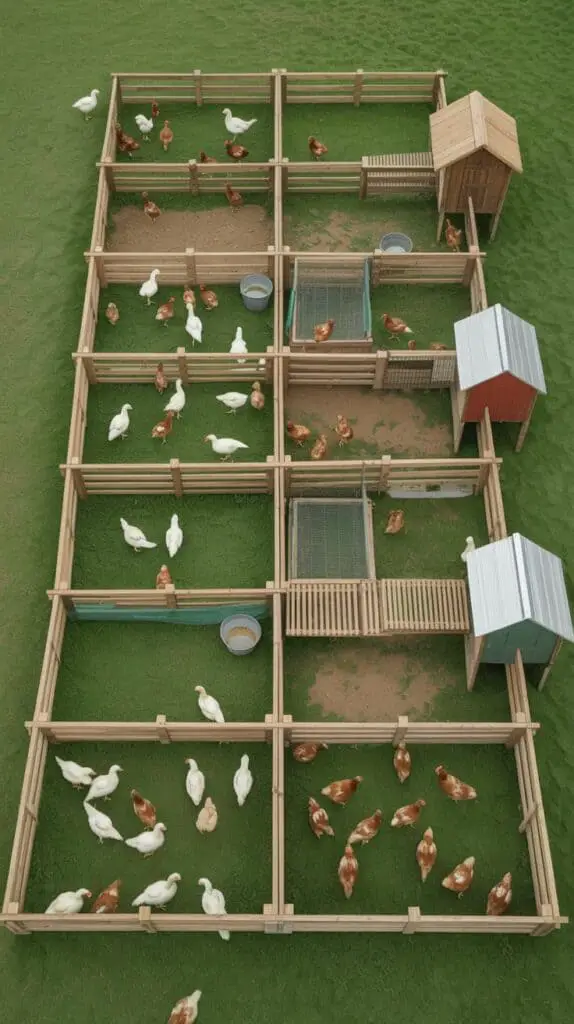
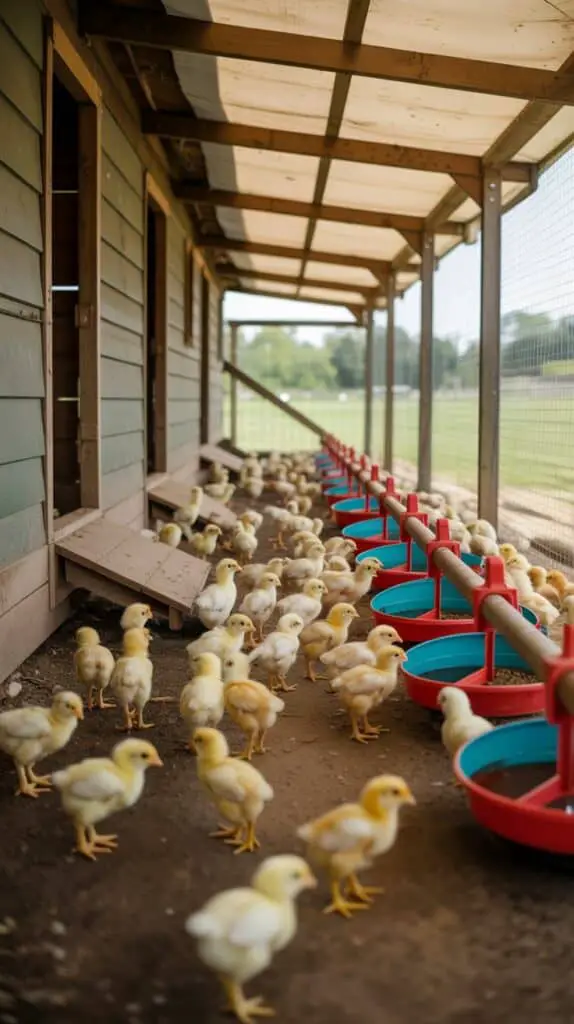
If your goal leans more toward breeding or small-scale poultry business, rotational pen systems are worth considering. Instead of one large shared space, the area is divided into several connected runs. Each flock can rotate through these sections every few weeks—helping grass regrow and reducing parasite buildup naturally.
Start with a rectangular yard split into 3–4 fenced sections, each with its own small shelter. Hinged gates or removable wire panels let you redirect the birds easily. This approach also helps track breeding groups—perfect for managing traits or different poultry breeds (or even separating ducks from chickens during wet seasons).
Use movable waterers and feeders to prevent muddy patches, and consider portable shades or tarps for flexibility. It’s efficient, healthy for the soil, and looks professional enough for small farm visitors.
Many poultry farmers say it’s their favorite setup once they’ve tried it—less cleaning, happier flocks, and a layout that encourages grass growth year-round. Think of it as the crop rotation system of poultry farming.
10. The Modern Timber Poultry House with Integrated Storage
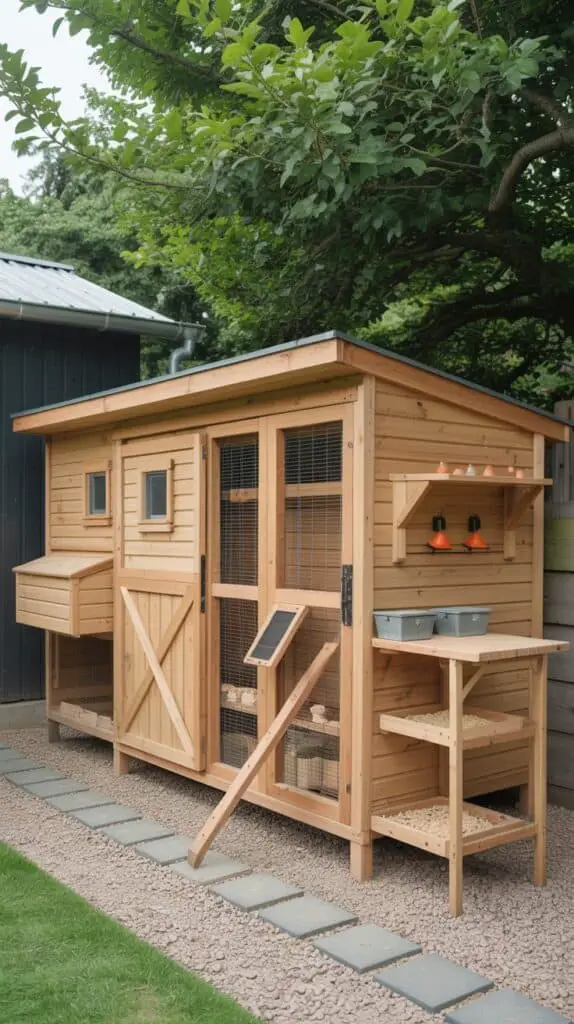
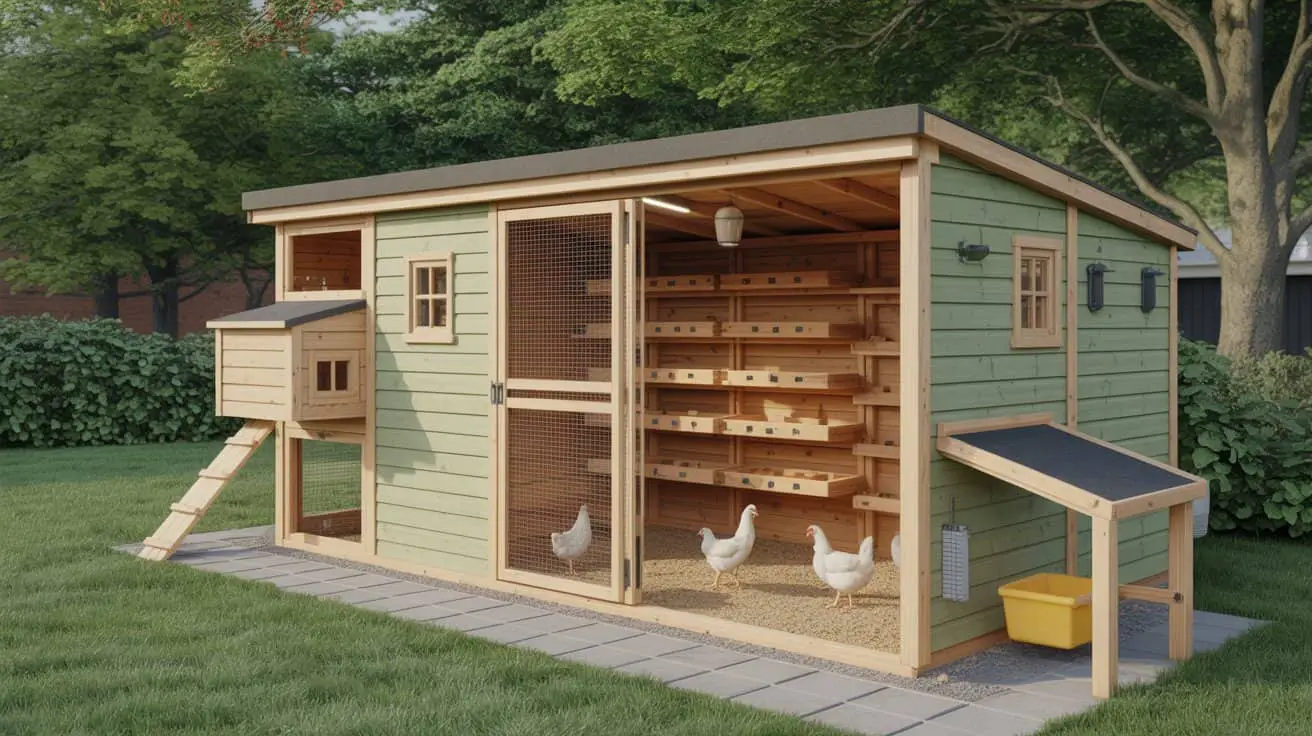
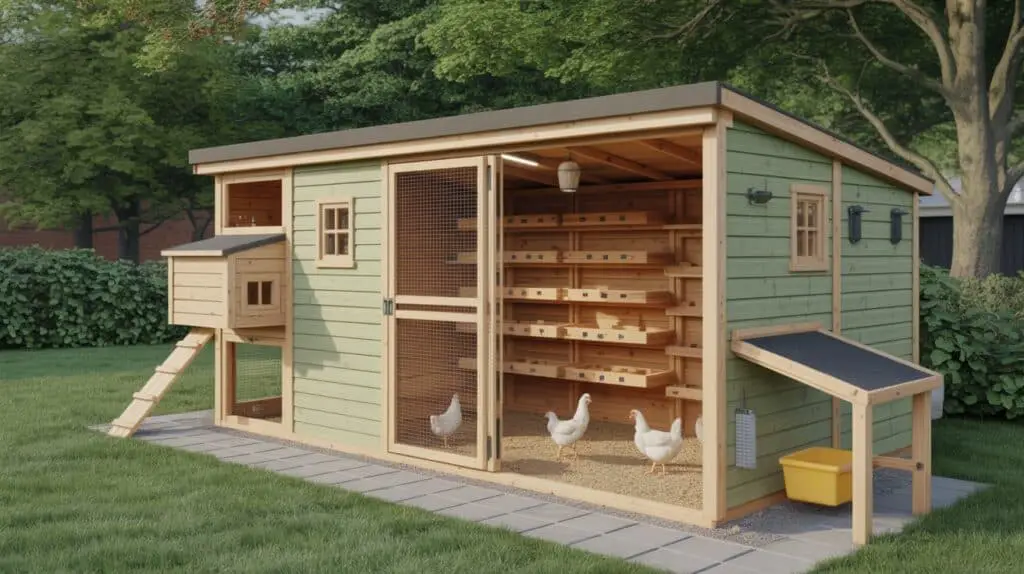
For the organized farmkeeper (or anyone tired of losing feed scoops), this design merges style and function seamlessly. Built from light pine or cedar wood, the structure includes an enclosed coop on one end, a walk-in run on the other, and a side storage shed for feed, tools, and nesting materials.
This layout is ideal for medium flocks or breeding setups, where you need everything close at hand. Use sliding barn-style doors, small windows for airflow, and a gravel or tiled walkway around the perimeter for easy cleaning. Inside, nesting boxes line one wall, while the opposite side has perches at staggered heights to maximize space.
Add a fold-down table on the outside for egg sorting or cleaning feeders—it’s the kind of design that makes daily chores feel smooth and satisfying. A soft neutral color palette—cream, grey, or sage—gives it a professional yet warm aesthetic.
You can even install solar lighting for evening visits. This design bridges hobby and small poultry business—showing that practicality and beauty can live side by side, even on a working farm.
Final Thoughts
Building a poultry breeding pen isn’t just about keeping birds safe—it’s about creating a rhythm in your daily life that feels balanced and grounded. Each idea here can be adapted for your own needs, whether you’re managing a handful of hens or building the first stages of a poultry business.
And remember, no pen ever starts perfect. It grows, shifts, and improves with every cluck and feather you care for. The best designs are the ones that make both you and your birds happy to start the day.