
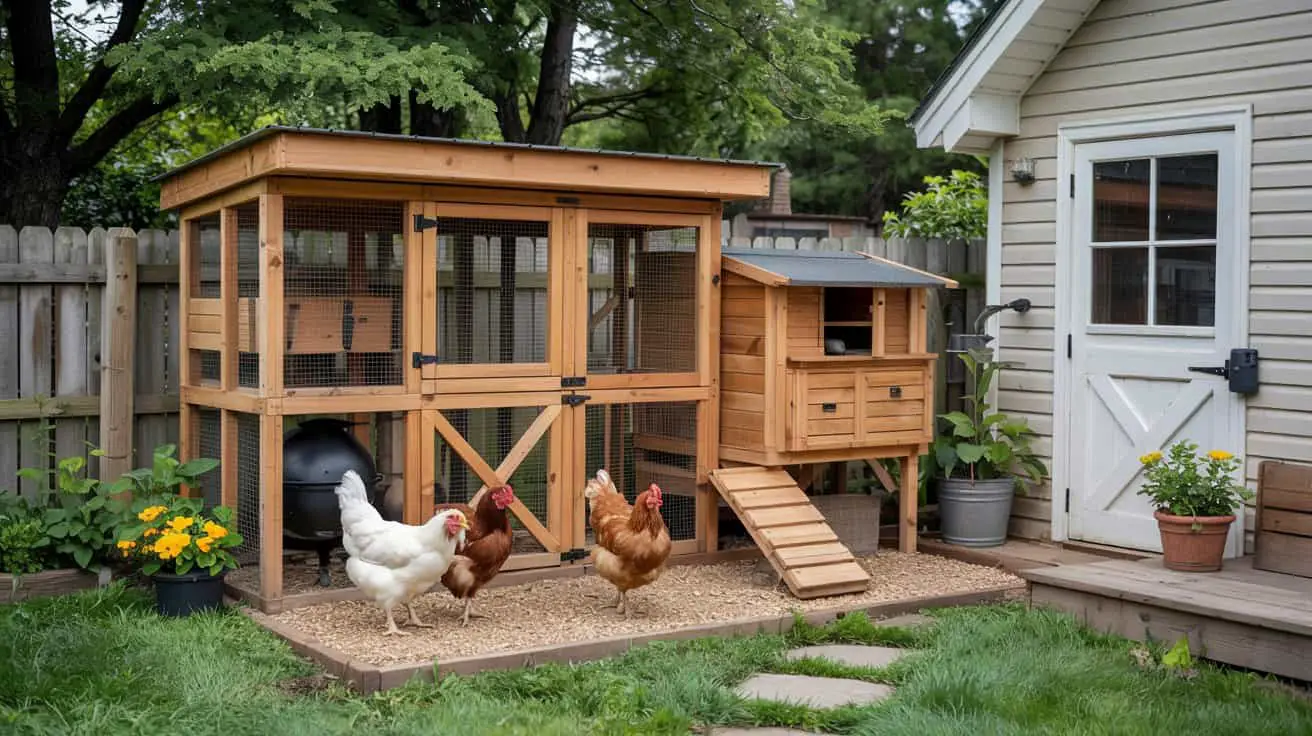
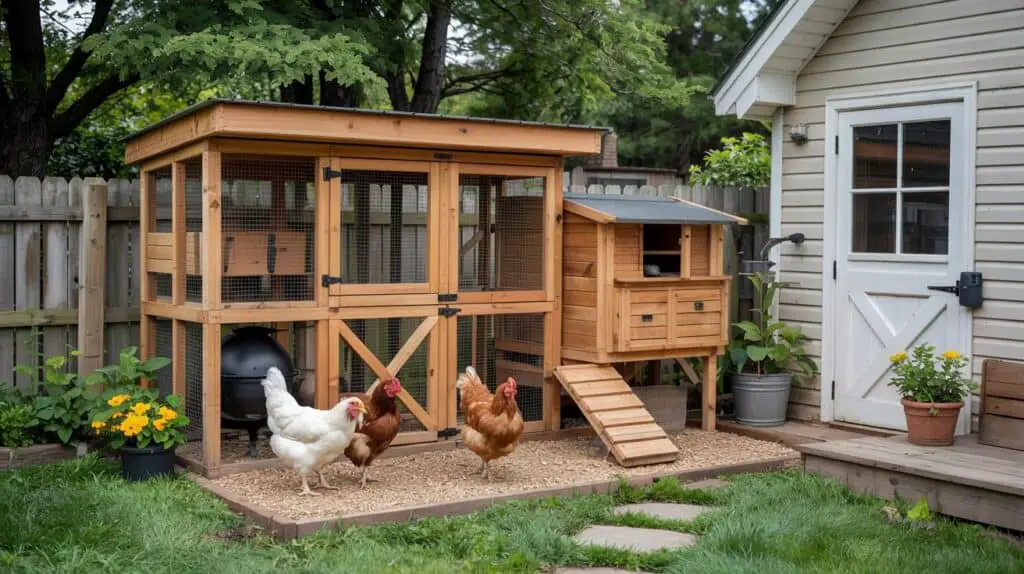
There’s something quietly satisfying about a backyard that works hard and still feels pretty. When you blend chickens, a chicken garden, and simple garden landscaping around your patio, you get a space that’s both productive and pleasant to be in. The trick is giving everything a “place” so it doesn’t feel like a jumble of fencing, feed buckets, and half-finished beds.

For most real homes, the sweet spot is a small backyard farming system that’s organized: chickens have a defined zone, plants are protected where they need to be, and the walkway from the back door to the patio stays clean and usable. You don’t need a huge yard or a perfect layout. You just need a plan that respects how chickens move, scratch, dust-bathe, and snack their way through anything green.
Build a Simple Backyard Farming System with Clear Zones
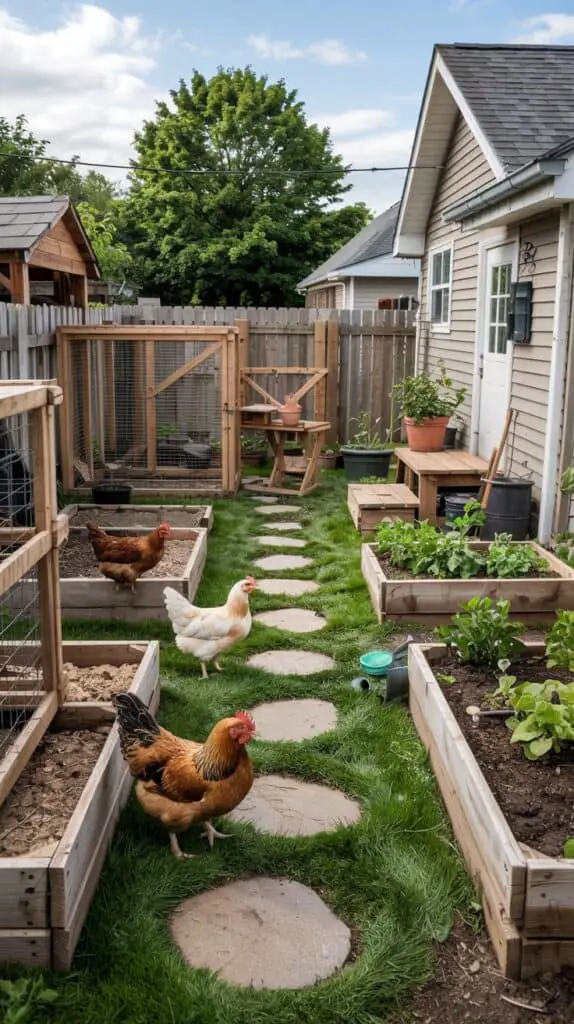
If you want chicken garden landscaping to feel intentional, start with zones. This is the unglamorous part that makes everything else look better. Chickens are busy little composters, but they’re also enthusiastic landscapers in the “dig first, ask questions later” way. A clear layout saves your flower garden and makes your yard easier to maintain.
Think in three zones:
- A chicken run and coop zone (their home base)
- A protected growing zone (vegetables, herbs, or delicate flowers)
- A shared “people zone” (patio, paths, seating, and storage that doesn’t smell like feed)
Even a small yard benefits from a simple loop path: back door → patio → gate to the chicken area → garden beds → back to the house. A loop keeps traffic off muddy patches and makes daily chores feel less like tromping through chaos.
Use materials that can flex with your life. For renter-friendly setups, consider movable raised beds, large planters, and temporary fencing panels that don’t require digging permanent posts. If you own your space, you can go more permanent with edging, gravel paths, and a fixed gate.
The most helpful detail: place the coop/run where you can see it from a window you already look out of. You’ll notice water bowls running low, a loose latch, or a hen acting off without turning it into a whole “yard mission.”
Use Chicken-Safe Garden Landscaping That Stays Tidy
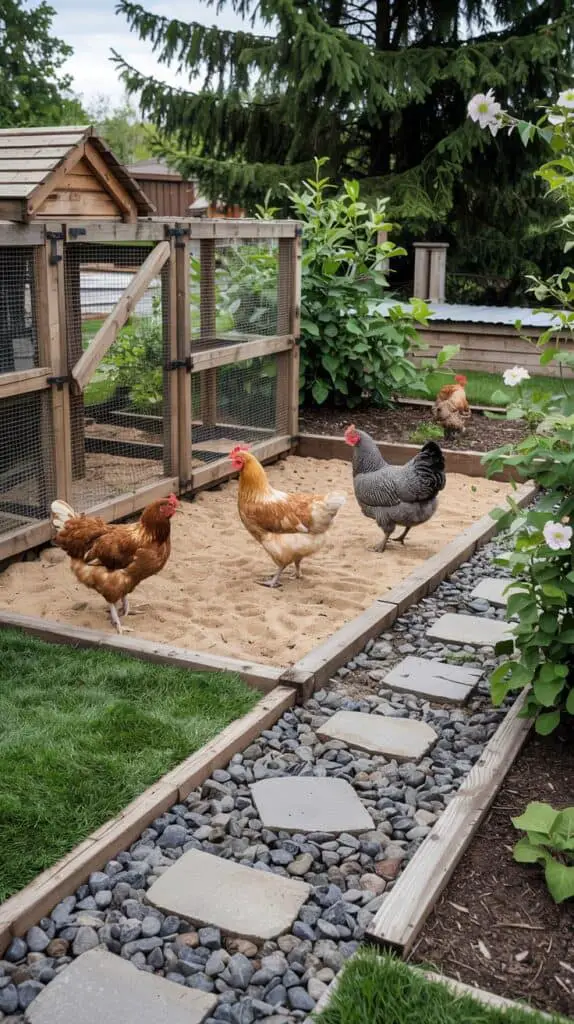
A yard with chickens can look rustic without looking messy. The goal is a clean base layer that’s easy to rake, hose, or refresh. When the ground stays manageable, the whole space feels calmer.
For the chicken area, choose surfaces that handle scratching:
- Coarse wood chips (great for odor control and composting)
- Sand (easy to sift, especially in smaller runs)
- A mix of dirt and chips with a reminder that chickens will “re-level” it daily
Around the perimeter, define edges so the run looks like a deliberate feature, not a temporary pen. Simple options: timber borders, stone edging, or even a neat line of pavers. Just having a crisp edge makes the entire chicken garden landscaping plan feel more like a designed backyard.
In the people zone—especially near a patio—go for a surface you can sweep. Gravel with stepping stones works well, and it’s budget-aware compared to a full hardscape. If you already have a concrete patio, add a border of gravel or pavers beside it to act as a “mud buffer” before you reach the grass or garden beds.
A small but powerful upgrade is a contained “chicken utility corner”: a lidded feed bin, a hanging scoop, and a hook for a broom or rake. When those items don’t wander across the yard, the space looks intentional even on a busy week.
Create a Protected Chicken Garden with Raised Beds and Barriers That Look Nice
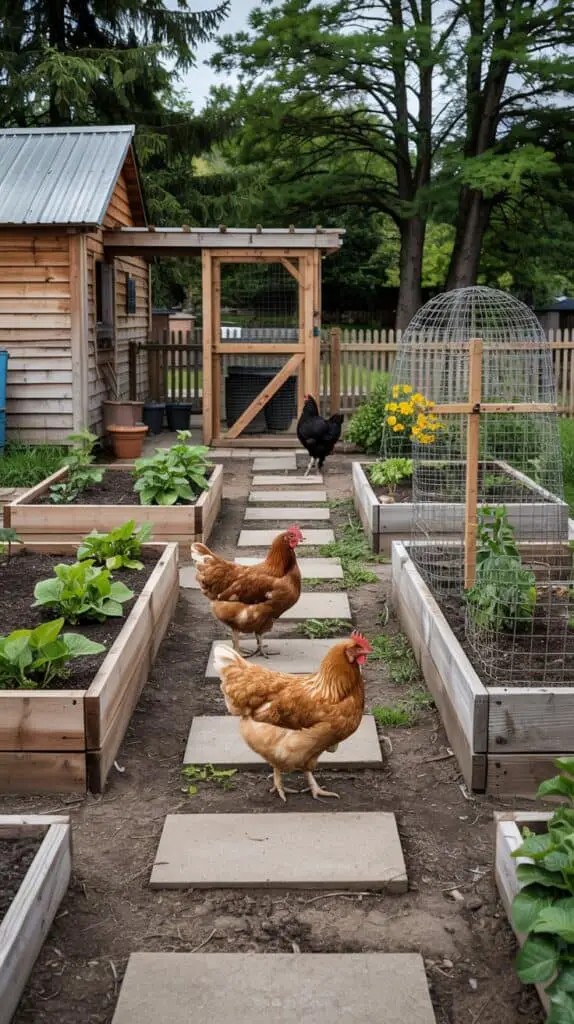
If you’ve ever tried to grow anything near chickens without protection, you already know how that story ends. Chickens don’t mean you can’t have a lush chicken garden—they just mean your garden landscaping needs a little structure.
Raised beds are your best friend here. They’re tidy, they define the garden area, and they keep plants out of reach. Even a modest height helps, especially if you add a simple border on top (like a 2×4 lip) that makes it harder for chickens to hop in.
If you want the garden to feel cohesive, repeat the same bed material throughout—matching wood tones or the same style of metal beds. Consistency reads as “designed,” even if you built everything slowly over time.
For extra protection, add low fencing that looks like it belongs:
- Welded wire panels framed in wood (clean, modern-rustic)
- Short picket-style edging around a flower garden
- Arched trellises that double as barriers and climbing supports
This is also where patios can be a secret weapon. If your patio sits slightly higher than the yard, use that elevation to your advantage. Place planters and herb pots right at the patio edge, where you can enjoy them and chickens can’t reach them easily.
A practical planting approach for a chicken garden is mixing “daily use” plants with visual filler:
- Daily use: herbs, greens, cherry tomatoes, peppers
- Visual filler: marigolds, calendula, nasturtiums (bonus: they’re cheerful and easy)
- Structure: rosemary, lavender, or small shrubs in containers (depending on climate)
You’ll end up with a space that feels like a real garden landscaping plan, not just “the area where we keep the veggies safe from the birds.”
Add a Flower Garden Buffer to Soften Fencing and Make the Yard Feel Finished
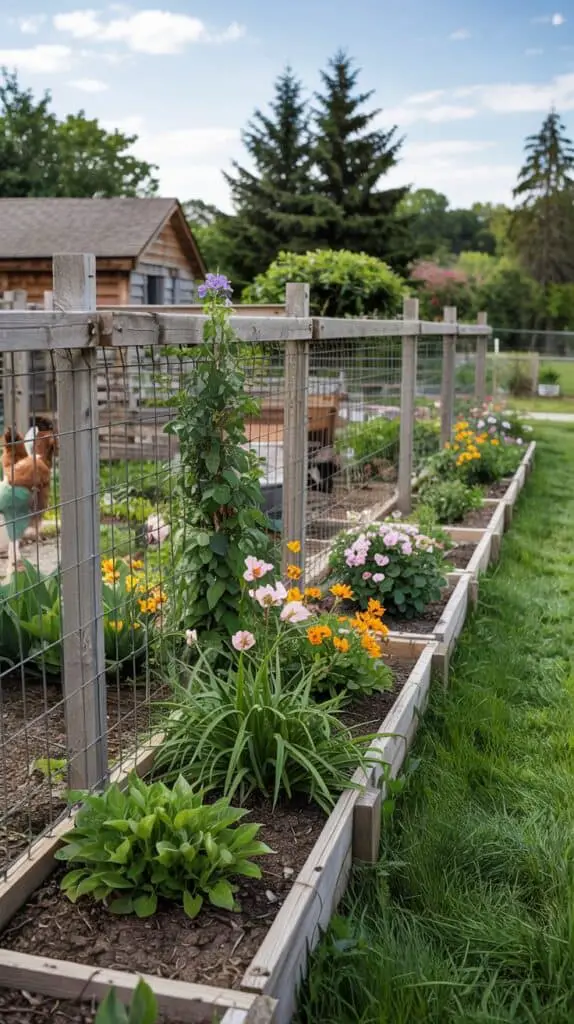
Chicken runs often look a little stark—lots of wire, posts, and practical geometry. A flower garden buffer is one of the easiest ways to soften that without creating more work. Think of it as landscaping that visually blends the chicken area into the rest of the yard.
Create a planting strip outside the run fence. Even 18–24 inches makes a difference. This strip keeps the fence from feeling harsh, and it gives your eye something pretty to land on when you look across the yard.
If you’re budget-aware, start small and repeat a few reliable plants rather than buying one of everything. Repetition looks more polished and is easier to maintain. Choose plants that can handle a little disturbance—because chickens will inevitably investigate through the fence line.
Good options (depending on your region and sunlight) include:
- Tough perennials and grasses that hold shape
- Pollinator-friendly flowers for color
- Shrubs in a few key spots to break up the fence line
If you’re working with a smaller yard, you can also use vertical elements to make the area feel lush without taking up space. A trellis on the outside of the run with climbing flowers gives you height and softness—plus it makes the run look less like a “cage” and more like part of a backyard farming system.
For renters or anyone avoiding permanent planting, you can do the same thing with planters lined along the fence. Matching pots or trough planters keep it visually intentional, and you can move them if needed.
Design Patio-to-Coop Paths That Stay Clean in Every Season
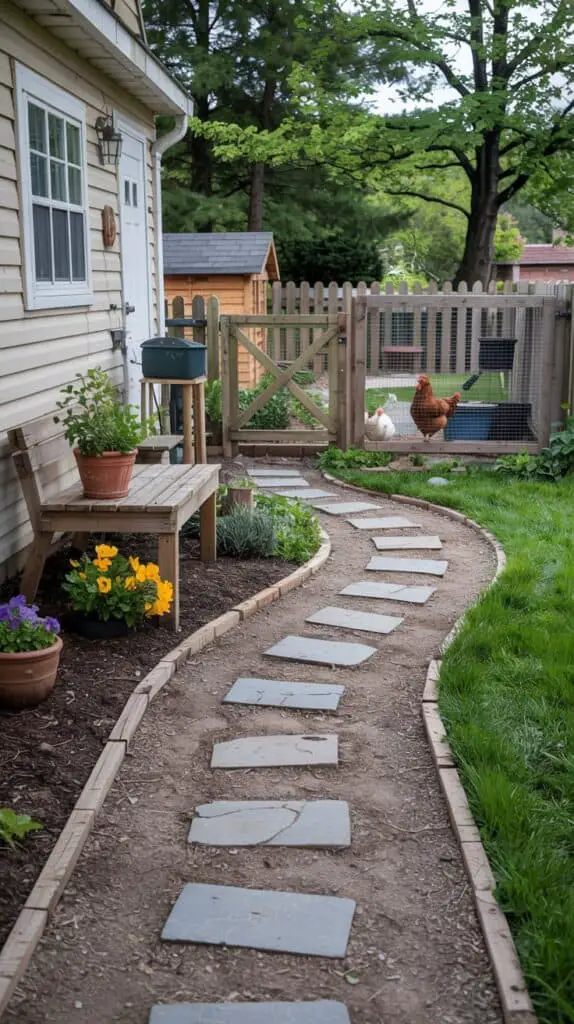
The real difference between “chickens are fun” and “why did we do this” is often the path you walk every day. Chicken garden landscaping works best when the route from the house to the coop is simple, stable, and not muddy.
A dedicated path also makes your yard feel designed. It signals that the chicken area is part of the plan, not an afterthought.
Start with where you naturally walk:
- Back door to patio
- Patio to gate
- Gate to coop door
- Coop to compost or bin area (if you have one)
Then choose a path style that suits your yard and budget:
- Gravel path with stepping stones (easy, tidy, forgiving)
- Pavers set into gravel (more polished, still practical)
- Mulch path (cheap and soft, but needs topping up)
If your patio is a main hangout spot, angle the path so it doesn’t cut straight through your seating view. A slight curve around a planter or a small flower garden bed feels more intentional and makes the yard feel calmer.
Don’t forget lighting. It doesn’t have to be fancy—simple solar lights along the edge of a path can make early mornings and winter afternoons feel much easier (and safer). A well-lit path instantly makes the whole yard feel more cared for.
Make the Chicken Area Look Like a Feature, Not a Utility Zone
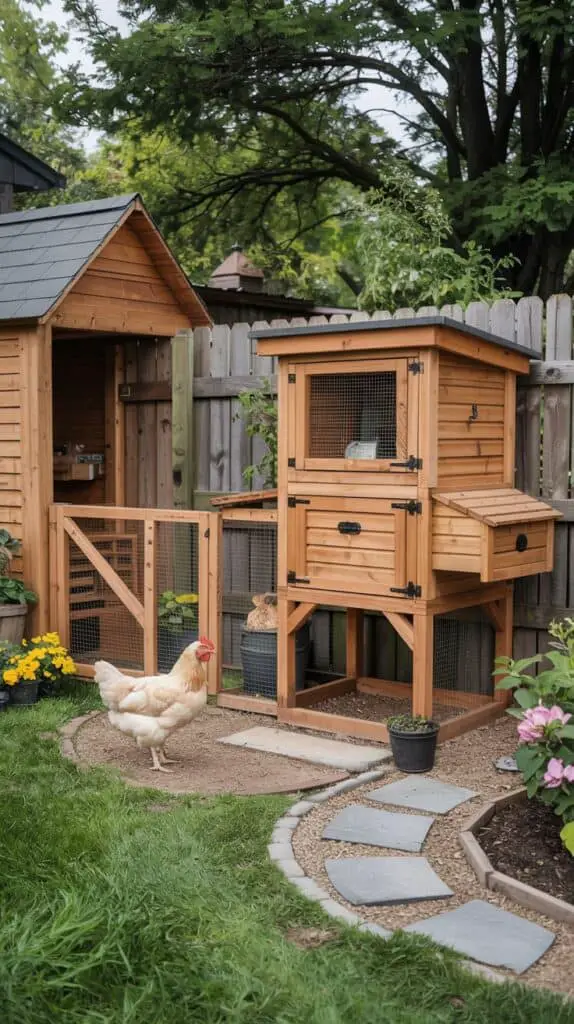
The easiest way to elevate chicken garden landscaping is to treat the coop area like an outdoor “structure” that deserves the same attention as a shed or pergola. It doesn’t need to be expensive, but it should look considered.
A few small choices do a lot:
- Paint or stain the coop in a color that matches your home or fencing
- Use the same hardware finish throughout (even simple black hinges look cohesive)
- Add a clean trim line or a small roof overhang for a finished look
If you like rustic chicken pen ideas, lean into natural materials and simple shapes. A coop with warm wood tones, a tidy gravel border, and a small row of flowers outside the run can look charming instead of makeshift.
You can also hide the “messy” parts with smart placement. Put feed storage behind a screen panel, keep compost in a lidded bin, and tuck tools into a small outdoor cabinet near the patio. When the utility items have a home, your yard feels like a place to relax again.
And if your space is small, keep the chicken footprint tight and the landscaping clean. It’s better to have a compact, well-designed chicken run and a thriving garden landscaping plan than a sprawling setup that’s hard to maintain.
Let Chickens Help in the Yard Without Letting Them Wreck It
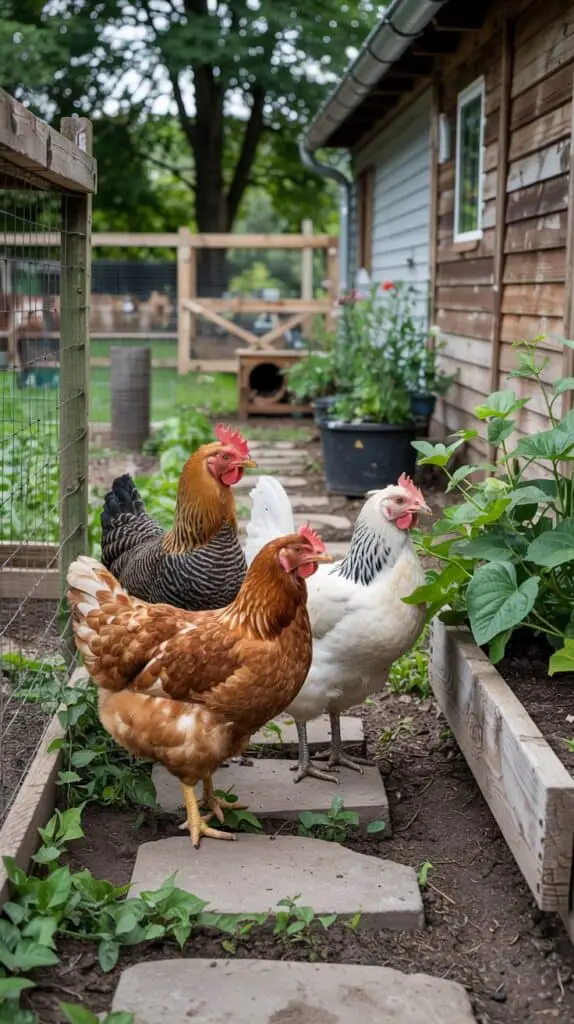
Chickens can be part of your farming system in a way that actually helps your yard—if you manage their access. Instead of letting them free-range everywhere (and turning your flower garden into a scratch zone), use controlled “work sessions.”
A simple approach:
- Rotate them into one section at a time
- Use temporary fencing to protect beds and patio edges
- Let them clear spent garden areas at the end of a season
They’re great at cleaning up fallen fruit, knocking back pests, and turning compost—just not at respecting your landscaping borders. Controlled access lets you enjoy the benefits without sacrificing the look of your yard.
If you want them near the patio sometimes, create a defined “chicken-friendly” corner: a small dust bath area, a patch of shade, and a few sturdy plants in protected planters. You get the charm of chickens wandering nearby without the stress of watching them uproot everything.
Conclusion
The best chicken garden landscaping doesn’t fight what chickens do—it plans around it. With clear zones, tidy paths, obvious edges, and a protected chicken garden, you can build a backyard that feels calm and looks good while still being genuinely productive. Start with one upgrade that makes daily life easier—usually the path or the garden protection—and let the flower garden and patio details fill in over time. A beautiful yard doesn’t have to be perfect. It just has to be organized enough to live in.