
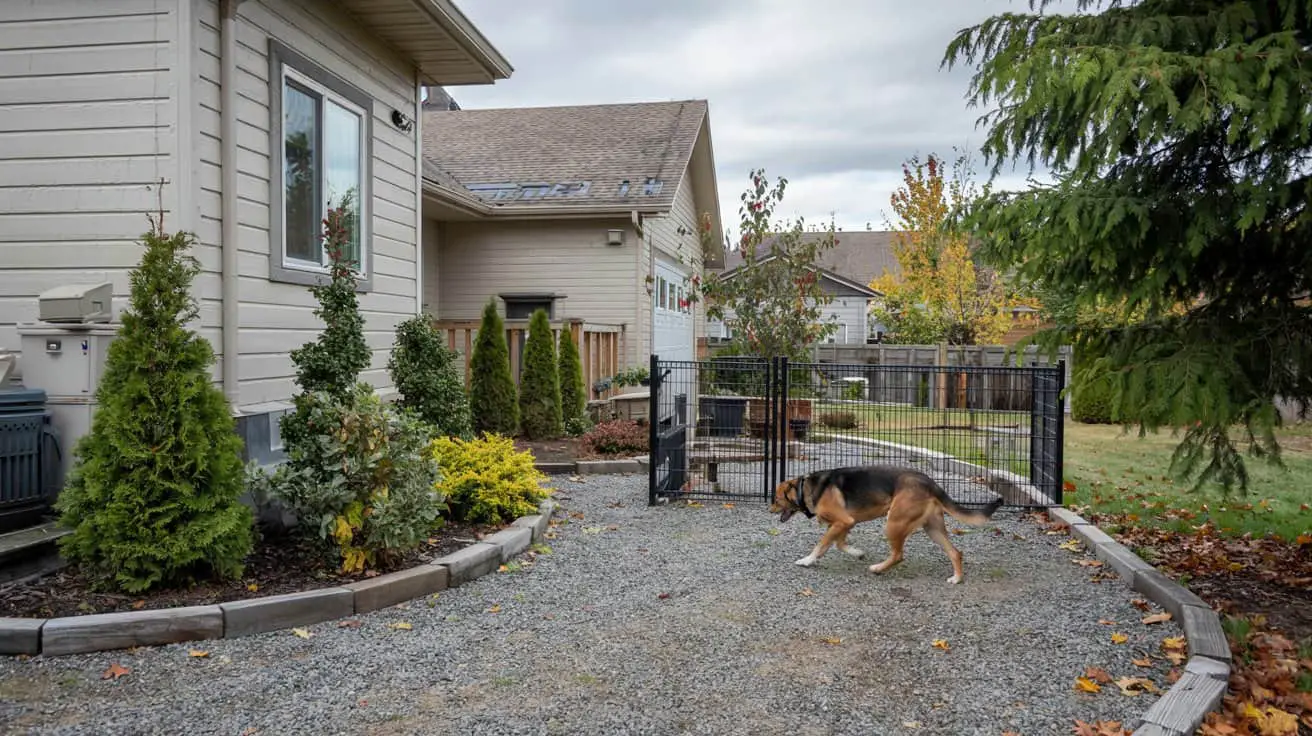
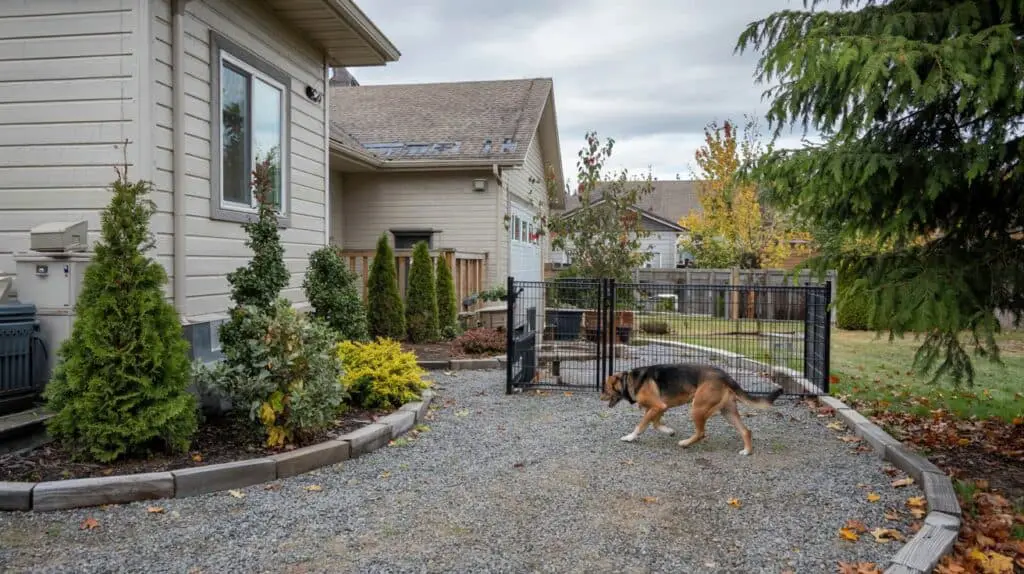
If you’re anything like me, your backyard turns into a swamp every winter. The grass disappears, the dog’s paws double in size with mud, and your floors become a paw-print gallery. The good news? You don’t need to spend a fortune to fix it. With a little planning (and some DIY elbow grease), you can create a dog-friendly space that stays usable even when the weather’s a mess. Here are some realistic, budget-conscious ideas to keep both your yard and your sanity intact.
Gravel Dog Run for Side Yards
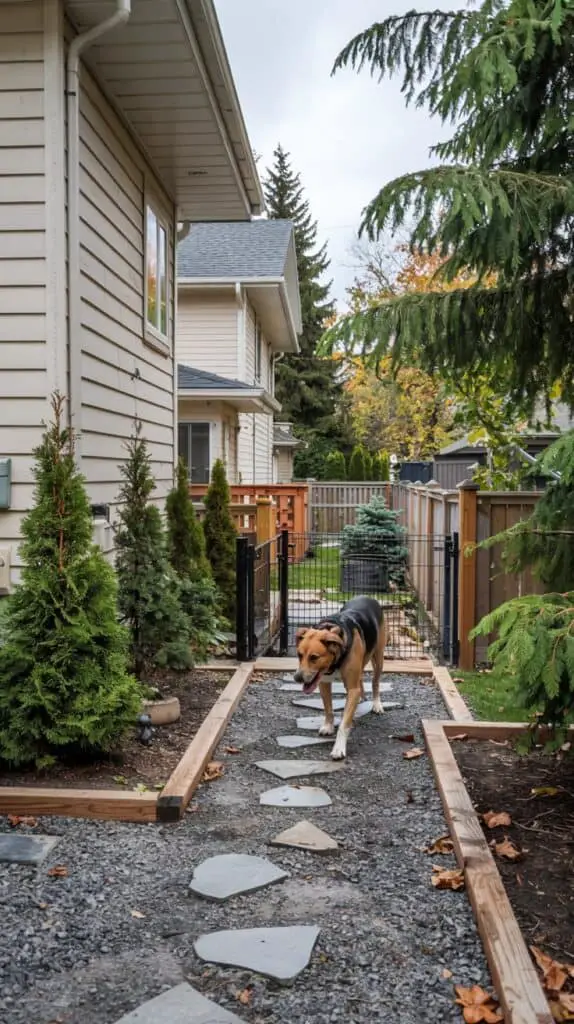
A gravel dog run is one of the cheapest and quickest ways to turn a muddy side yard into a usable space. It drains well, doesn’t get slippery, and is easy to hose down. It also gives your dog a clear “zone” so they’re less likely to destroy your main lawn.
How to achieve it:
- Clear the side yard of any existing sod or debris.
- Lay down landscape fabric to stop weeds coming through.
- Spread a layer of small pea gravel or crushed stone (not sharp-edged).
- Add a low fence or border to keep the gravel in place.
- Include a shaded area or dog house if the run is long and narrow.
DIY Raised Walkways to Beat the Mud
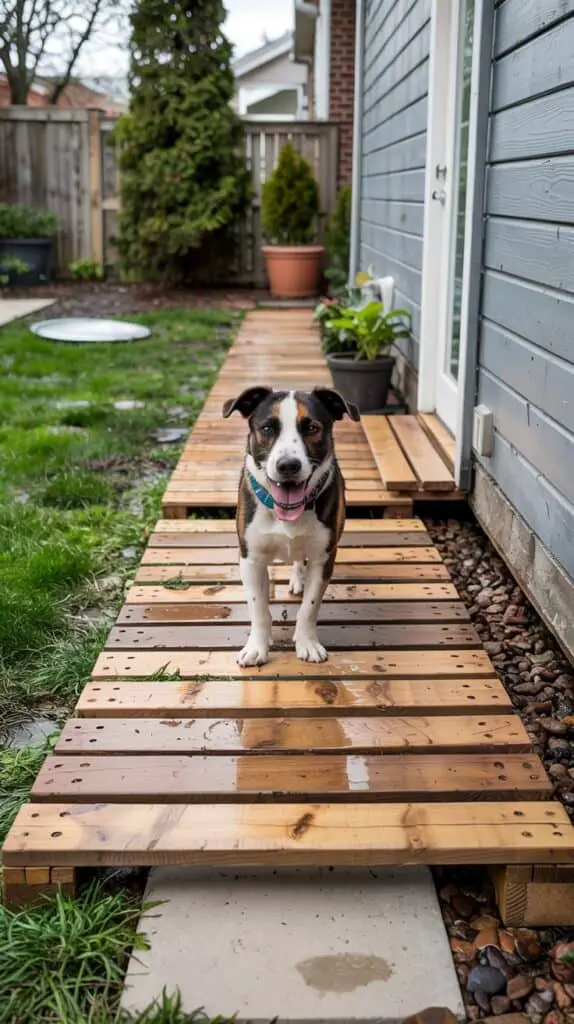
Sometimes the simplest fix is to elevate your dog above the mud entirely. A narrow raised walkway or decking strip gives your pup a dry path and reduces the area they can churn up with paws.
How to achieve it:
- Use recycled pallets or treated wood boards for a budget-friendly walkway.
- Place concrete pavers or stepping stones under the boards for stability.
- Leave small drainage gaps between boards to prevent water pooling.
- Add a slip-resistant mat or outdoor rug for extra grip in icy weather.
- Position it along your house or fence where your dog usually runs.
A Dedicated Dog Pee Area Outside
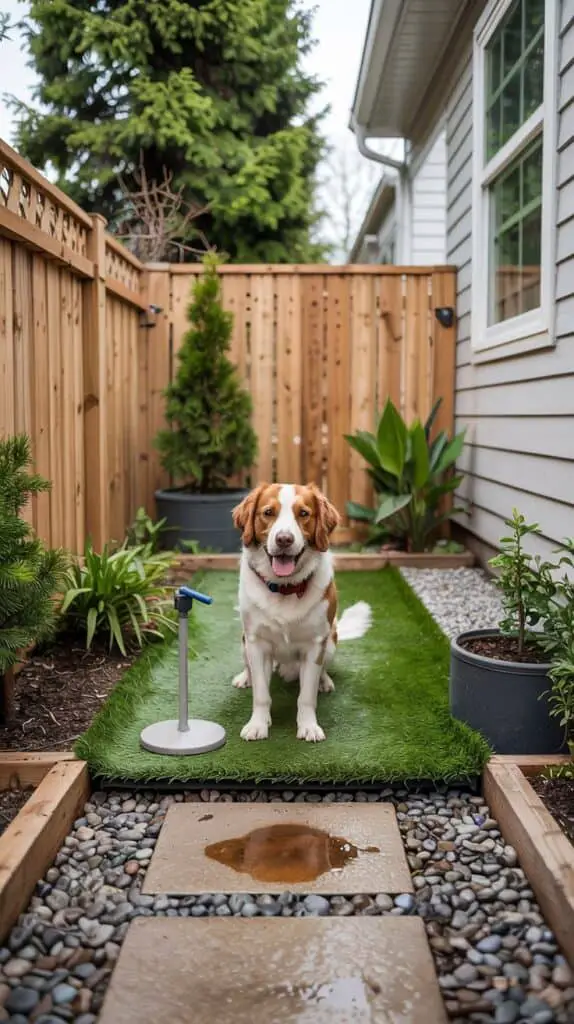
Nothing wrecks a winter yard faster than one spot turning into a muddy, ammonia-smelling mess. A designated dog pee area helps save your grass and keeps things more hygienic.
How to achieve it:
- Pick a corner of your yard or side yard for the designated zone.
- Lay down artificial turf, pea gravel, or large pavers to prevent mud.
- Add a simple screen or low fence to mark the area visually for your dog.
- Rinse with a hose or pet-safe enzyme cleaner regularly to control odor.
- Reward your dog at first to teach them where to go.
Dog Digging Area to Channel the Energy
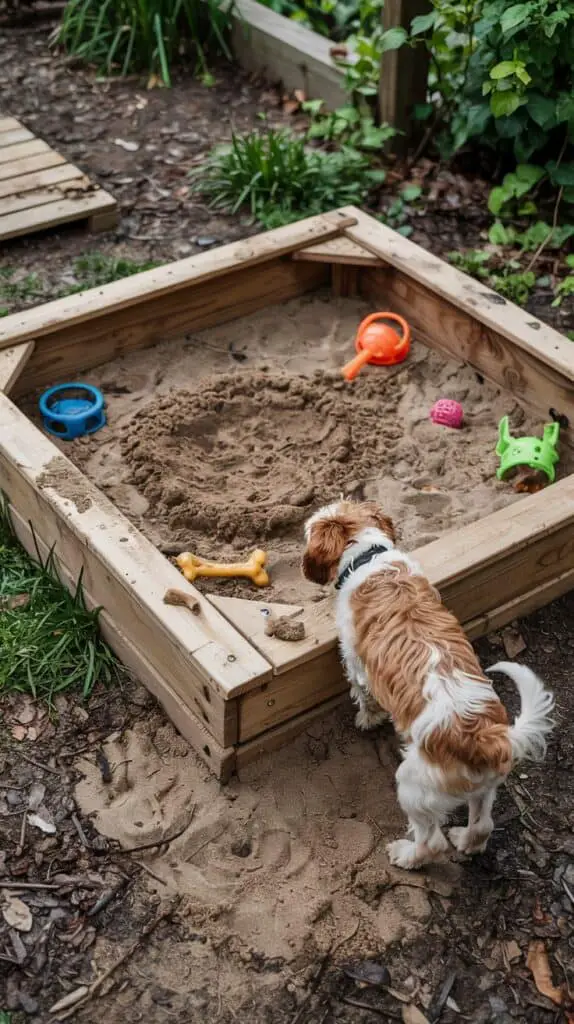
Winter boredom = more digging. Instead of fighting it, create a space where your dog can dig without turning your whole yard into craters.
How to achieve it:
- Build a simple wooden frame like a sandbox in a corner of the yard.
- Fill with a mix of clean sand and soil that drains easily.
- Bury a few safe toys or treats to encourage your dog to dig there.
- Surround with mulch or gravel so the mess stays contained.
- Cover with a tarp when it’s pouring rain to keep it usable.
DIY Dog Playground for Rainy Day Energy
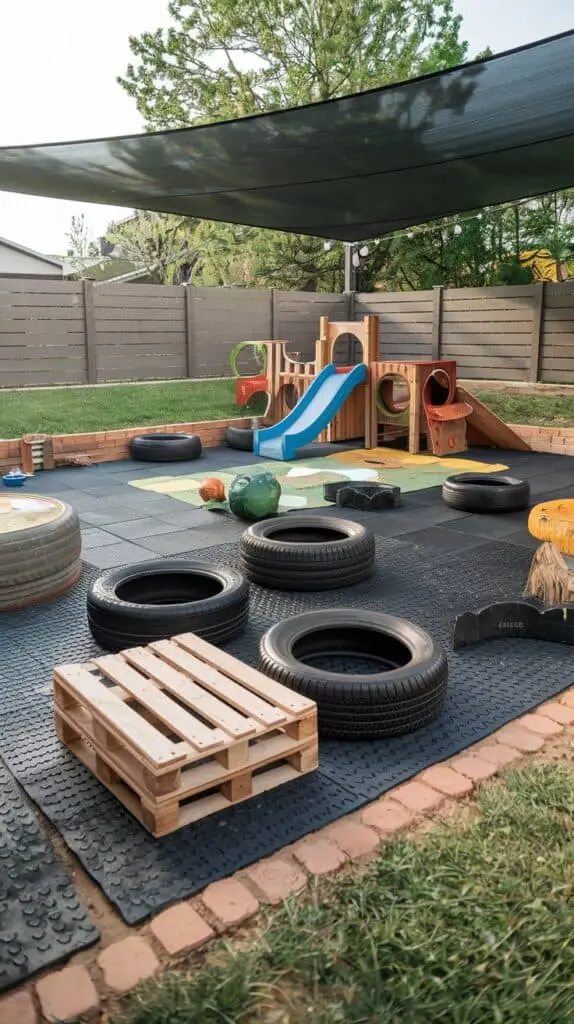
A tired dog is less likely to churn up mud. Even in winter, you can create a simple dog playground or “activity zone” in your yard to help them burn energy.
How to achieve it:
- Use old tires, low ramps, or pallets to build small climbing structures.
- Lay rubber mats or mulch under play zones for safer footing.
- Add a waterproof shade sail so parts of the area stay dry.
- Rotate toys or obstacles every few weeks to keep it interesting.
- Keep the area clear of puddles with a slight slope or drain channel.
Dog-Proof Landscaping for Mud Control
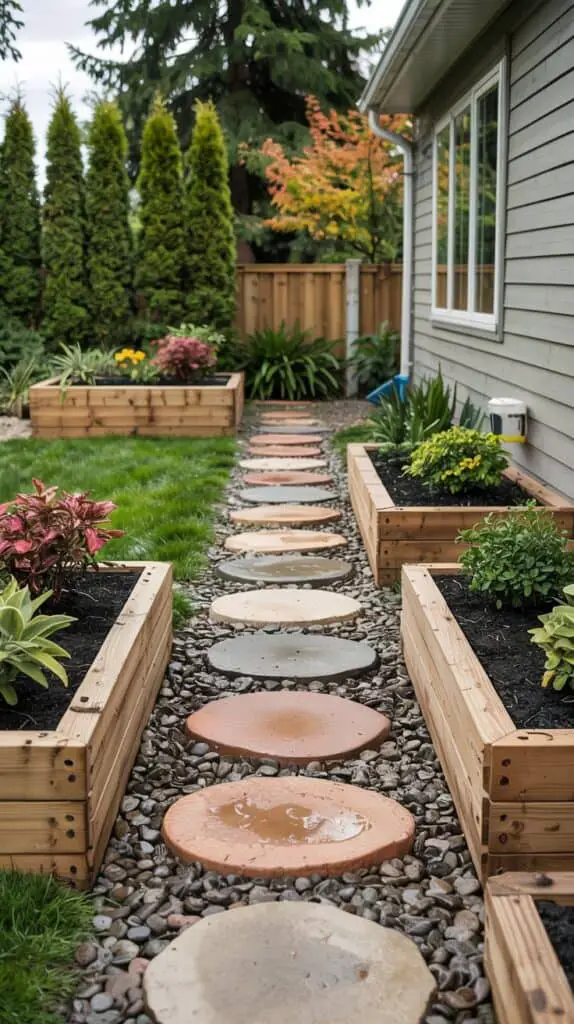
If you’re doing a more permanent fix, focus on landscaping that’s tough, drains well, and holds up to paws. Dog-proof landscaping makes your yard functional year-round.
How to achieve it:
- Swap out high-maintenance grass for hardy ground covers or gravel.
- Use raised beds with evergreen plants along the edges to reduce mud zones.
- Install simple French drains or perforated pipes to channel water away.
- Add low fencing to protect delicate garden areas from dog traffic.
- Use mulch or bark chips in heavy-traffic paths to soak up moisture.