
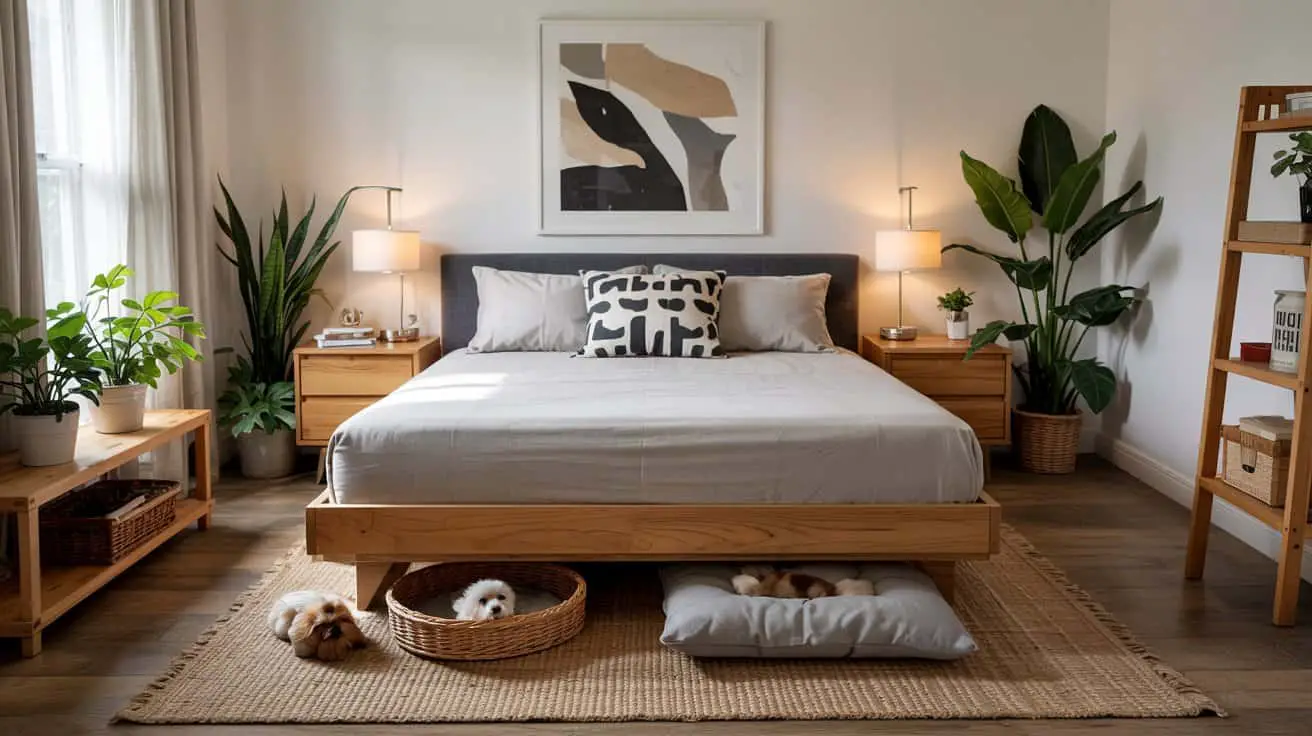
If you’ve ever tried to make a bedroom feel calm and put-together while also living with a pet who wants to be right there, you already know the struggle. Pet beds slide out of place, bulky crates interrupt the flow of the room, and the “cute corner” you imagined becomes a tangle of blankets and toys by week two.
That’s why built-in pet sleeping zones are such a satisfying solution. A platform bed with a tucked-under nook gives your cat or dog a dedicated spot that feels intentional, not like an afterthought. It can look modern, keep floors clearer in small spaces, and help pets settle at night without taking over your decor. These Unique Pet Bedroom Ideas are all about blending function with a bedroom that still feels like yours.
Imagine a small rental bedroom or shared primary suite where storage matters, visual clutter shows instantly, and you want everything to feel coordinated. The goal here isn’t a show-home setup. It’s a real, livable bedroom makeover idea with pets—where you can make the room feel styled, keep cleaning manageable, and still give your animals the comfort they’re asking for.
Start With a Minimal Platform Bed That Hides a Cozy Pet “Den”
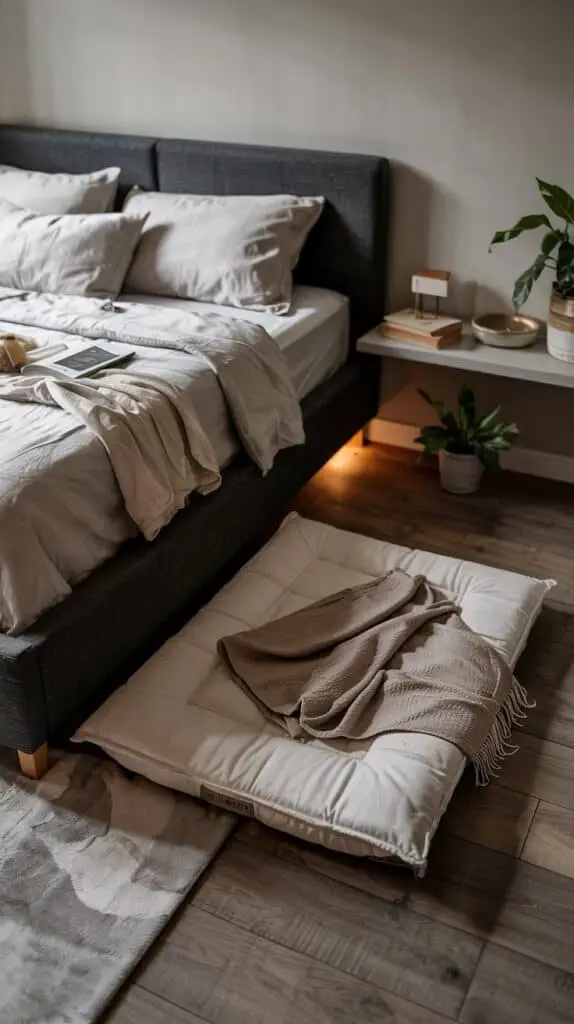
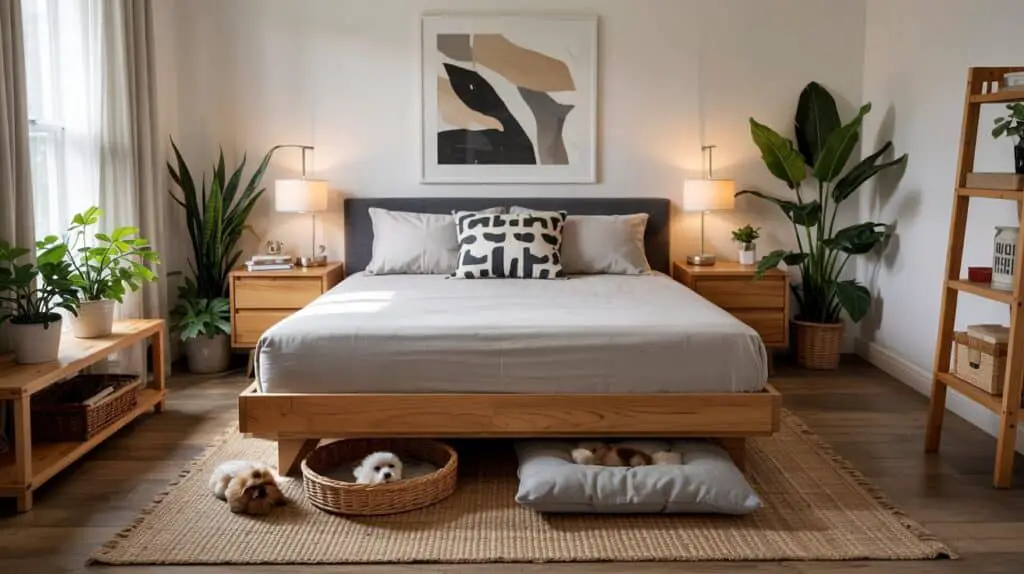
The simplest version is also the most versatile: a clean-lined platform bed with enough clearance underneath to create a pet zone that feels like a built-in cubby. This works especially well if you’re aiming for a modern bedroom that doesn’t look “pet themed,” because the pet bed becomes part of the architecture of the room instead of another object on the floor.
Look for a bed frame style that already reads streamlined—simple wood, painted MDF, or upholstered with a tidy base. Then, treat the space underneath like a tiny room. The difference between “I shoved the dog bed under there” and “this is a designed nook” comes down to three things: boundaries, texture, and lighting.
Boundaries can be as easy as a low-profile basket tray or a thin frame that keeps bedding from creeping outward. A shallow rug under the bed can also visually anchor the zone and catch fur. For texture, think washable, layered softness: a flat base mat plus a removable cushion. If you want the pet nook to feel cozy without adding visual clutter, match the pet bedding to your bedroom palette—cream, taupe, charcoal, or muted olive instead of bright patterns that fight the rest of the room.
Lighting is optional but surprisingly helpful. A small motion-sensor LED strip along the bed slats can make nighttime trips feel gentler (and yes, it helps you see toys before stepping on them). Keep it warm-toned so it doesn’t feel like task lighting.
This is also the easiest approach for renters: you’re not permanently altering anything. If you can’t replace your bed, you can “fake” the look by adding a bed riser system plus a tidy under-bed drawer unit on one side and a pet nook on the other. It still reads as purposeful, and it still clears floor space—especially important if you’re working with a small room.
If you’re specifically hunting for a bed frame with cat bed built in, this is the concept to search for: platform frames with under-bed openings, or styles that leave one side open instead of fully boxed in. For dogs, focus on airflow and easy cleaning—nothing feels stylish for long if it’s hard to vacuum.
Build a Two-Zone Under-Bed Layout for Both Cat and Dog Comfort
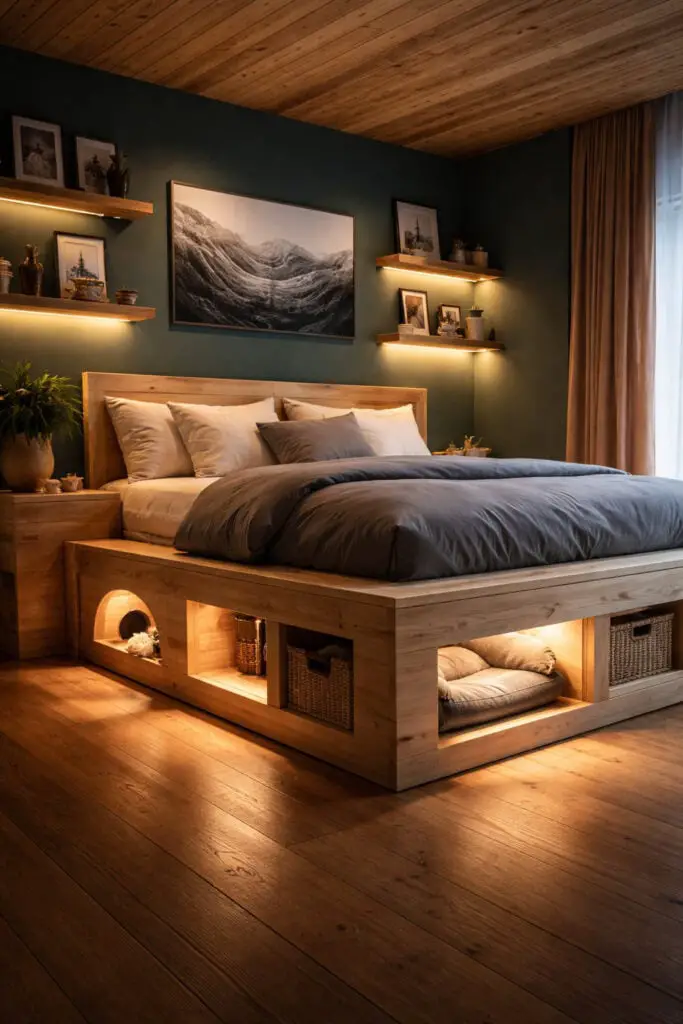
If you have more than one pet—or one pet who’s a sprawler—you can make the under-bed area work like a little “shared suite” instead of one crowded pad. This is one of those stylish pet bedroom ideas that also helps everyone sleep better, because pets aren’t competing for the same spot.
A practical layout is half pet zone, half storage. Under the bed, dedicate one side to a dog bed underneath (especially if your dog prefers den-like spaces), and use the other side for low bins or drawers. The key is to keep the pet side more open and breathable, and keep the storage side more contained.
For a dog zone, choose a bed insert that fits the available height. Many dogs don’t actually need a thick cushion—they need a supportive base and a cozy top layer. A flat orthopedic pad with a washable cover can be plenty, and it won’t crowd the space. Add a small bolster or rolled blanket if your dog likes something to lean against. For cats, consider adding a second “level” under there: a slim shelf or sturdy crate-top platform that creates a perch above the dog zone. Cats love height, even if it’s only a few inches, and it helps them feel like they have their own territory.
If you’re working with a bed with pet bed attached concept, you can also attach a cat hammock under the bed slats (only if your frame is sturdy and you’re comfortable with the hardware). It’s a fun solution that doesn’t take up floor space at all, and it makes the pet area feel designed rather than improvised.
To keep it visually calm, coordinate the under-bed “zones” with matching materials. Use the same style of bins on the storage side, and similar textiles on the pet side. If your bedroom is neutral, keep pet blankets neutral too. If your room leans warm wood tones, choose tan, camel, and cream bedding for the pets. This is the simplest way to make the whole arrangement feel like part of the bedroom, not a separate “pet corner.”
And don’t forget the human side of the room. A bedroom makeover idea with pets works best when you also remove the little clutter triggers: add a lidded basket for toys, keep a lint roller in your nightstand, and make one small spot near the door a “pet landing zone” for leashes or grooming wipes. Small habits make the built-in bed design feel effortless instead of fussy.
Use a DIY “Drawer-Style” Pull-Out Pet Bed for Cleaner Lines and Easier Cleaning
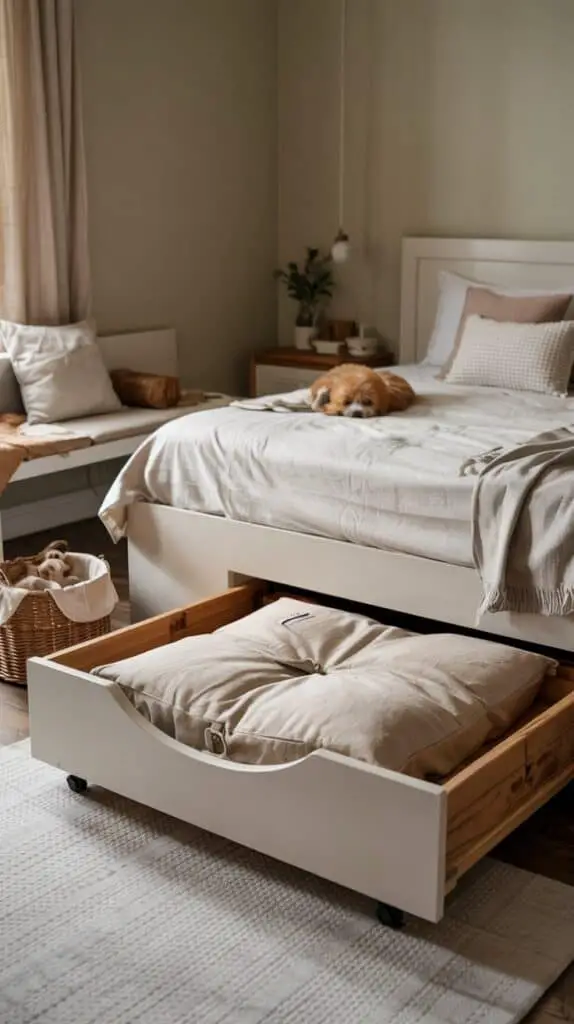
If you want the under-bed pet area to feel truly built-in—like furniture design, not just a tucked-away cushion—a pull-out drawer style is one of the most satisfying options. It’s also a great idea if your dog tracks in dirt or your cat sheds heavily, because you can pull everything out to clean instead of crawling under the bed.
Think of it as a low rolling platform that slides under the bed when not in use, then pulls out like a drawer at night. This is a strong fit for the “adult bed with dog bed underneath” dream: you get a grown-up bedroom look, and your dog still gets proximity and comfort.
You can DIY this with a sheet of plywood cut to size, low casters, and a lip edge to keep bedding contained. Add a thin mat, then a washable cushion on top. If you want it to look elevated, wrap the platform edge in the same material as your bed frame (paint it to match, or use a wood veneer tape). When it’s tucked in, it disappears. When it’s pulled out, it looks like part of the bed system.
For cats, the pull-out version can be even more flexible. You can build a shallow “cat lounge” drawer with a soft liner and add a small scratch pad insert on one side. Cats often like having options—sleep spot, scratch spot, perch spot—and a drawer gives you a contained place to offer that without spreading cat items across the room.
This approach is renter-friendly because it’s fully removable. You’re not cutting into your bed frame or permanently altering anything, and you can size it to your space. It’s also budget-aware: you can use basic materials and upgrade the look with paint and fabric instead of expensive hardware.
A few practical details that make it work well in real homes:
- Keep the height low enough that it doesn’t scrape the underside of the bed frame.
- Use casters that roll smoothly on your floor type (especially if you have rugs).
- Make the bedding easy to swap and wash—one cushion cover, one spare, no complicated layers.
- If your pet is older, ensure the drawer doesn’t roll away while they step in; a simple wheel lock or a silicone grip strip helps.
If you’re searching online for a bed with pet bed attached, you can also look for “trundle pet bed” concepts. Some people repurpose a twin trundle frame as a dog bed insert under a larger bed. It’s not always the most minimal-looking, but it can be a clever hack if you want something sturdy without custom building.
Make the Under-Bed Pet Zone Feel Like Part of the Bedroom, Not an Add-On
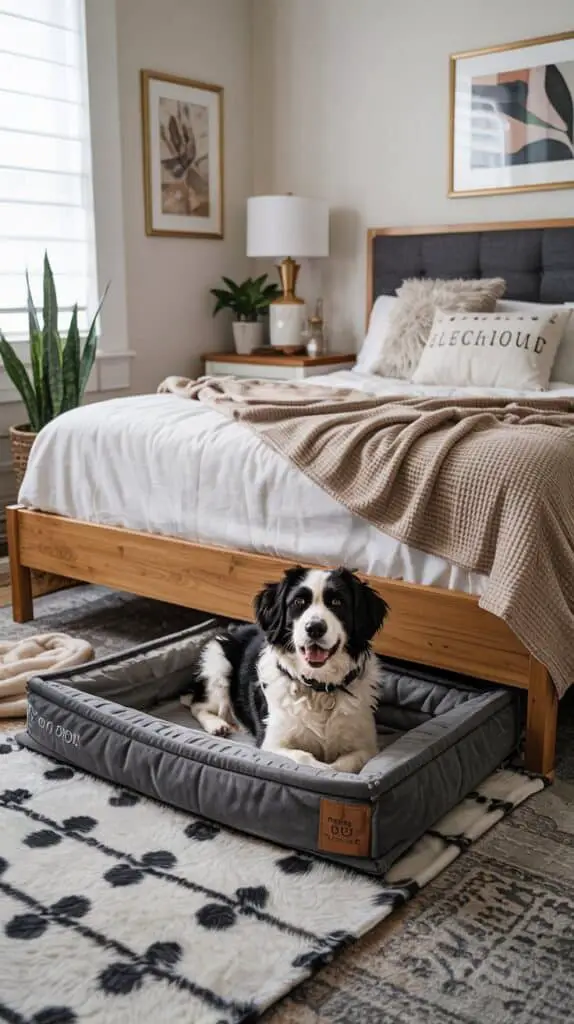
The reason some pet-inclusive bedrooms look instantly peaceful—and others look chaotic—usually comes down to styling choices. Not decorative fluff, but intentional decisions that make the pet setup feel integrated.
Start by deciding what the bedroom is supposed to feel like: airy and bright, cozy and warm, modern and dark, soft and romantic. Then make the pet area follow the same rules. This is where “stylish bedroom ideas with pets” becomes less about buying something special and more about editing what you already have.
If your room is modern:
- Choose a bed frame with clean lines, matte finishes, and minimal visible hardware.
- Use solid-color pet bedding, ideally in the same tone family as your duvet.
- Hide extras (toys, grooming tools) in closed storage—under-bed bins, a nightstand drawer, or a lidded basket.
If your room is warm and cozy:
- Add texture through knits, sherpa, or brushed cotton—just keep it washable.
- Use a pet blanket that matches your throw blanket, so it looks cohesive.
- A small bedside rug can unify everything and keep paws comfortable on cold floors.
If your room is small or shared:
- Keep the pet zone contained under the bed so your walking space stays clear.
- Pick a pet bed size that fits the room, not just the pet. Many pets will happily curl up in a slightly smaller bed if it feels secure.
- Use a narrow bench at the foot of the bed for both seating and hidden pet storage.
This is also where you can make it feel safer and calmer for the pets. Under-bed spaces can get dusty, so plan for easy cleaning. Choose materials that don’t trap hair too badly. If your dog tends to chew or your cat claws fabric edges, pick tougher textiles and avoid dangling trim.
And if you’re working within DIY dog bed designs, think of the pet nook as a “finish carpentry” moment even if you’re not building anything major. A simple painted panel on one side of the bed can hide the pet area from view while still allowing airflow. A small curtain is tempting, but it often looks messy and collects fur. A solid panel tends to look cleaner and stays cleaner.
The final touch is routine. When the pet bed has a home, it’s easier to keep the rest of the bedroom calm. Make a habit of shaking out bedding once a week, washing covers regularly, and resetting the nook in the morning the same way you’d straighten your duvet. It’s not about perfection—it’s about keeping the room feeling intentional, even with fur and real life happening in it.
Conclusion
Platform beds with built-in pet zones are one of the easiest Unique Pet Bedroom Ideas to live with because they solve a real problem: where pets sleep, without sacrificing the look and function of your room. Whether you go with a simple under-bed nook, a split cat-and-dog layout, a pull-out drawer bed, or a fully styled integrated setup, the best designs are the ones that stay practical—easy to clean, easy to maintain, and calm to look at every day.
When your bedroom supports both your sleep and your pet’s comfort, the whole space feels more settled. And that’s the kind of “stylish” that actually lasts.