
If you’re keeping chickens through the colder months, you already know that winter comfort is more than just tossing in extra straw. A well-thought-out roosting setup can make a massive difference to your flock’s health, egg-laying, and overall happiness.
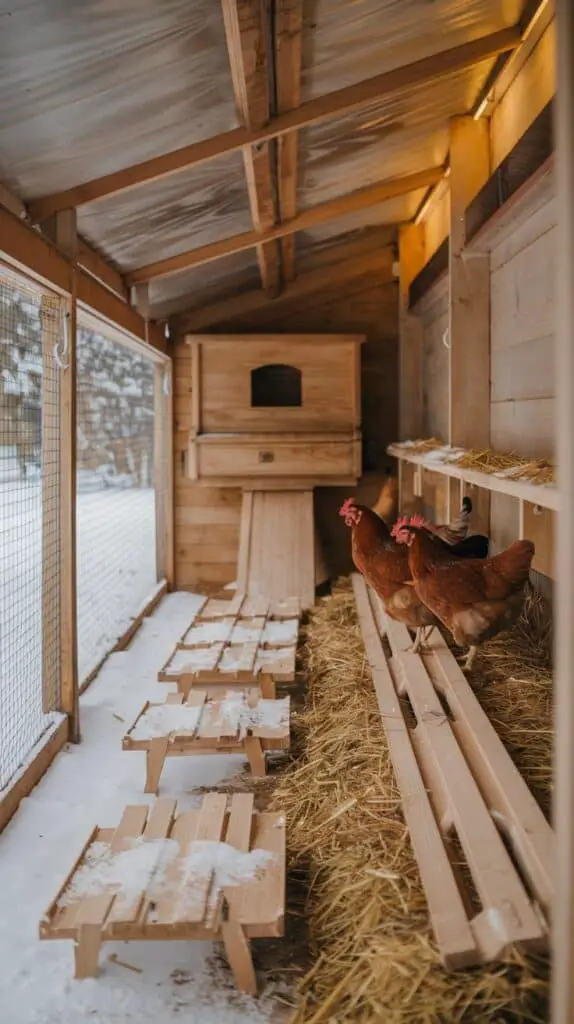
It’s not just about staying warm—it’s about airflow, safety from damp drafts, and giving each bird a stress-free place to perch. Whether you’ve got a fancy walk-in coop or a cozy DIY setup in a small backyard, there’s a winter roosting idea here that’ll help you upgrade without breaking the budget.
Raised roosting bars with wind protection
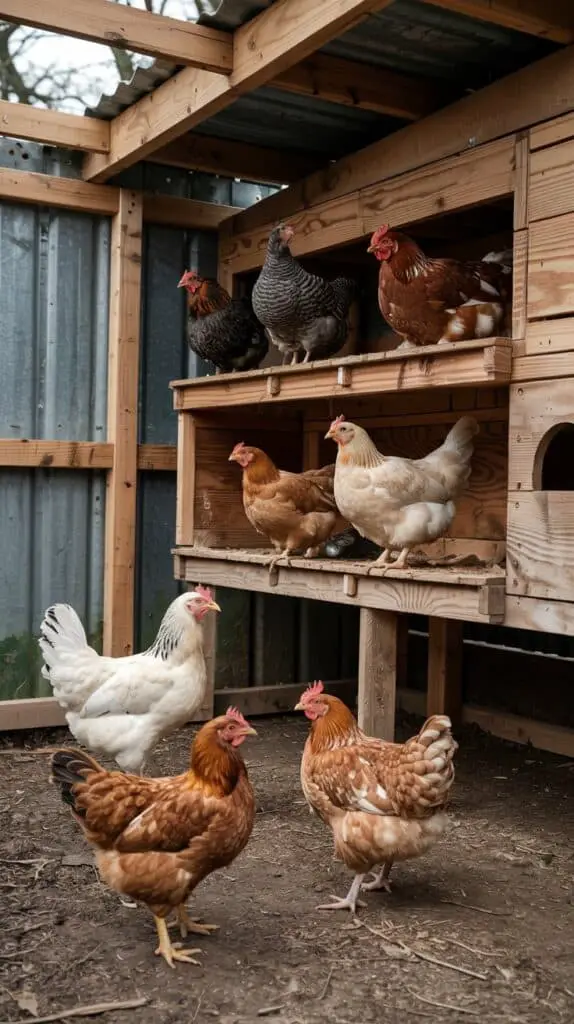
A good winter roost starts with height—chickens naturally prefer to sleep elevated, and keeping them off the cold ground is key. Use wooden roosting bars positioned at least 18–24 inches off the floor.
Add side walls or wrap the back of the coop with a wind-blocking barrier (like recycled plywood or corrugated plastic) to stop icy gusts from hitting your birds at night. This setup works well for coops in exposed areas or where drafts sneak in under rooflines.
Use wide, flat roosts to keep toes warm
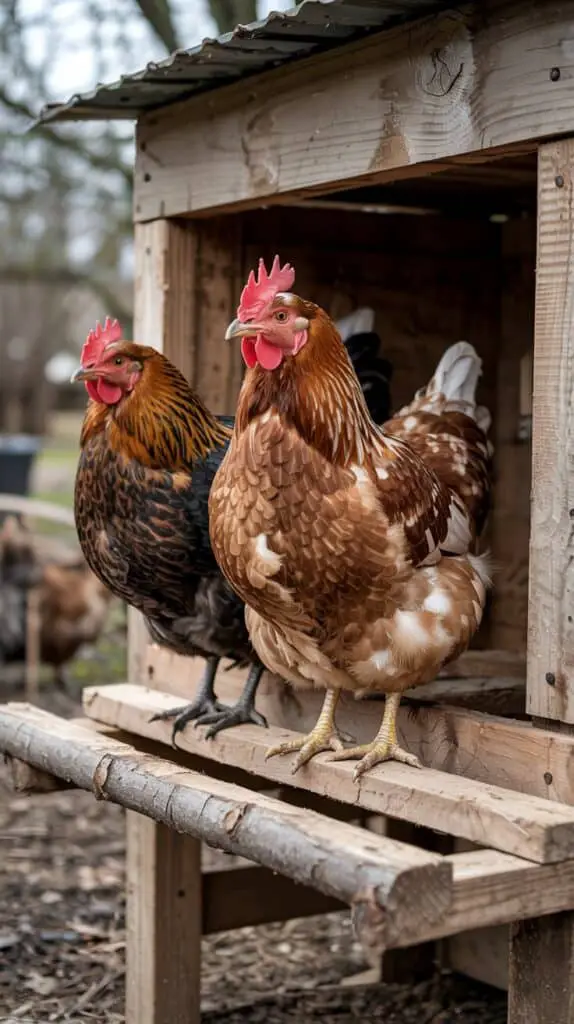
Roosts made from 2x4s (with the 4-inch side facing up) are ideal in winter. Why? Because your chickens’ feet stay flat and fully covered by their bodies, reducing frostbite risk. Round perches like branches or dowels don’t allow full foot coverage, especially in very cold areas.
This small upgrade can make a huge difference for comfort and health, especially in colder climates or uninsulated coops.
Try a staggered roosting ladder for small coops
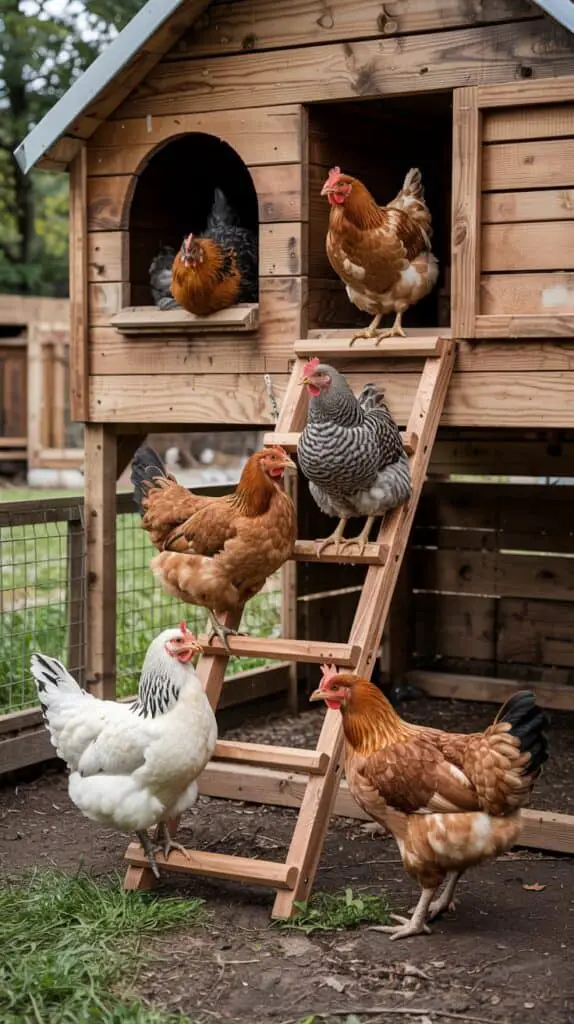
If you’ve only got space for a tight layout, a staggered ladder-style roosting system is a great space-saver. Each bar is offset and slightly higher than the one in front, so chickens don’t poop on each other while they sleep.
It also keeps the peace at bedtime, since dominant hens can claim the top spots without shoving others off the bars. These are perfect for chicken coops with limited floor area or for families extending a basic coop design.
Install poop boards with absorbent bedding
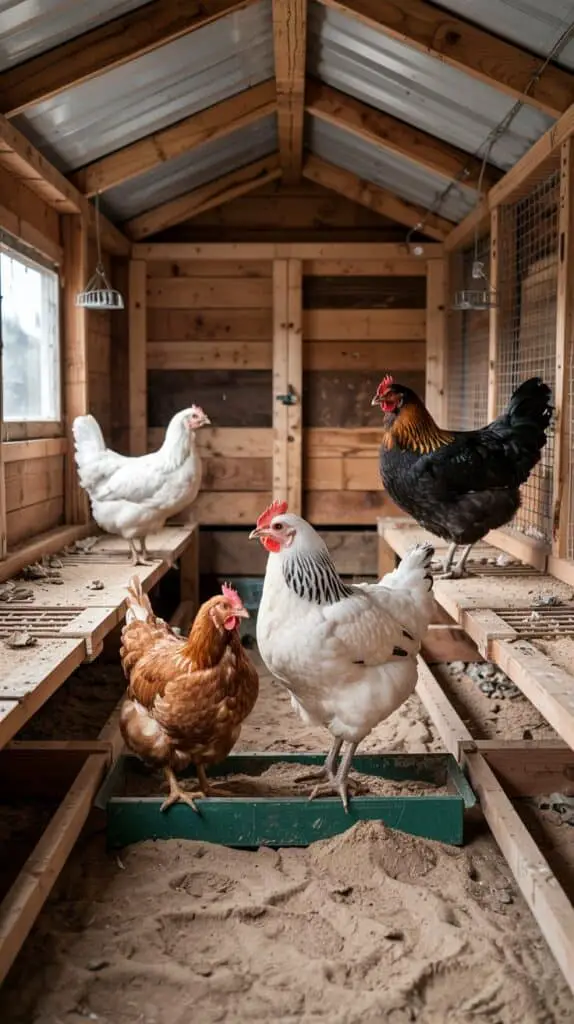
Winter means fewer cleaning days, so anything that keeps things tidy is a bonus. Add poop boards under your roosting bars and line them with sand or PDZ granules. Scrape them off every few days and you’ll have a cleaner, drier coop with less ammonia buildup.
It also helps you keep track of chicken health—droppings say a lot about how your flock’s doing. For small backyard coops, this is one of the easiest DIY upgrades you can make.
Use roosting alcoves or cozy corners
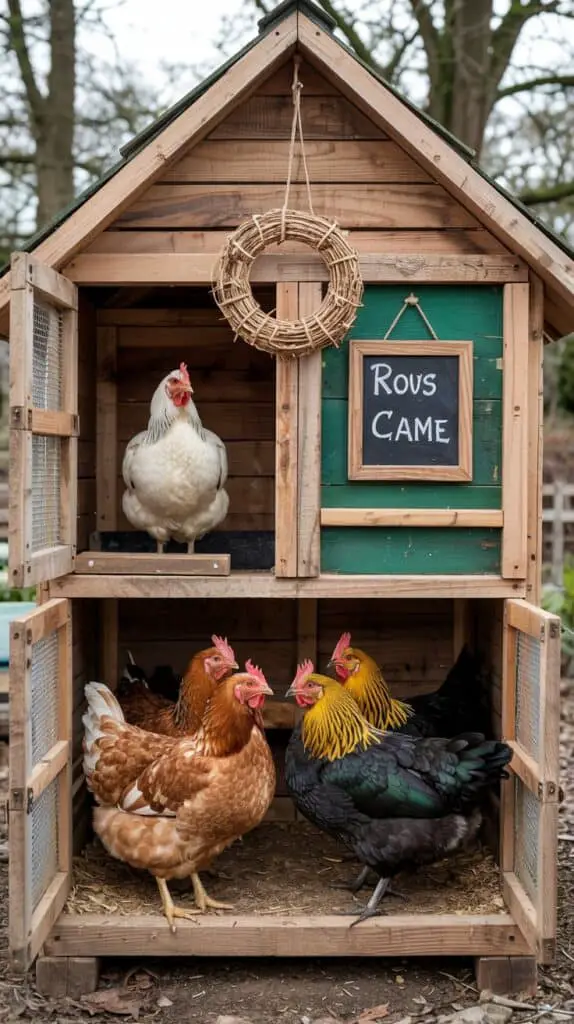
If you’re dealing with cold snaps or exposed areas, try building partial walls or dividers inside the coop to create “roosting alcoves.” These mini zones feel safe and warm, especially for nervous hens or small breeds. You can make them with recycled wood, woven panels, or even thick canvas.
For added charm, decorate with winter-safe coop accessories like a hanging feed wreath or a little chalkboard name sign. It keeps your setup functional but cute—perfect for families who love a bit of backyard coop decorating.
Combine nesting boxes and roosting zones carefully

Some chickens like to sneak into nesting boxes to sleep when it’s cold—but that’s not ideal, since it makes eggs messy and can cause squabbles. Keep your nesting boxes slightly lower than your roosts and line them with deep straw or shavings to discourage roosting there overnight.
If needed, close off nesting areas after dusk and reopen them in the morning. The key is making the roost more appealing than the nest—warm, high, and draft-free.
Final thoughts
Winter roosting isn’t about reinventing your whole coop—it’s about layering little changes that help your chickens stay warm, clean, and happy through the coldest weeks. Whether you’re raising chickens in a suburban yard or a countryside field, the right roost setup gives your flock the safe, dry perch they need to thrive. It’s one of those cozy upgrades that pays off in calmer birds, cleaner coops, and fresher morning eggs—even when there’s frost on the ground.