
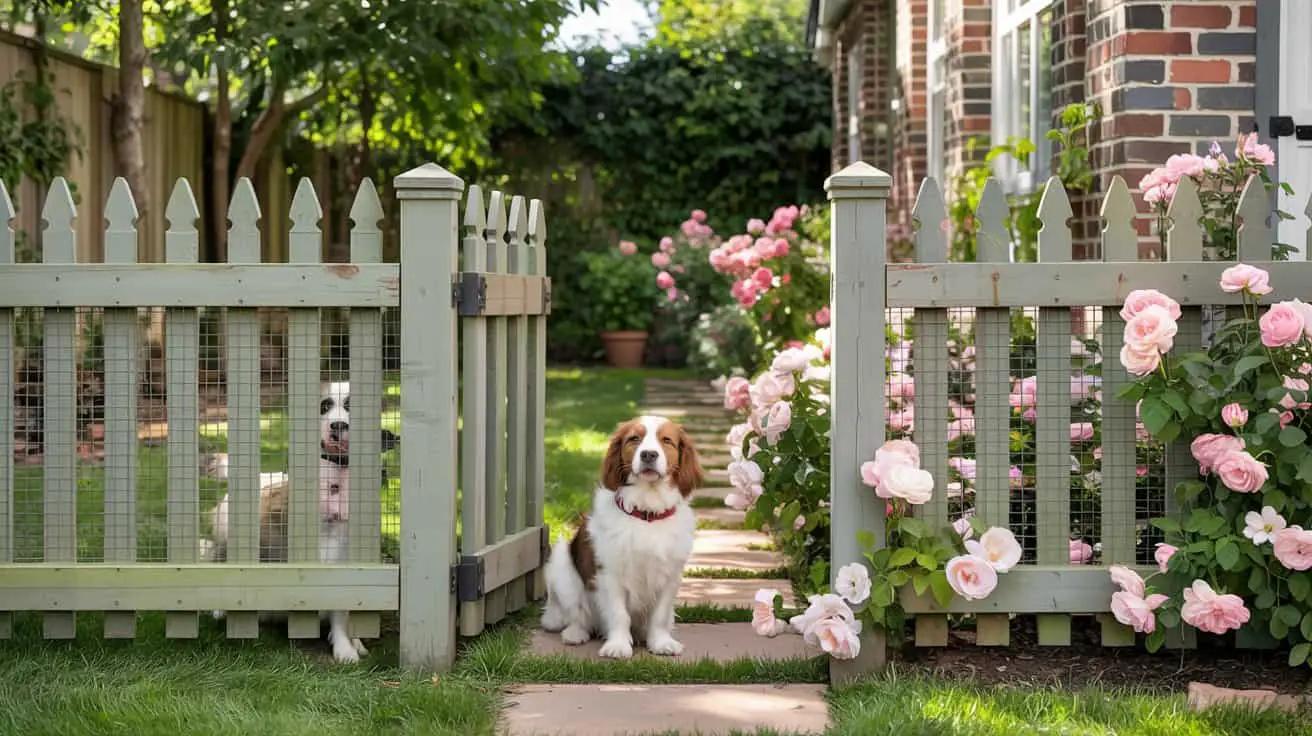
If you’ve ever stood in your front yard, squinting at your scraggly old fence and thinking, “This doesn’t exactly scream cozy countryside charm…” — well, same. I used to think a fence was just a fence. Something to keep the dog in, keep the deer out, and hopefully not fall over when it gets windy. But lately, I’ve realized how much a good fence changes the whole vibe of your home. Especially if it’s got that rustic, slightly-stained-by-time look that just feels right in a country setting.

And when you’ve got dogs — you know the ones that are basically family — you start looking at fences a little differently. It’s not just about curb appeal. It’s about giving your pets a safe space that actually looks nice too. You want something sturdy, natural, a bit charming but still functional. Something that doesn’t make your front yard look like a holding pen.
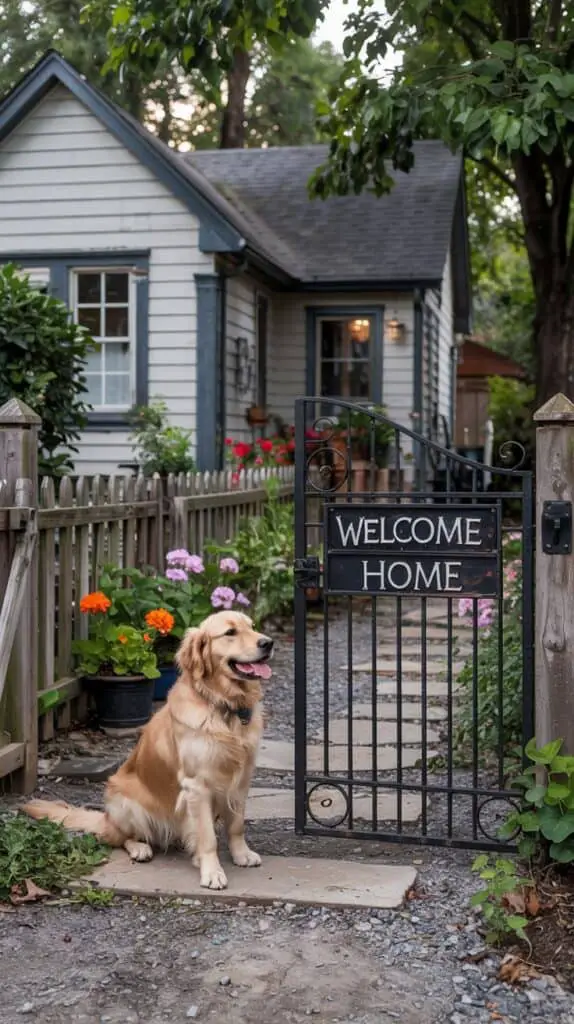
Whether you’re living the real rural dream or just adding a little farmhouse flavor to your suburban patch, these rustic dog fence ideas bring that cottage-core comfort — without feeling too fancy or forced.
Weathered Cedar Fence That Looks Straight From a Farmhouse Catalog
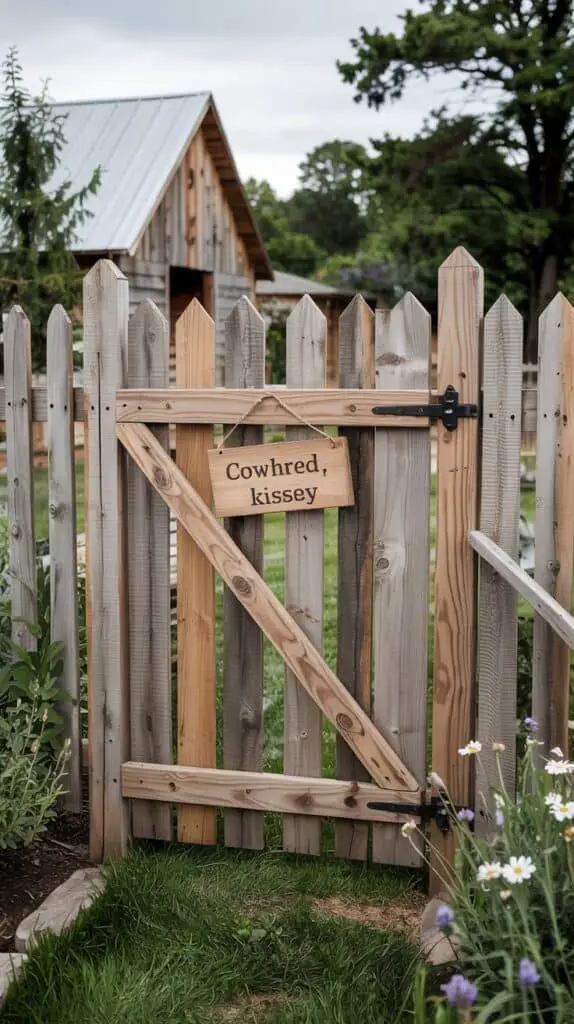
This one’s for anyone who wants that timeless, never-going-out-of-style look. A weathered cedar fence has this soft, gray-brown tone that just gets prettier with age — kind of like a good leather armchair or a barn door that’s seen a few storms. It’s low-maintenance and naturally bug-resistant (which is helpful if your dog loves sniffing every post).
To keep things feeling more “country cozy” than “corporate ranch,” go for thick cedar planks with visible grain. Let the top of each board be just a little uneven — no need for straight lines here. Add a simple wood gate with black iron hinges and maybe a cute wooden sign that says your dog’s name (or just “beware of kisses”).
This works beautifully as a fence around your whole house or just along the back, especially if you’ve got a few trees or flower beds nearby. Add in some lavender or wild daisies along the base, and it honestly starts looking like something out of a rustic wedding venue. Except with paw prints.
Hog Panel Fence with Timber Frame for a Practical, Ranchy Feel
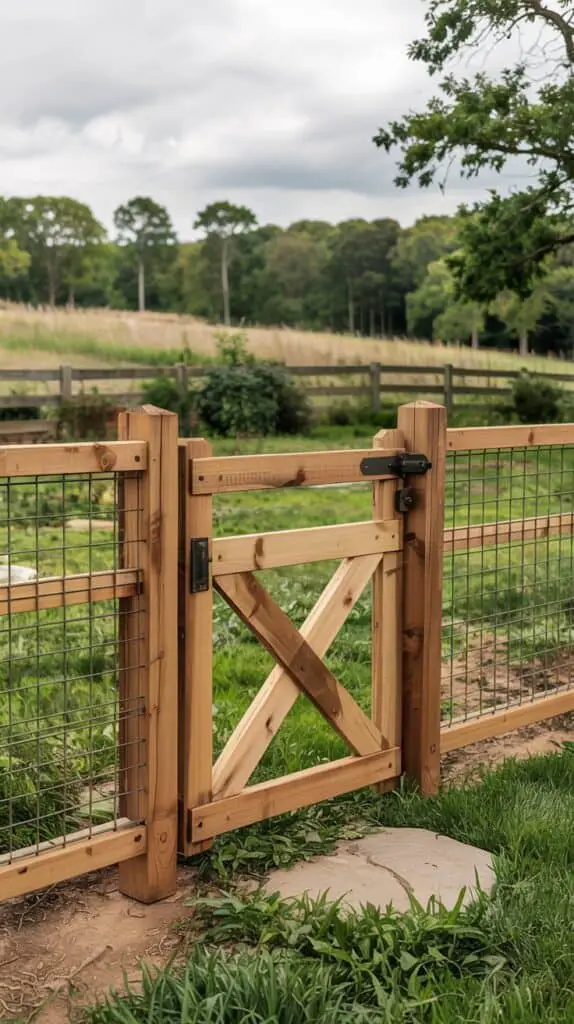
If you’ve got big dogs (or sneaky little ones), hog panels are such an underrated gem. They’re basically heavy-duty wire grids that ranchers use for—you guessed it—hogs. But paired with chunky wooden posts and a sturdy timber frame? Total country charm with serious strength.
This fence style gives you visibility (so your pups can keep an eye on the squirrels), but also durability. It won’t block your view of the landscape if you’re lucky enough to have rolling fields or even just a few garden beds worth admiring.
Go for a slightly darker wood tone — like treated pine or even stained oak — to get that “rustic but put-together” look. It works great for fencing in a carport, side yard, or lining a country driveway entrance. Throw in a split-rail-style gate or even a sliding barn door-style entrance if you’re feeling creative.
Cattle Wire Fence with Rustic Gate for That “Real Farm” Look
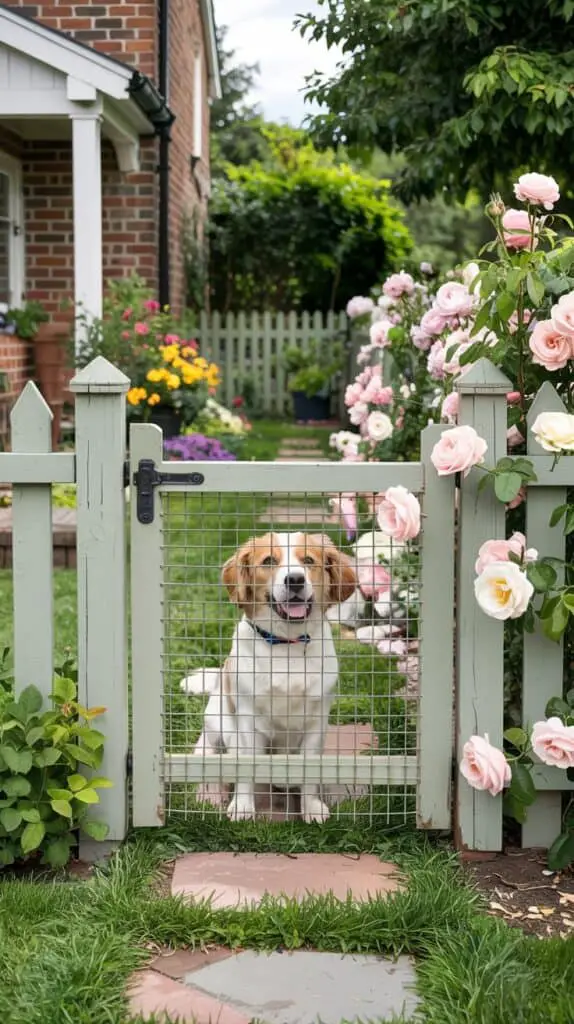
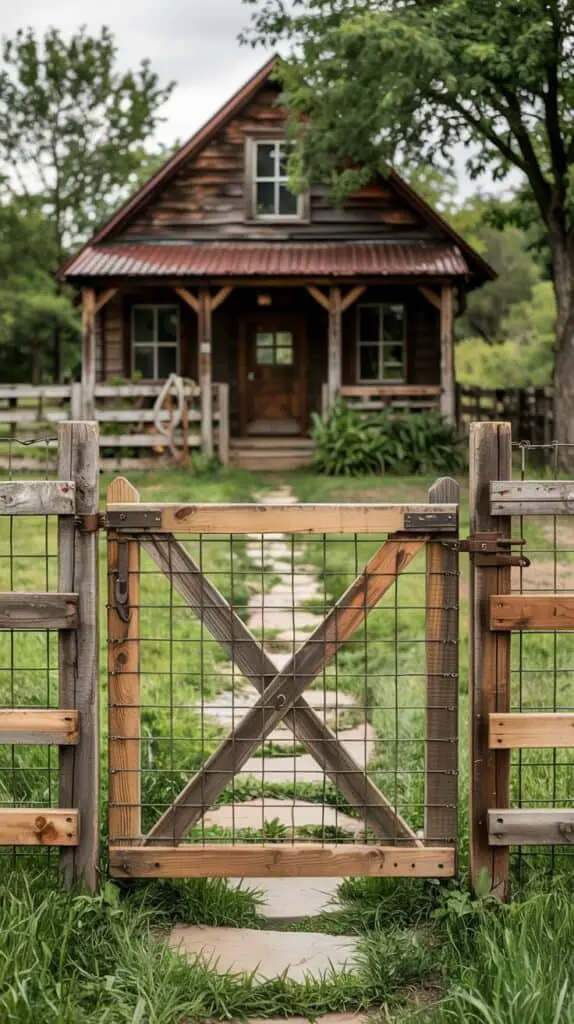
Sometimes, the classics stick around for a reason. Cattle wire fencing is affordable, easy to install, and gives off strong rural vibes — like, “yes I have chickens and no, you can’t pet my goat” kind of vibes. But add a rustic wooden gate to it and suddenly it’s less farm utility and more vintage chic.
The key is the framing. Use thick wood posts — think rough-cut cedar or reclaimed barn wood. You want to keep it a little raw, a little imperfect. Let the gate be slightly arched or add diagonal cross-beams for style. If you’re handy, you could even attach an old horseshoe as a handle.
This design is ideal for front yard fences for dogs, especially if you want something open-looking but secure. If your front porch has rocking chairs or your mailbox is a little rusty in a charming way, this fence will feel right at home.
Half-Height Cottage Fence with Dog-Proof Wire Mesh
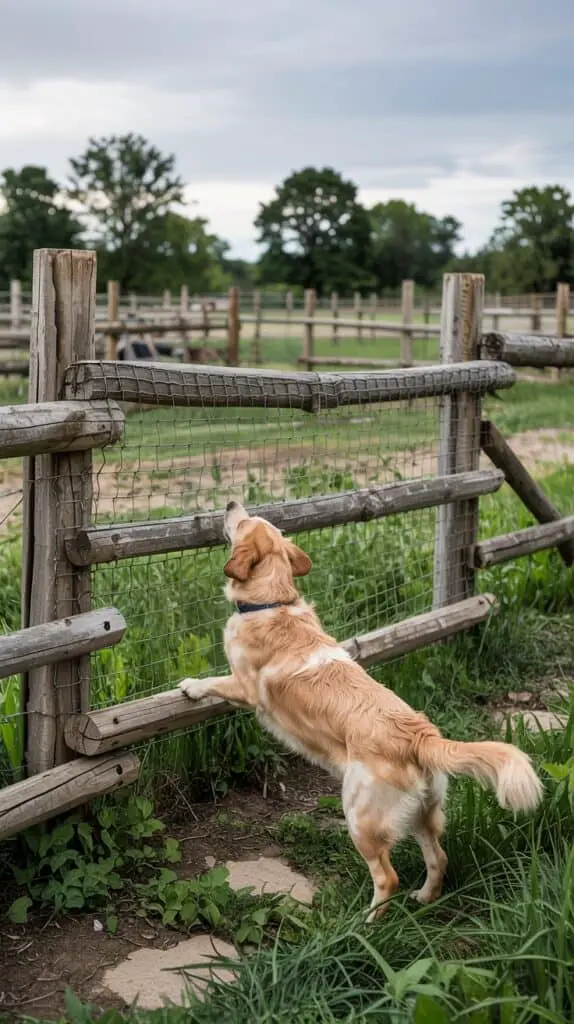
Ever fall in love with those dainty white cottage fences but think, “my dog would hop that in five seconds”? Same. That’s why I love this hack: build your cottage-style fence, then subtly line the inside with pet-safe wire mesh.
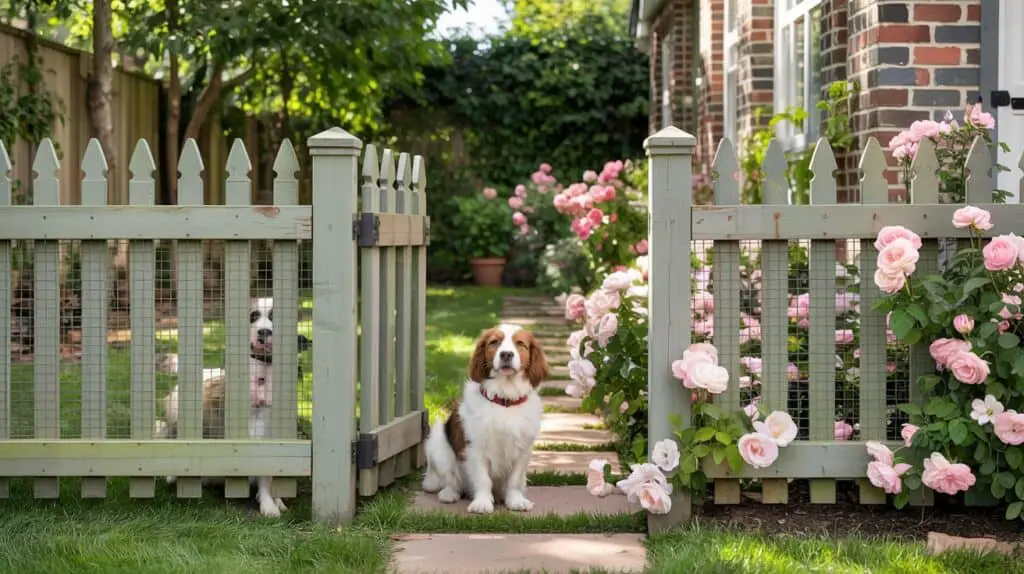
Keep the posts chunky but short — around waist height — and paint them soft white or pale sage green. Add those classic cross-hatch rails or even a picket top if you’re going full English garden. Then on the inside, attach invisible wire mesh fencing that blends into the design but keeps your pups where they belong.
This is a dream setup for small- to medium-sized dogs, and it looks adorable along a front garden fence or beside a flagstone path. Bonus points if you plant climbing roses or sweet peas nearby — they’ll soften the mesh and make it feel more like a Jane Austen movie set with dogs.
Rustic Split Rail Fence with Chicken Wire Backing
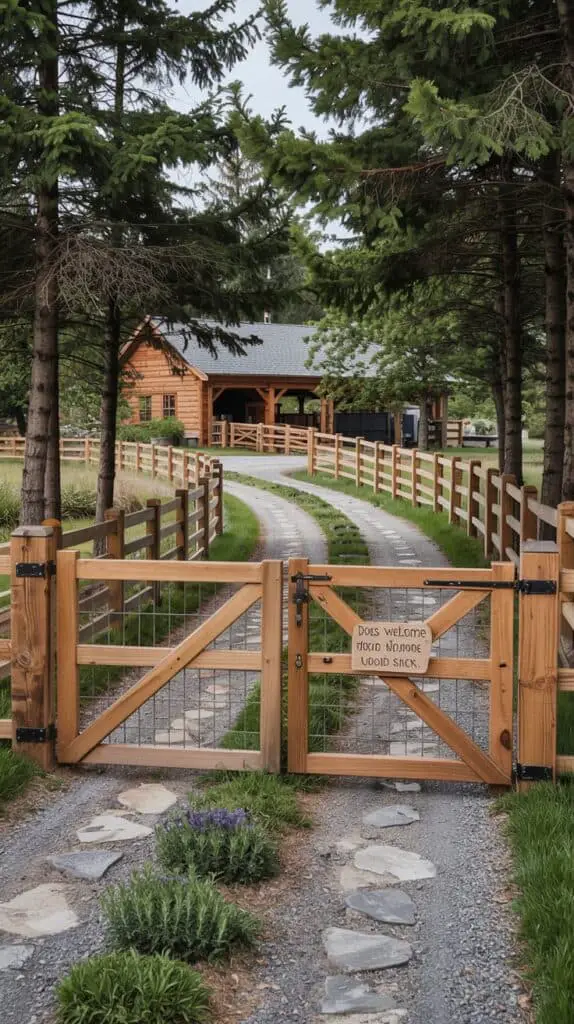
The split rail fence might just be the blue jeans of country fencing — it goes with everything and never tries too hard. On its own, though, it’s not exactly dog-proof. That’s where chicken wire saves the day.
Run a layer of fine mesh or chicken wire along the back of your rustic rails. Secure it tight between the posts and let the natural wood still shine through. You get the rough-hewn, open countryside look — but your pup doesn’t get a free pass to chase the neighbor’s cat.
This setup is great for rural fencing along bigger property lines or around a veggie patch or cedar garden bed. If your land is sloped or uneven, the loose nature of split rail makes it adaptable. And if the wood gets a little mossy or sun-bleached over time? Even better. That’s the point.
Curved Country Driveway Fence with Gate and Gravel Path
There’s something instantly inviting about a country driveway entrance that curves in just slightly, framed by rustic fencing and a gravel path crunching under your tires. This setup feels less like a property line and more like a welcome. And if your dog’s the greeter type, even better.
To get the look, use thick wooden posts — either square-cut or rough-hewn logs — and run them along the driveway in a gentle curve, about waist height. Between posts, opt for horizontal rails or tightly strung wire. At the entrance, add a wooden country gate — preferably double-sided — that opens wide but still feels quaint. A small sign that says “dogs welcome (if you bring snacks)” wouldn’t be out of place.
Gravel or crushed stone underneath gives texture and that satisfying sound when cars pull in. Bonus if you line the edges with rosemary or lavender — good for scent, and neither will be ruined if your dog runs through them. This style works especially well if the fence leads toward a fenced-in carport or barn-style garage.
Reclaimed Wood Fence with Built-In Dog Window
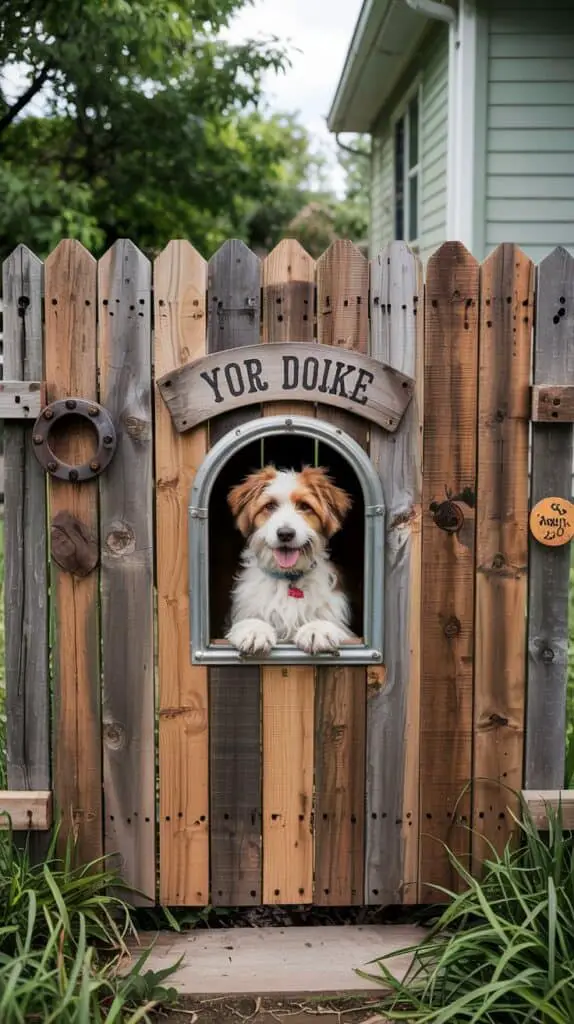
This one’s got a little quirk and a lot of charm. If your dog’s the type to sit and watch the world go by, why not give them a literal window to the action? A rustic fence made from reclaimed wood — barn planks, old shipping pallets, or leftover siding — gives you that layered, textured country look. And a built-in dog peek-hole? Pure genius.
The window can be a small arch cut into one of the center panels, or even a round bubble window like the ones they use for cats. Frame it with metal or painted trim, just enough to catch the light. Keep the rest of the fence rough and rugged — mismatched boards and visible nails are all part of the aesthetic.
This is perfect for a front yard dog fence or along a side lane where your dog can safely spy on joggers, mail carriers, or rogue squirrels. If you’re extra, you could paint your dog’s name above their lookout point like a little saloon sign.
Stone and Wood Combo Fence for Farmhouse Charm
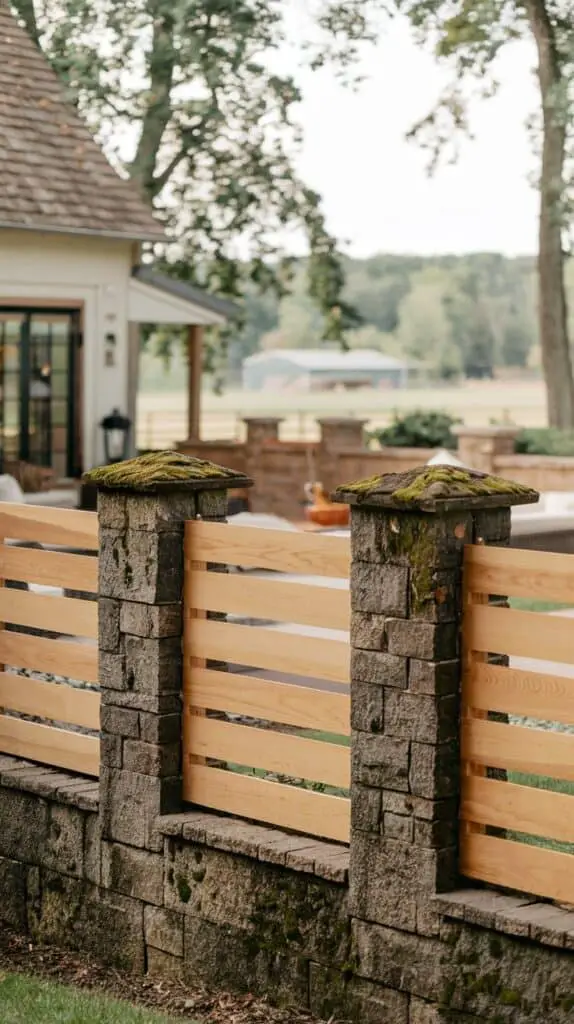
If you want something that’s extra sturdy but still fits your rustic theme, a stone-and-wood combo fence hits the mark. Think chunky stone columns — maybe with moss creeping up the sides — paired with warm-toned horizontal wood slats or hog panel inserts. It’s equal parts rustic retreat and sturdy farmhouse.
This style is great around patios or outdoor lounging zones where your dog likes to chill but you don’t want the whole space blocked off. Use hog panel fencing between the columns if you want visibility, or go solid wood if you’re more about privacy.
The trick here is in the materials. Don’t use perfect, polished stone — go for fieldstone or anything with a rough edge. And let the wood slats vary slightly in width or color. If your dog has a favorite nap spot in the sun, this fence can help define that space while still making your backyard feel open and calm.
Rustic Branch Fencing with Twine for Natural Vibes
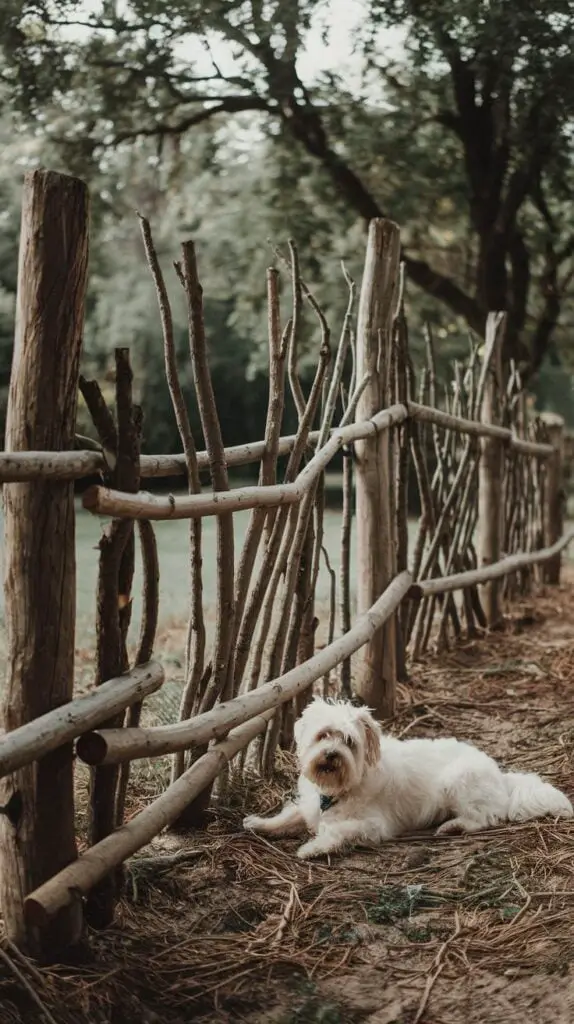
Now this one’s more on the whimsical side, but it totally works — especially if you’re going for cottage-core or just want something that blends into nature. Instead of traditional boards, use long branches or saplings woven together between upright stakes. Think natural fence ideas you might see in a woodland garden.
To keep it dog-friendly, reinforce the base with wire mesh or garden fencing so no one squeezes through. Use garden twine or jute rope to tie things off — it adds to the handmade, rustic charm. If you live somewhere that’s already wooded, it’ll almost disappear into the background (in a good way).
This is ideal for smaller sections — like around raised garden beds, along a side path, or at the end of a driveway fence where you just want a soft visual break. It’s not as heavy-duty as other options, but the aesthetic payoff is worth it. Especially when your dog’s lounging nearby like they’re in a storybook illustration.
Whitewashed Ranch Fence with a Simple Swing Gate
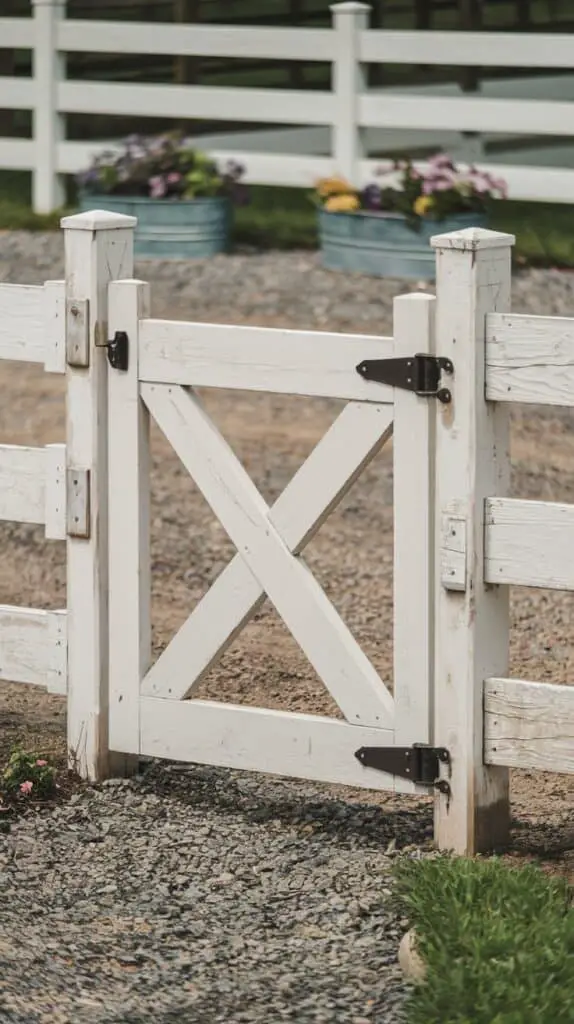
Here’s a design that says “ranch life” without needing a whole herd of cattle to go with it. A classic ranch-style fence — wide-set horizontal rails, tall corner posts — gets a cozy upgrade with a quick whitewash. It’s still rugged, still functional, but with just enough polish to make your yard feel welcoming.
A swing gate in the same style, hung with big black hinges or even a chain latch, finishes the look. Use cattle wire fencing behind the rails for dog safety without losing the airy feel. This combo works great for both large properties and farmhouse fence ideas for front yards, especially if you’ve got a gravel drive, porch columns, or potted flowers in metal tubs.
You can dress it up or down. Leave the wood rough and let the whitewash chip naturally over time, or seal it for a cleaner look. It’s flexible, classic, and lets your dogs roam with style.
Split-Level Dog Fence with Natural Wood and Landscape Layers
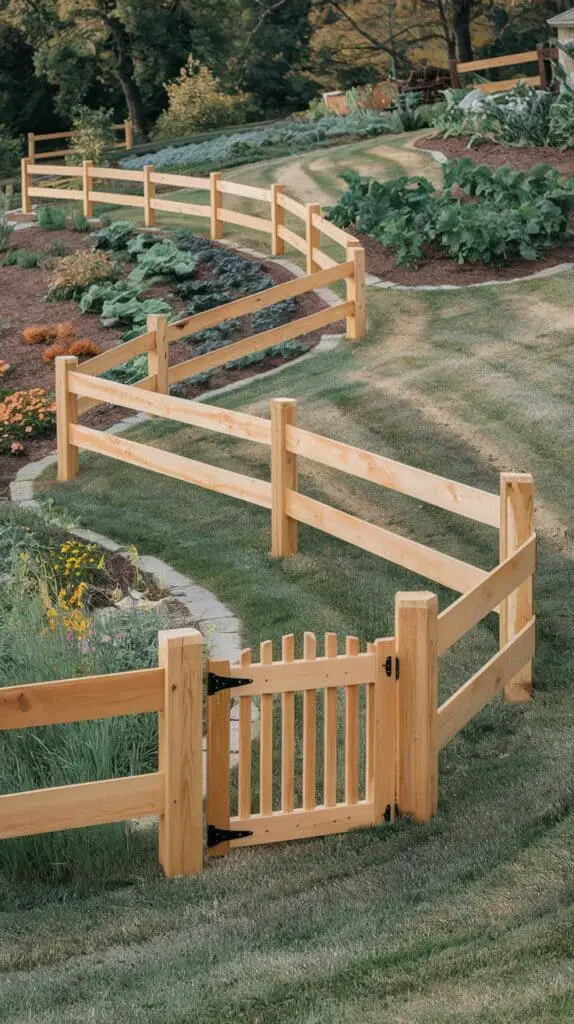
If your yard isn’t perfectly flat (whose is?), this split-level dog fence idea makes the most of it. Instead of forcing everything into one rigid height, this layout follows the slope of your yard in a way that looks intentional and calm — almost like part of the landscaping itself. And when it’s built with rough-cut wood or treated cedar, it adds a ton of rustic charm.
Each section steps slightly up or down depending on the terrain, with thick posts anchoring the corners. You can use cattle wire or hog panel insertsbetween the wooden frames to keep things secure without turning your yard into a fortress. If you’ve got flower beds or veggie boxes along the edges, this design lets them peek through while still giving your pup boundaries.
Add a small country-style gate at one level, maybe leading to a walking trail or tool shed, and you’ve got something that’s functional, friendly, and totally grounded in the natural flow of your yard. Especially great if you’ve got multiple dogs or just want your fencing to feel like it’s part of the earth, not plonked on top of it.
Final Thoughts
A good rustic dog fence does more than keep your dog in — it makes your whole space feel grounded, cozy, and lived-in. It’s part of your home’s personality, and it tells a little story, whether that’s weathered wood along the driveway, a peek-hole in a front yard fence, or some messy twine holding together hand-woven branches.
And honestly? Dogs don’t care if it’s perfect. They care that they’ve got space to run, smells to sniff, and a spot where they feel safe. But if you can make that spot also look like it belongs in a country living magazine… well, why not?