
When you bring a rescue cat into your home — whether for a few weeks or forever — your space suddenly becomes more than “just a room.” It becomes a safe zone, a healing corner, a small world where a scared or curious cat can finally exhale.
And you don’t need a big home or expensive furniture to create that kind of environment. What rescue cats really need is thoughtful design: vertical space so they feel in control, soft hiding spots for decompression, cozy perches where they can watch the world without being in it, and simple enrichment pieces that help them rebuild confidence.
This article gathers functional, realistic ideas that work beautifully for foster families, apartment dwellers, and anyone transforming part of their home into a sanctuary for cats who need a little extra care. They’re calm, modern, flexible — and specially chosen to support the emotional needs of rescue cats.
Create a Vertical Climbing Zone for Confidence and Security

Rescue cats often feel safest when they can climb. A vertical layout instantly increases their “territory” without taking up floor space. Install staggered wooden shelves, wall-mounted hammocks, and stable cubby perches that allow a cat to move upward gradually.
Start low for shy cats, then build upward as they grow confident. Add soft rugs on shelves, a few felt pads for traction, and one corner shelf near a window to create a peaceful lookout perch.
Vertical setups help nervous or previously outdoor cats feel safe again — they get height, control, and distance from new sounds or unfamiliar people.
Design a Calm Corner With Hiding Spots They Can Retreat To

Every rescue cat needs somewhere to disappear. Not in a bad way — in a healing way. A simple fabric-covered crate, a tunnel draped with a blanket, or a round cat cave placed under a table gives them a reliable hiding place whenever the world feels too big.
Layer the space with soft bedding, dim lighting, and maybe a warm heating pad on low for extra comfort.
Cats who have lived outside or experienced stress often decompress much faster when they know they have a “safe cave” that no human will reach into unless absolutely necessary.
Use Multi-Level Furniture That Doubles as Human Decor

Functional doesn’t have to mean ugly. Modern cat shelves, floating steps, or built-in wall units blend beautifully into a rescue-friendly home. Choose neutral woods, clean lines, and soft tonal fabrics so the space feels like part of your interior design, not an obstacle course.
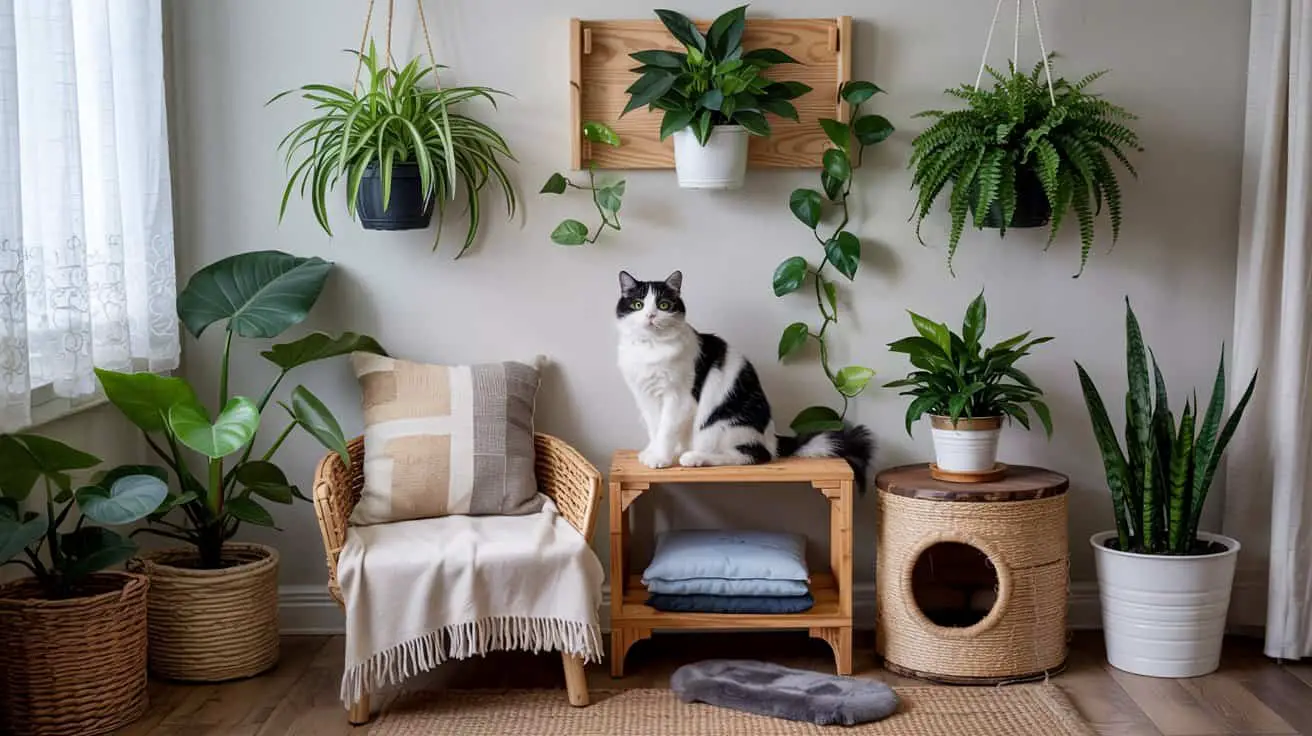
A window seat with cushions, a side-table cat cave, or a bookshelf with a cozy cat bed built into a cubby can help your room remain stylish while giving cats more places to perch and rest.
This is ideal for foster parents who want their space to look calm and intentional — not chaotic.
Set Up a Sensory Enrichment Zone That Is Simple but Impactful

Rescue cats often need gentle enrichment, not overstimulation. Create a small zone for low-stress play: a rotating selection of toys, a few vertical scratchers, a cardboard scratch box, and slow-moving wand toys.
For sensory comfort, include:
• A sisal scratch post at different heights
• A crinkle tunnel for exploration
• Silvervine or catnip pillows for play bursts
• Soft wool balls or feather toys for gentle confidence-building
The key: keep enrichment visible and accessible, but not overwhelming. The cat chooses the pace.
Incorporate Plants and Natural Elements for a Calming Atmosphere

As long as the plants are safe for cats, greenery transforms a room into a therapeutic environment. Spider plants, Boston ferns, and cat grass add life and texture.
Place trailing plants high and climbing-safe, and keep non-toxic leaves accessible to cats who enjoy nibbling — this works especially well for indoor-only rescues who miss nature.
Natural textures like linen curtains, wooden shelves, wool blankets, and bamboo hideouts help the space feel grounded and comforting.
Create a Dedicated Feeding + Litter Zone That Reduces Stress

Most rescue cats thrive when their core needs are separated.
Place the litter box in a quiet, low-traffic corner — ideally not beside noisy appliances. Use a high-sided or top-entry style for shy or messy cats.
Place food and water on the opposite side of the room. Elevated feeding bowls can help nervous cats feel safer while eating.
A small mat, a simple storage basket, and clear routine help cats feel secure and reduce unwanted behaviors.
Make Use of Windows — They Are Natural “Therapy Screens”

A window perch is worth gold for rescue cats. It gives them entertainment, sunlight, warmth, and gentle stimulation without requiring interaction.
Install a sturdy sill hammock, a cushioned platform, or a built-in bench beneath the window. Add soft blankets and, if possible, a sheer curtain to filter bright light.
For cats transitioning from outdoor life, a window perch often becomes their favorite “comfort zone.”
Final Thoughts
A functional cat space doesn’t need to be complicated — it needs to be thoughtful. When you create vertical pathways, calm corners, safe routines, and gentle enrichment zones, rescue cats begin to soften. They become curious, brave, playful, and open to connection.
You’re not just decorating a room.
You’re creating a sanctuary for healing.