
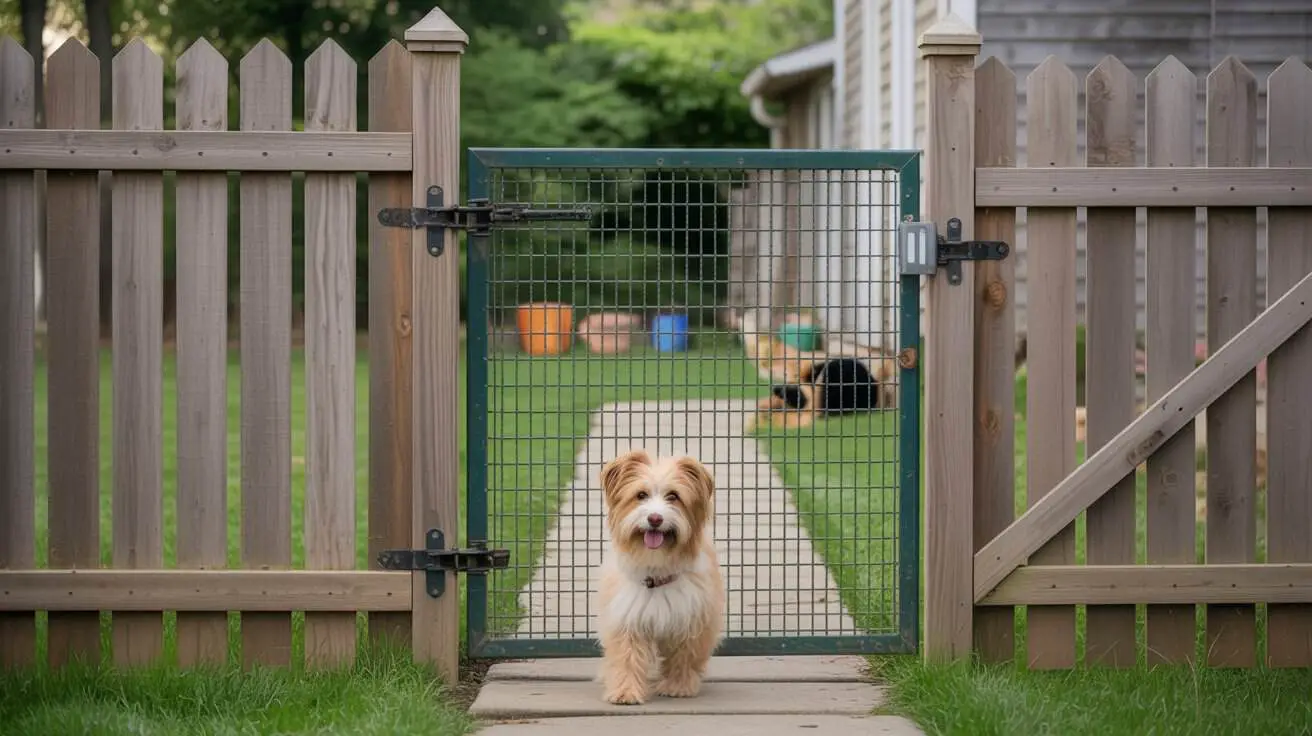
A side yard can be the most ignored strip of a home… until you have a dog who needs a quick, reliable potty break that doesn’t turn into a muddy mess. The good news: you don’t need a huge backyard to make something that’s clean, durable, and actually looks intentional. With the right base, drainage, and a little planning, side yard dog run ideas can stay green-ish (or at least “not gross”), even through spring rain and summer heat.
This article is for real homes: narrow side yards, awkward slopes, renters who can’t dig up everything, families who want low maintenance, and anyone who’s tired of wiping paws every single time.
Start With the “Dry Core” Layout (A Straight Run With One Job)
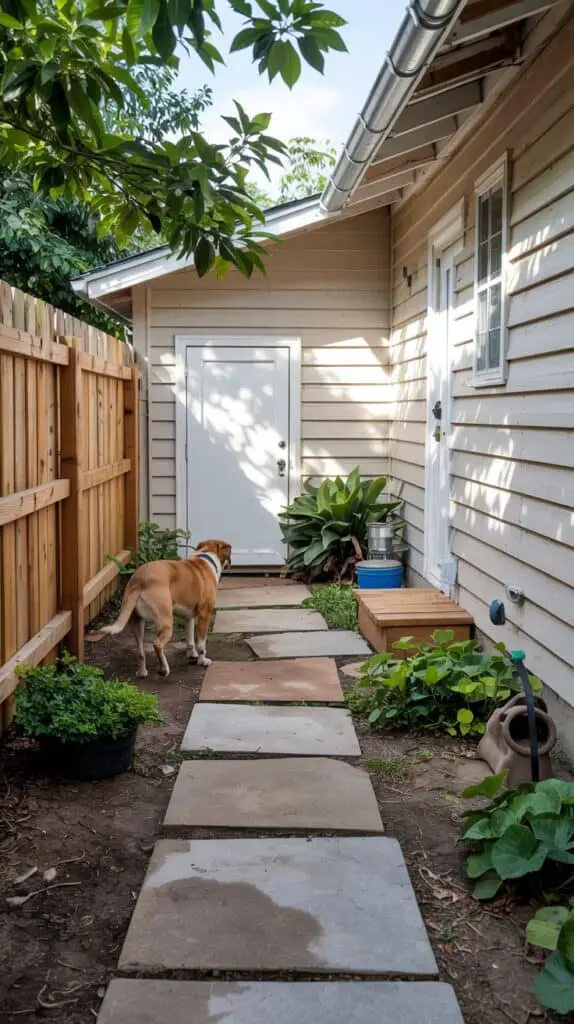
Before materials, decide what this space is for. In most homes, the side yard dog run works best when it does one job well: a direct route from door → potty zone → easy clean-up.
Keep it simple:
- A clear path from the back door or side door (no tight turns if your dog sprints out excited).
- A potty zone at the far end (so the rest stays cleaner).
- A small “hose + bin” corner for pickup supplies.
Even if you’re using small dog run ideas on a budget, the layout matters more than fancy finishes. When the run is straight and obvious, your dog learns faster, your shoes stay cleaner, and your yard doesn’t get randomly “chosen” as the bathroom.
If your side yard is very narrow, aim for a minimum walking lane that still lets your dog turn around comfortably. You can keep the design visually calm by choosing one main surface material and repeating it throughout, rather than patching together leftovers.
Build a Mud-Free Dog Yard With a Drainage-First Base
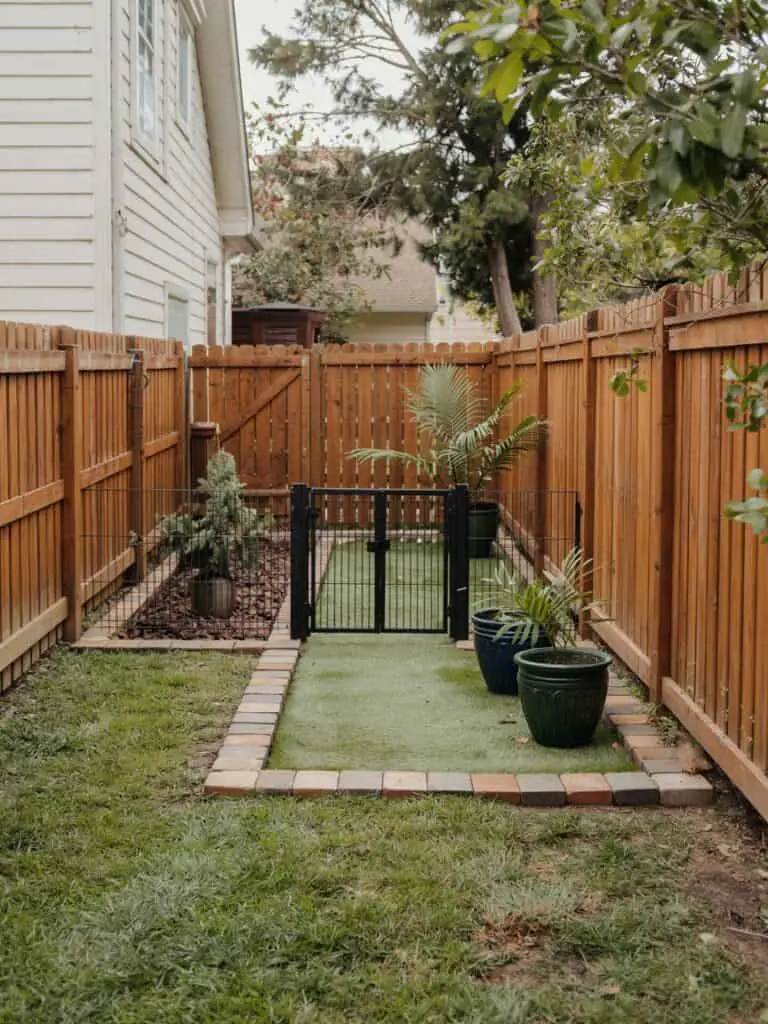
Most “mud free dog yard” problems aren’t surface problems—they’re base problems. Mud happens when water sits and churns under paws. So the real win is building a base that drains.
A strong, common setup:
- Remove loose topsoil where possible (even just the worst areas).
- Add a compacted layer of crushed stone (often called road base or decomposed granite depending on region).
- Add a leveling layer (finer gravel or screenings).
- Top with your finish surface (turf, pavers, gravel, etc.).
If you can’t dig deeply (hello, renters), you can still improve drainage by adding a thin gravel layer in the lowest spots and using a permeable top layer. The goal is for water to move down and away, not sit on top like a sponge.
Pro tip from lived-in yards: identify where water already wants to go after rain. Don’t fight it—work with it. If the side yard slopes toward the house, that’s when you want to be extra thoughtful and redirect water away from the foundation.
Artificial Turf Dog Run That Doesn’t Smell (Yes, It’s Possible)
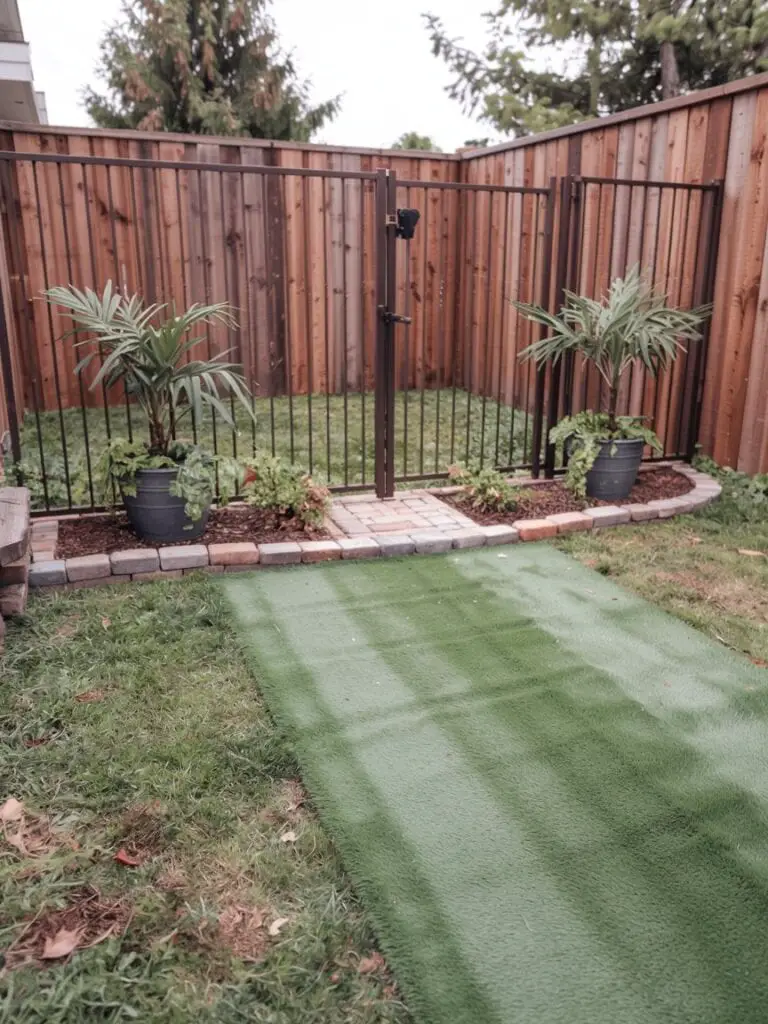
An artificial turf dog run is popular for a reason: it looks green, it’s fast to install compared to full landscaping, and it can stay tidy if it’s built correctly.
The smell issue usually comes from one of two things:
- Turf installed directly on soil (so it stays damp and holds odor)
- No way for urine to drain and be rinsed through
If you’re going turf, prioritize:
- A compacted crushed rock base for drainage
- A proper drainage layer (even a small one helps)
- Infill that doesn’t trap odor as much (some options are more dog-friendly than others)
- A rinse routine (quick hose-downs prevent buildup)
For families, turf can be the “least drama” option—especially when spring rain turns everything else into a paw-print factory. It also photographs well for Pinterest boards because it looks clean and intentional.
If your dog always uses one corner, you can make that specific zone more rinse-friendly by adding a slightly more drainable base there, or even creating a tiny “potty station” inset so the rest of the turf stays nicer longer.
Pea Gravel Potty Lane (The Classic Low Maintenance Dog Run)
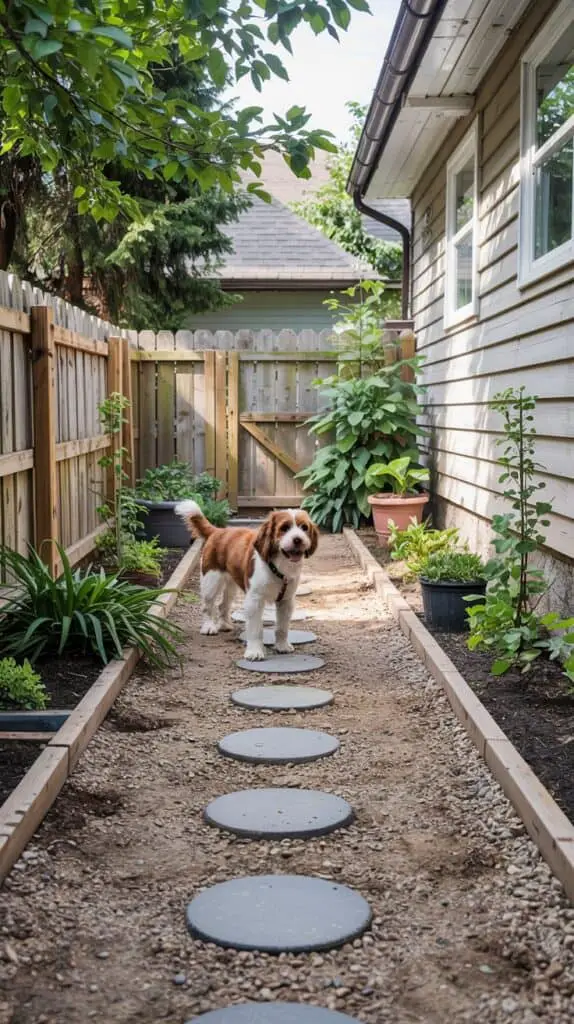
Gravel gets a bad reputation because people imagine it traveling everywhere. But in a side yard dog run, it can work beautifully—especially when it’s contained.
Why it works:
- Drains fast
- Doesn’t turn to mud
- Easy to rake and refresh
- Cheap compared to hardscaping
To make it feel finished (not like a construction zone):
- Install edging (metal, pressure-treated boards, or paver borders)
- Use a stabilizing underlayer (landscape fabric or a permeable grid, depending on your preference)
- Choose gravel that’s paw-friendly (pea gravel is common for comfort)
A nice visual trick: pair gravel with a simple stepping-stone path down the center. That gives humans a clean walk line and makes the space look designed. It’s one of those small dog run ideas that feels “on purpose” without being expensive.
Paver + Gravel Combo for a Clean Walkway and a Potty Zone
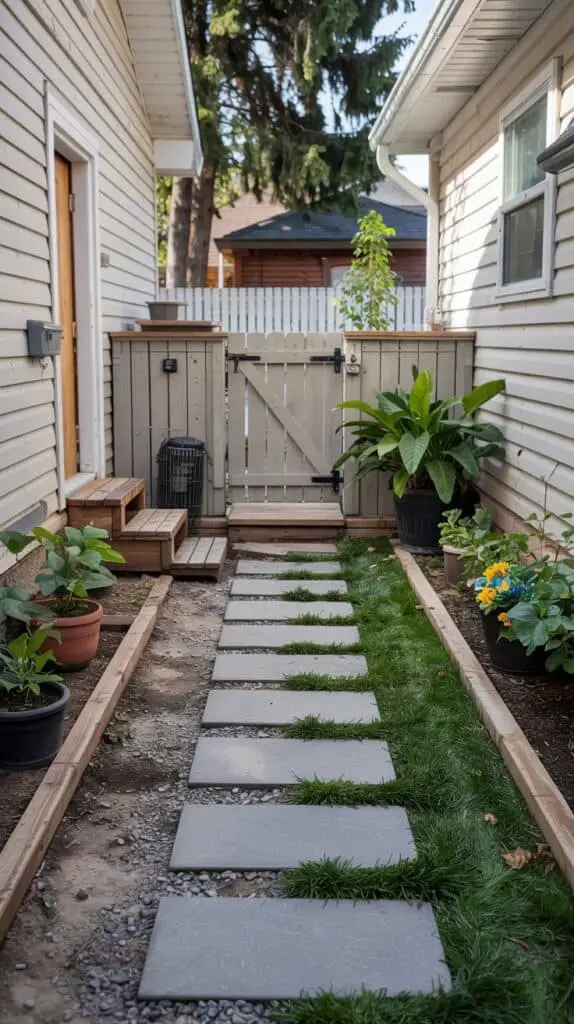
If you want a mud free dog yard but you’re not trying to build a full patio, a combo approach is super practical: pavers for the main walking path, gravel (or turf) for the potty zone.
This setup stays green-ish visually because it’s neat, and it stays functional because you’re not asking one material to do everything.
A simple plan:
- Paver strip from the door to the back of the yard (your clean “human lane”)
- Potty zone on one side or at the end (gravel or turf)
- Easy-access gate so you’re not dragging bins through the house
This also works well if you’re juggling kids, groceries, or morning chaos. You get a clean route that doesn’t become slippery mud.
Decomposed Granite Dog Run That Looks Like Landscaping
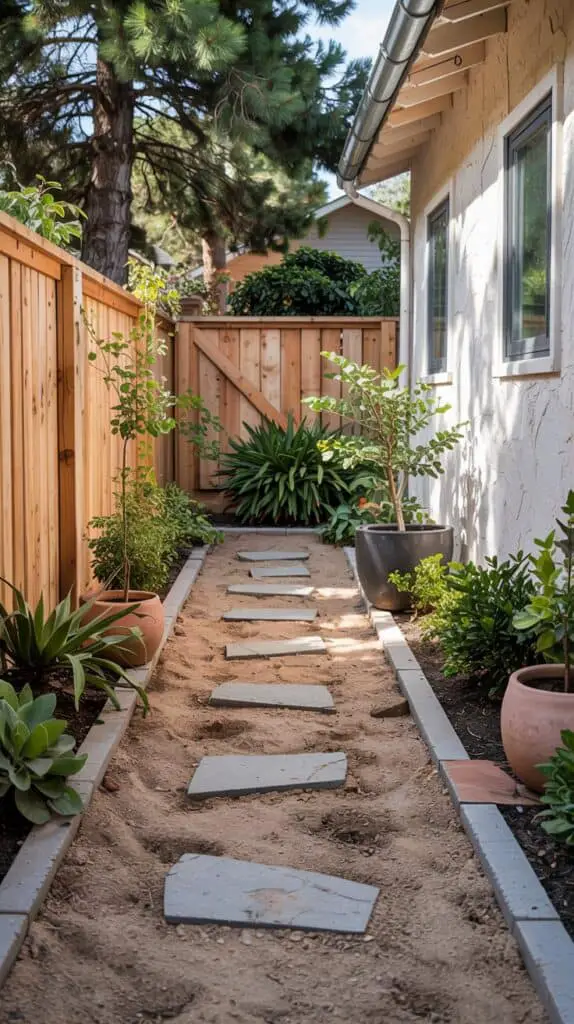
Decomposed granite (DG) is one of the most visually intentional low maintenance dog run surfaces—when it’s installed and compacted correctly.
Why people like it:
- Natural look that blends with drought-tolerant landscaping
- Drains better than soil
- Can feel smooth and tidy
But it’s not magic. DG needs:
- A compacted base
- Proper edging (or it will migrate)
- Occasional top-ups and raking
If you want the side yard to look like part of the home’s landscaping (not a “dog zone”), DG plus a few large planters or a narrow border of hardy plants can be a really clean aesthetic.
Mulch Done Right (Best for Light Use or Small Dogs)
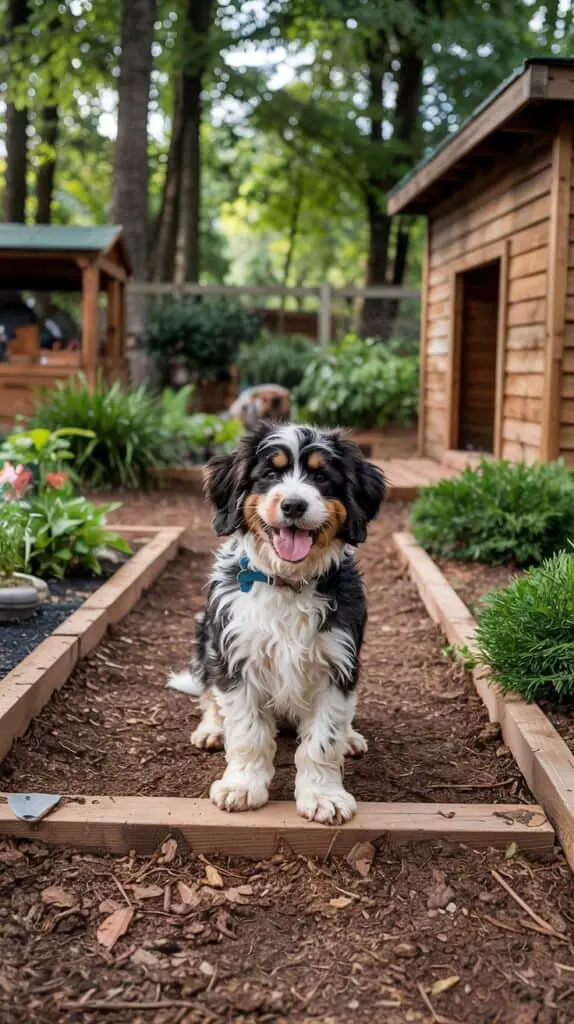
Mulch is comfortable and natural-looking, but it’s not always truly “mud-free” unless you manage the base and accept that it’s a refreshable surface.
Mulch can be great for:
- Small dog run ideas for lighter dogs
- Families who want a softer, quieter surface
- People okay with seasonal maintenance
To keep it cleaner:
- Install a drainage-friendly base layer (even thin gravel helps)
- Use edging so mulch stays in the run
- Expect to top up (especially after heavy rain)
Avoid mulch if your dog eats it constantly or turns it into a digging hobby. In that case, gravel or turf will save your sanity.
A Renter-Friendly Dog Run You Can Remove Later
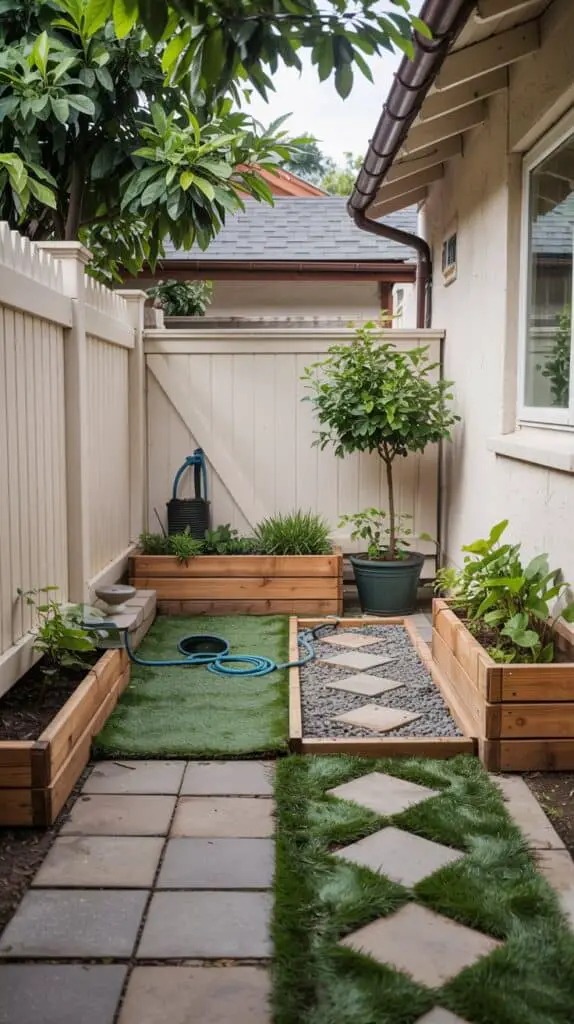
Renters can absolutely create side yard dog run ideas that work without permanent changes. Think “contained system” instead of “full renovation.”
Renter-friendly strategies:
- Use temporary fencing panels or a freestanding dog fence run
- Lay down a removable base: interlocking deck tiles, rubber pavers, or a contained gravel section in a border frame
- Use planters as “soft walls” to guide movement without digging holes
For the surface, consider:
- Interlocking outdoor tiles for the walkway
- A small artificial turf dog run mat system for the potty area
- A bin-and-hose station that doesn’t require mounting anything
The key is making it look tidy: keep materials consistent, hide supplies in a simple deck box, and avoid clutter. Renter-friendly doesn’t have to look temporary.
Small Dog Fence Ideas Backyards Style (But Adapted for a Side Yard)
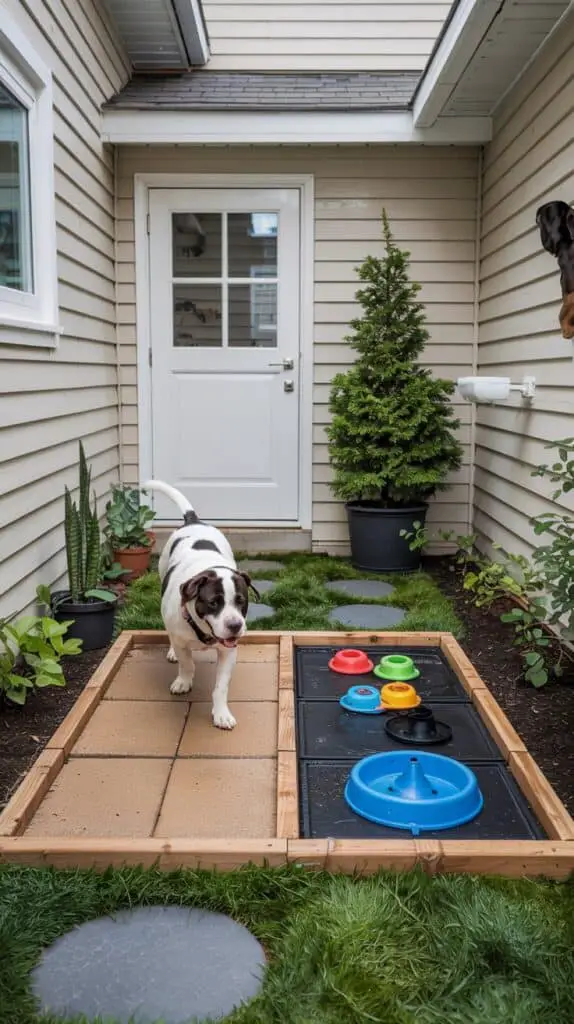
Side yards are tricky because they’re narrow and often already bordered by a side fence. You don’t always need to fully “fence” the run—you might just need to secure the openings.
Practical dog fencing ideas for side yards:
- Add a dog gate outdoor at the front and/or back to create a contained corridor
- Reinforce gaps under existing fencing (dogs are creative)
- Use simple latch hardware that’s easy for adults, hard for paws and noses
If you’re trying to create a fenced off area for dogs, focus on:
- The access points (gates and gaps)
- The “temptation zones” (trash cans, compost, neighbor’s cat)
- Any spots where your dog can jump or climb
For small dogs, fencing doesn’t need to be tall, but it does need to be tight. For bigger dogs, height matters and so does sturdiness—especially if they launch themselves at squirrels like it’s a sport.
The “Two-Zone” Design: Play + Potty Without Turning Everything Into a Mess
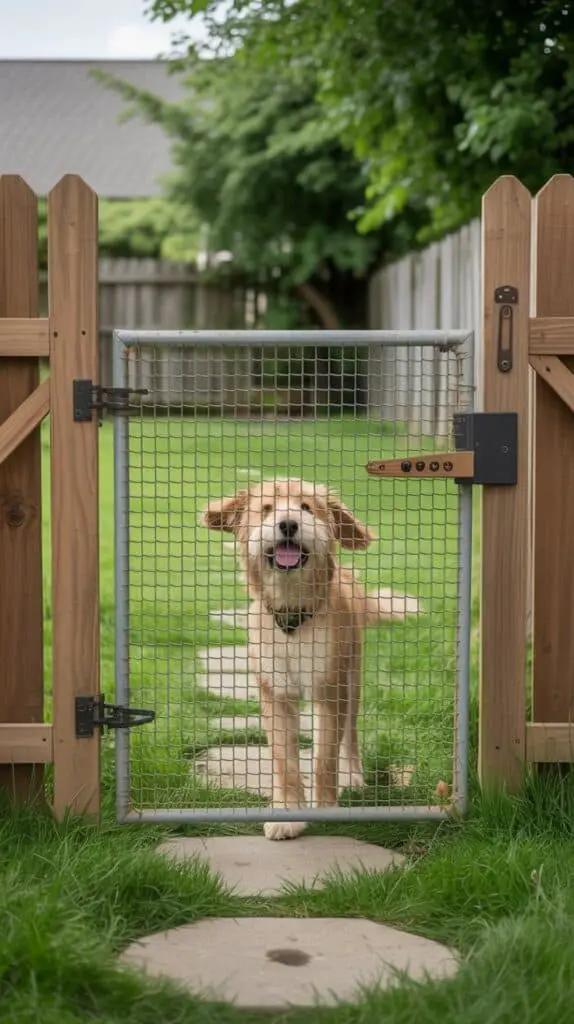
Some dogs don’t just go out to potty—they go out to zoom. If that’s your home, the two-zone layout keeps the mess contained.
Zone 1: Clean walkway + calm sniff space
Zone 2: Durable potty zone that’s easy to rinse
Ideas that help:
- Put the potty zone farthest from the door (so the high-traffic area stays cleaner)
- Add a visual divider (a row of pavers, a low border, or planters)
- Keep toys out of the potty area so they don’t get… gross
This is especially helpful for families who want a low maintenance dog run that stays neat even when your dog is enthusiastic and the weather is not.
Shade and Cooling for Summer Heat (Because Side Yards Bake)
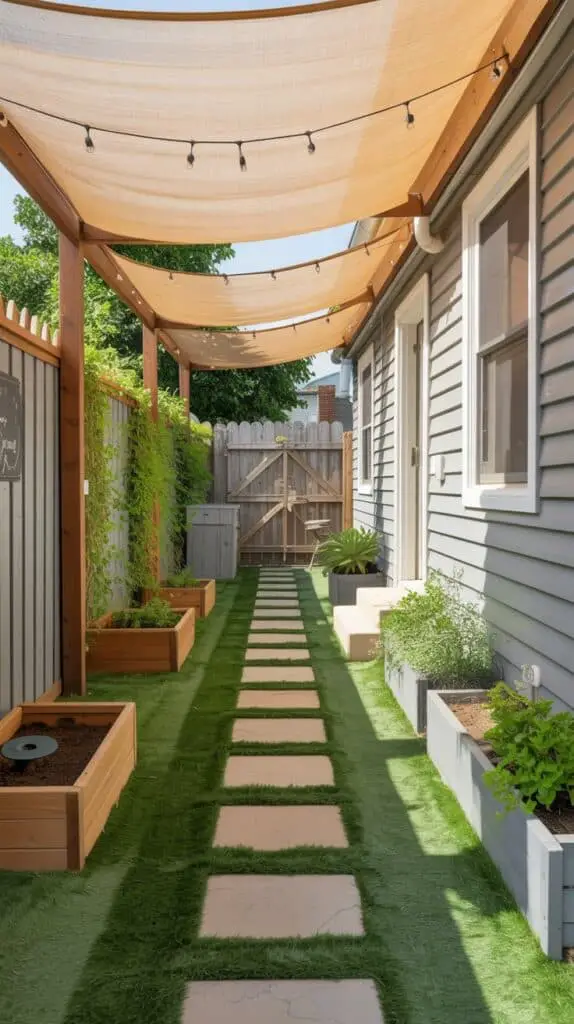
Side yards can turn into heat tunnels. A surface that’s mud-free in spring can become too hot in summer—especially artificial turf and pavers.
Simple cooling upgrades:
- Add shade cloth between fence lines (removable and renter-friendly)
- Use a pergola-style frame if you own the home
- Plant vertical greenery in planters (it cools and looks nicer)
- Create a small shaded “rest spot” with a raised dog bed
If you’re using artificial turf dog run materials, test the temperature on a hot day with your hand. If you can’t comfortably keep your hand there, your dog’s paws won’t love it either. Shade often matters more than the surface choice.
Keep It Looking “Green” With Minimal Planting (Without Inviting Chaos)
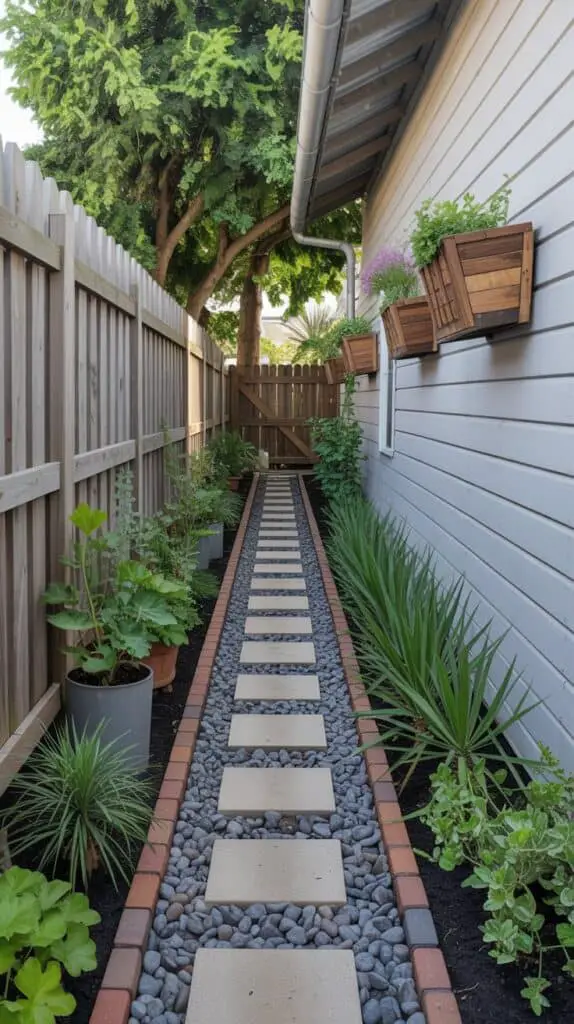
If “stays green” is part of your goal, you can add greenery without turning the run into a muddy garden bed.
Low-drama ways to do it:
- Tall planters along the fence line (keeps roots protected and paws out)
- Narrow gravel border with tough plants (for owners, not for digging dogs)
- Wall-mounted planters (if allowed) to free up floor space
This keeps the space visually intentional—more like a side garden path than a dog corridor. It’s one of the easiest ways to make side yard dog run ideas Pinterest-worthy without clutter.
Maintenance That Actually Fits Real Life (5-Minute Habits)
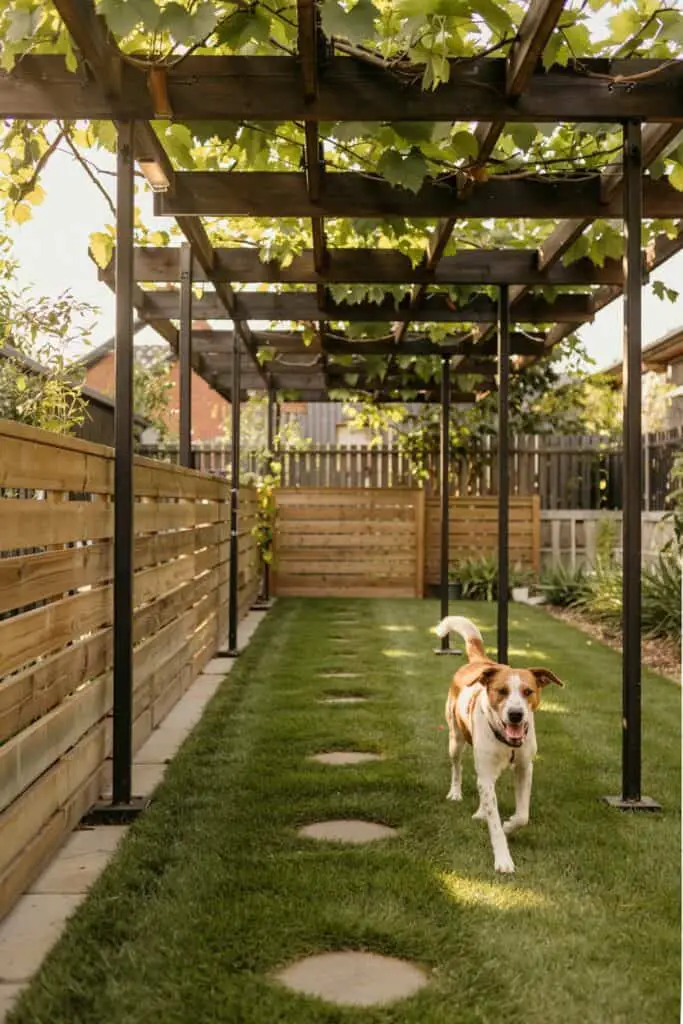
The best dog run is the one you’ll maintain without resentment.
A realistic routine:
- Daily: quick pickup (the less time it sits, the easier everything stays)
- Weekly: hose rinse if you have turf or pavers; rake if you have gravel or mulch
- Monthly: check edges, fix low spots, refresh deodorizer if needed
Keep a small station outside:
- Bags
- Small scoop or pooper tool
- A hose attachment or watering can
- A covered bin
When cleanup is easy, the whole setup stays cleaner—and you’ll actually use it the way you planned.
Conclusion
The secret to side yard dog run ideas that stay green and mud-free isn’t one perfect material—it’s a smart layout, a drainage-friendly base, and a surface that matches your dog’s habits. Whether you choose an artificial turf dog run, gravel, DG, or a paver combo, aim for simple, sturdy, and easy to clean. A narrow side yard can become the most functional part of your home when it’s designed for real weather, real dogs, and real life.