
Spring has a way of making chicken chores feel lighter—until you realize your shed setup is still stuck in winter mode. Muddy boots, scattered feed scoops, and nest boxes that somehow collect every stray feather in the county. The good news: a spring refresh doesn’t have to mean a full rebuild. With a few smart layout choices, you can create a bright, organized shed that’s easier to clean, calmer for your birds, and more pleasant to step into every day.
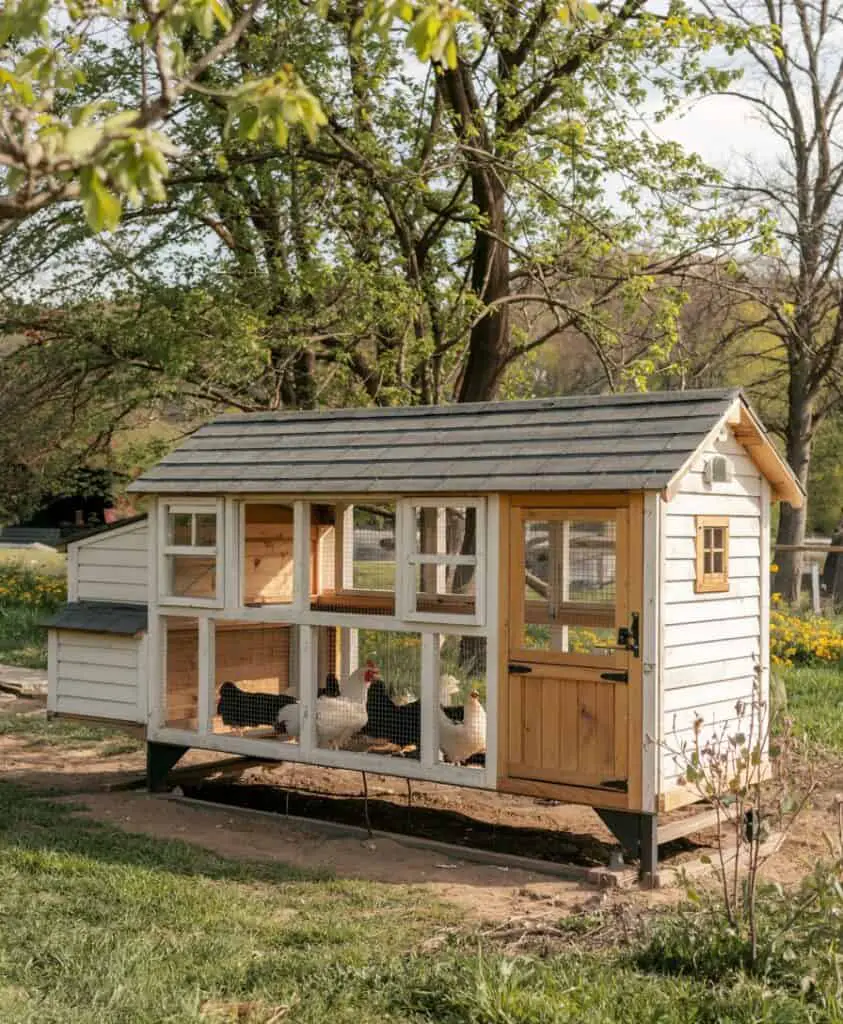
These chicken shed ideas focus on clean nesting rows, vertical chicken roost solutions, and layouts that work in real backyards. Think “mini farm layout” energy—simple, practical, and visually intentional without feeling precious. I’m assuming a typical suburban or small-acreage home where the chicken shed sits near a garden path or backyard fence line, and you want it to feel tidy and spring-ready without turning into a weekend-long construction project.
Start with a bright, hose-friendly shed “shell”
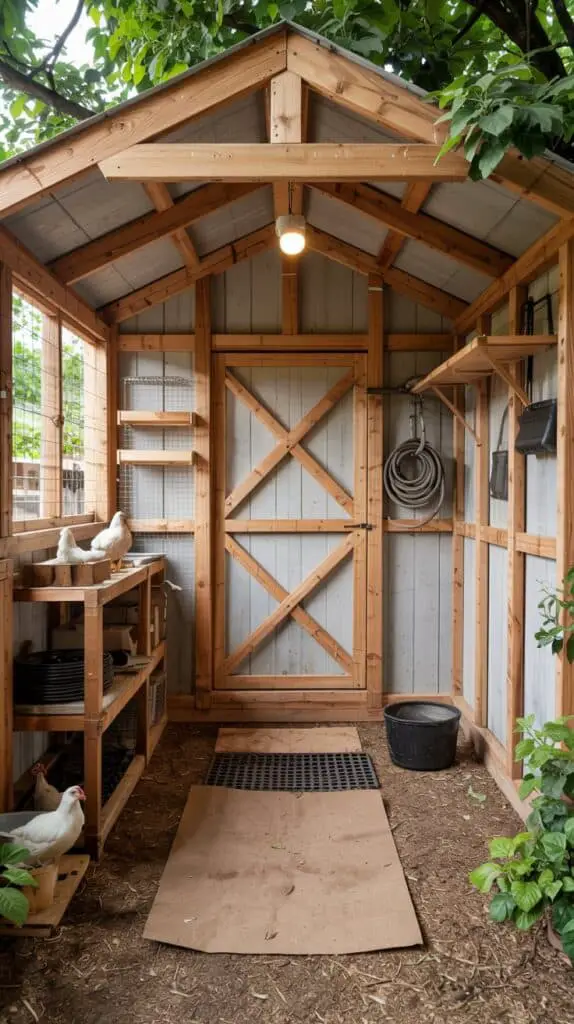
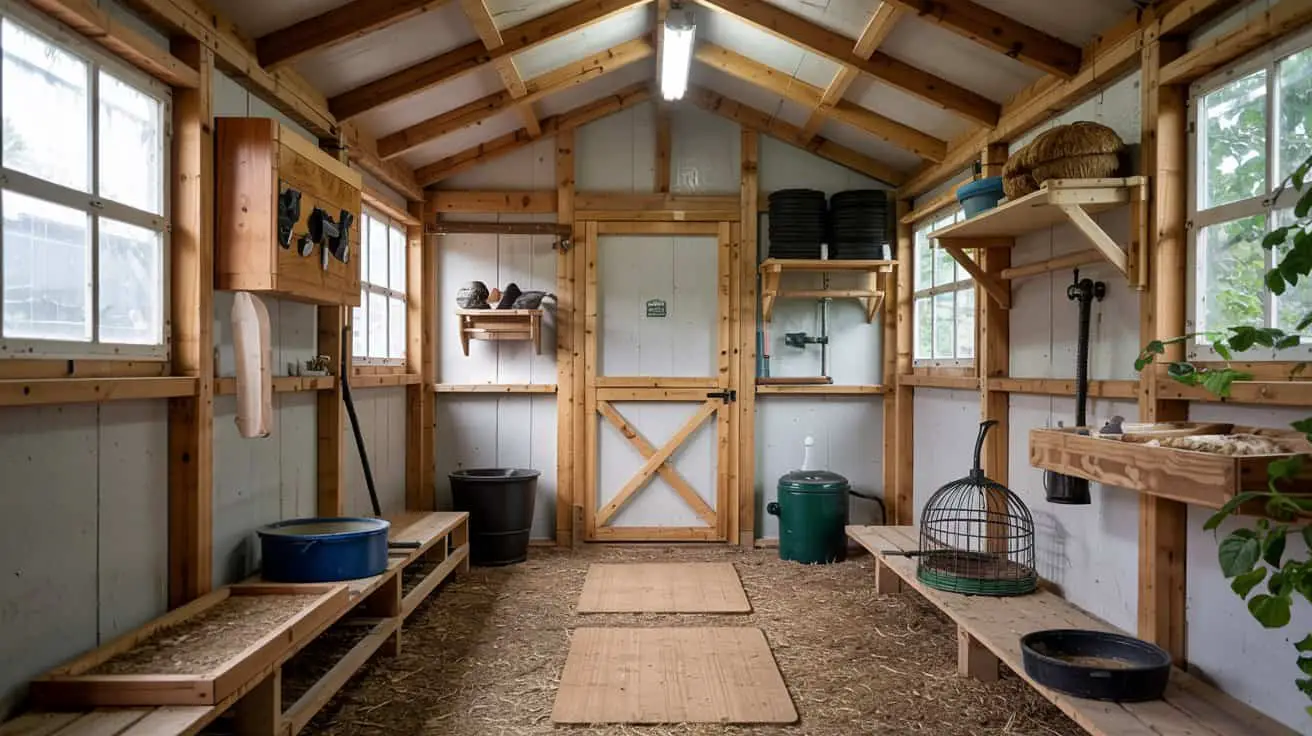
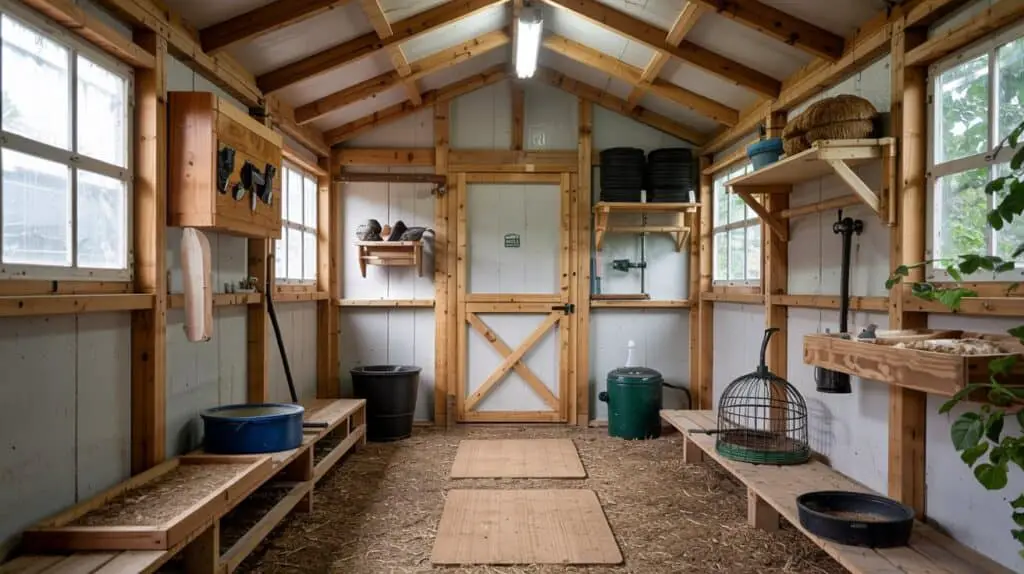
Before you add anything clever, make the shed itself easier to live with. A spring-ready shell is basically: light, washable, and not full of places for dust to hide. If your shed is older or multipurpose, you can still get the effect with small changes.
Paint or lime-wash interior walls a pale color so you can actually see dirt before it becomes a situation. Add a simple rubber threshold at the door to reduce wind-blown litter. If your floor is bare plywood, a sheet of thick vinyl flooring or a stall mat can make cleaning noticeably faster. Even a loose-laid mat you can pull out and shake works well for budget-aware setups.
If your shed doubles as storage, keep chicken items on one wall only. A visually clean space helps you stay consistent with chores—because nothing’s more demotivating than stepping into a cluttered shed with mystery piles.
Build clean nesting rows that don’t invite mess

Clean nesting rows are the heart of an organized spring shed. The goal is to make nesting predictable for hens and easy for you to spot-clean. A tidy nesting row is usually more about placement than fancy materials.
Mount nest boxes slightly off the floor so you can sweep underneath without drama. Line them up in a straight run (rather than scattered boxes) and keep the tops slanted so birds don’t lounge up there and add extra mess. If you can, add a simple “lip” at the front of each box to keep bedding from kicking out every time a hen turns around.
For easy-clean, think removable. Nest box pads or cut-to-size liners that lift out make spring maintenance much faster. You can still use straw or shavings, but the key is keeping it contained. If you’re working with a loafing shed chicken coop setup (open-front style), place the nesting row on the most sheltered side so wind doesn’t blow bedding everywhere.
Add vertical chicken roost space to free up floor area
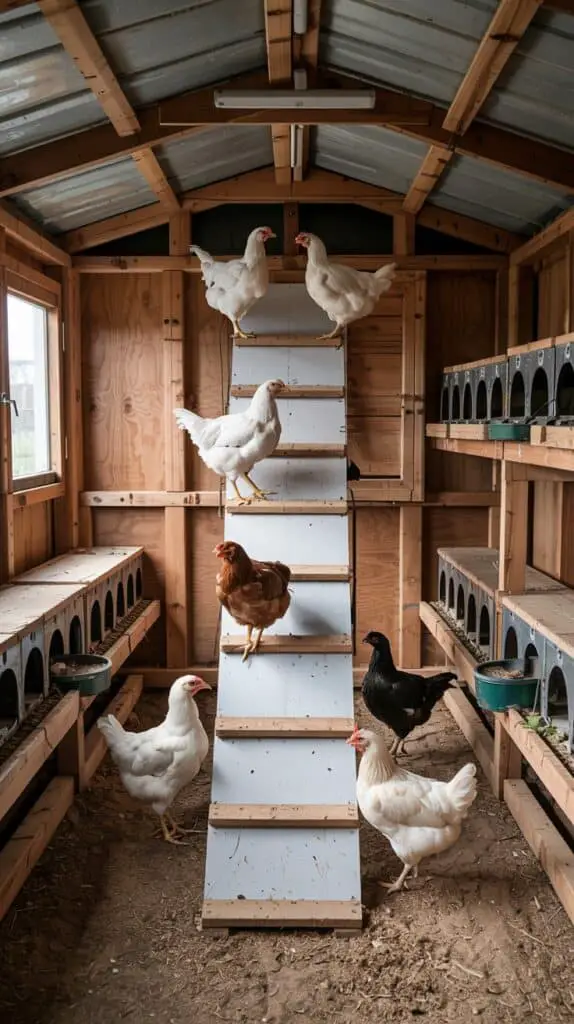
Floor space is precious in a shed. Vertical chicken roost designs let you use height instead of widening the footprint, which is especially helpful if you’re trying to stay renter-friendly or you’re working inside an existing structure.
The trick is to plan roosts like “steps,” not a straight ladder. Birds can hop up comfortably, and droppings fall down and away (instead of onto each other). Use 2x4s with the wide side up for comfort in cooler seasons, and keep the highest roost lower than your nesting row tops so they don’t decide nest boxes are the best sleeping spot.
Under-roost management is where you win the spring clean game. Put a droppings board under the roosts—just a flat board you can scrape daily or every couple days. If you want it extra clean, cover the board with a thin layer of sand or a sheet of linoleum you can wipe. This is one of those chicken shed ideas that feels small, but it changes your routine fast.
Create an easy-clean “drop zone” walkway
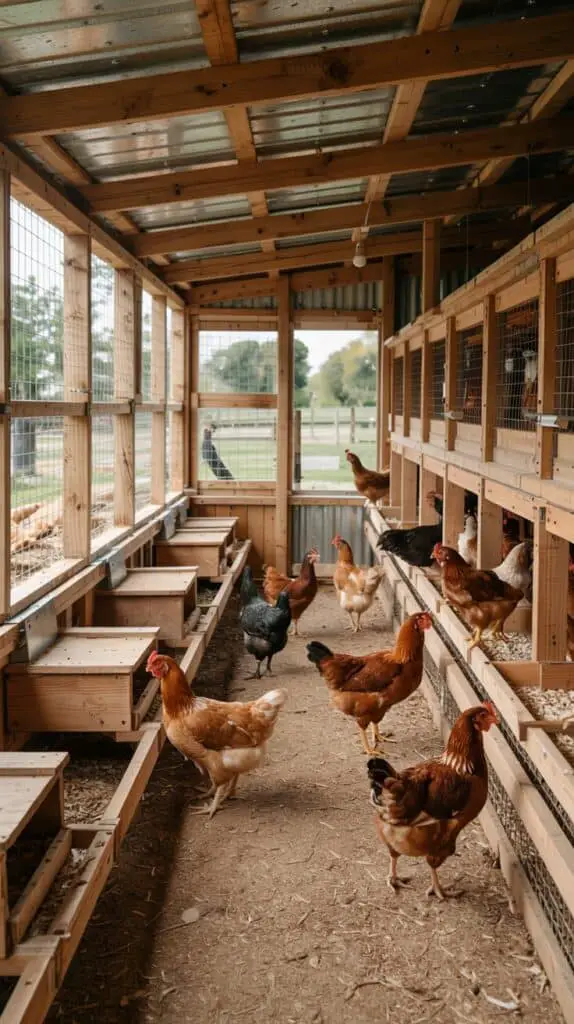
If you want your shed to stay clean, you need a predictable path for your feet and tools. A simple walkway—even just a clear strip—keeps you from stepping through bedding, feed, and dust zones.
Plan a straight line from the door to the egg collection point. Keep that corridor as open as possible. Hang tools vertically (small broom, dustpan, scoop) so the floor stays clear. This is where “visually intentional, not cluttered” actually matters: if you can see the floor, you’ll clean it more.
If your shed is narrow, keep one side “bird zone” (nesting rows + roosts) and one side “human zone” (feed bin, water station, small shelf). That separation alone reduces mess migration.
Use a simple chicken moat idea to reduce mud at the shed
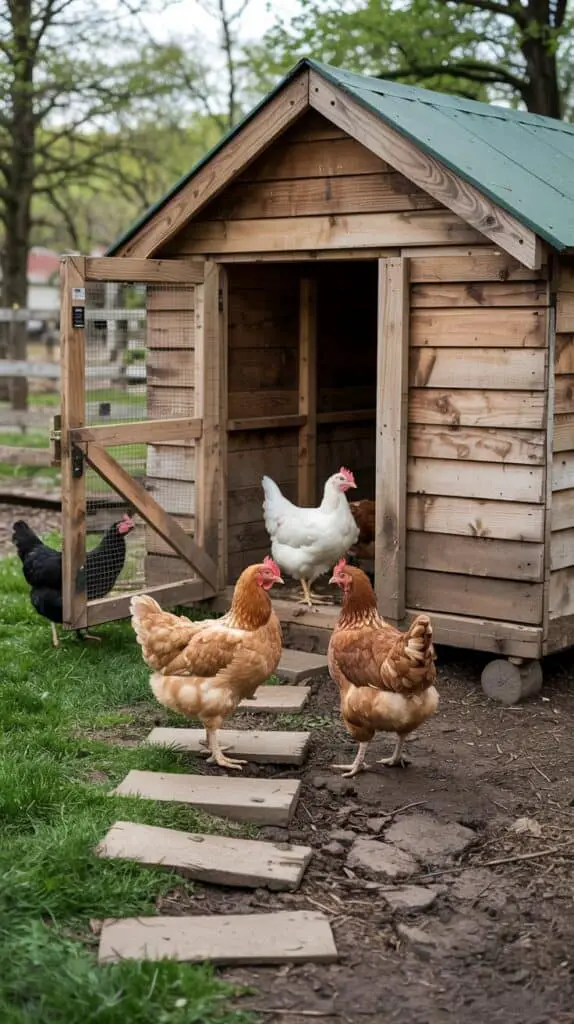
Spring mud is the enemy of clean sheds. If your birds track wet soil right to the doorway, your interior will never stay tidy. A chicken moat doesn’t have to be complicated—it’s essentially a managed strip around the coop or shed that takes the wear instead of your whole yard.
The simplest chicken moat idea: a perimeter run lined with mulch, wood chips, or pea gravel, with a small gate that routes birds away from your main grass. You’re creating a “traffic lane” that drains better and keeps mud from forming right where you step in.
Even if you can’t build fencing, you can place stepping stones, a gravel pad, or a sacrificial chip area directly outside the door. It’s not glamorous, but it’s very effective, and it fits budget-aware setups.
Set up a calm, contained feed station that doesn’t explode everywhere
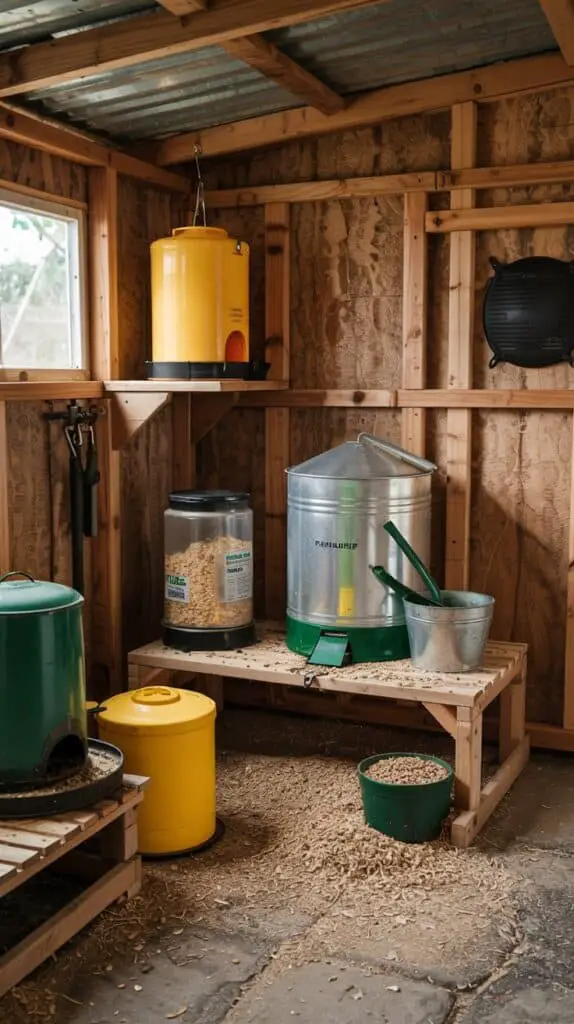
Feed is one of the fastest ways a shed turns messy. The goal is containment and easy refills. Use a sealed bin with a scoop that lives inside the bin (not on a shelf collecting dust). If rodents are an issue, use a metal can with a tight lid.
Place the feed station on the human zone side, ideally on a low shelf or raised platform so it’s not sitting in bedding. If you’re dealing with damp spring air, add a small desiccant pack in the bin or just keep the lid sealed and off the floor.
If you have show chicken pens or separate areas for specific birds, label feed containers clearly. Spring is when routines shift (more greens, treats, different protein levels), and labels stop you from guessing.
Try “rooster cages ideas” that feel humane and clean
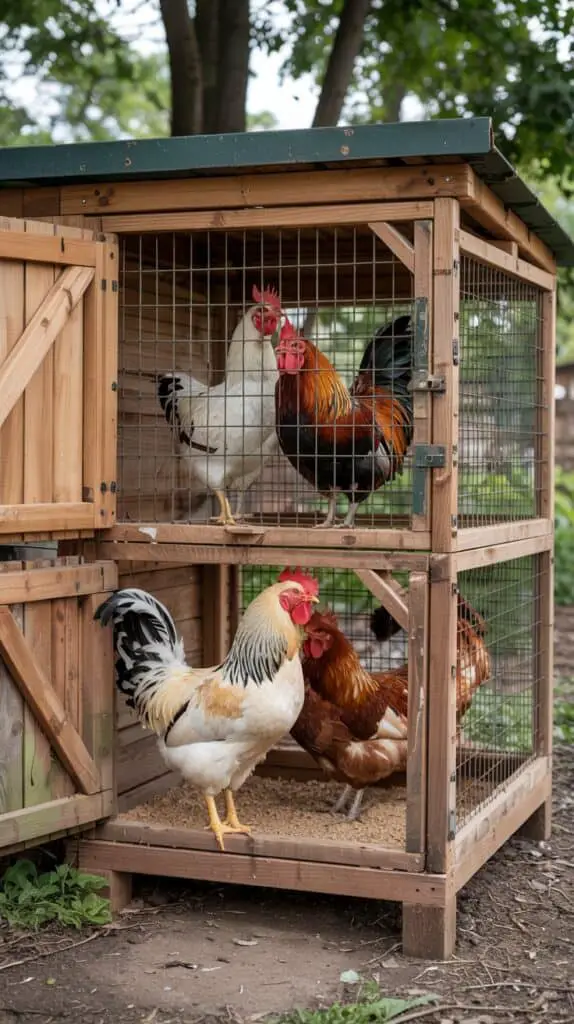
Sometimes you need separation—breeding plans, temperament issues, flock integration, or protecting a quieter bird. Rooster cages ideas don’t have to mean harsh, cramped setups. Think of them like clean, temporary pens with good airflow and easy access.
A practical approach is a sectioned area inside the shed or attached run using welded wire panels and a simple latch gate. Keep the floor easy to clean (mat, sand, or removable tray area) and provide a small roost bar so the bird can perch naturally. Place the pen so it’s not in the main footpath, but still easy to reach.
If you’re showing birds, show chicken pens are often cleaner because they’re designed for quick maintenance. You can borrow that logic: smooth surfaces, fewer crevices, and a setup that lets you remove bedding fast.
Design a mini farm layout for chore flow, not just looks
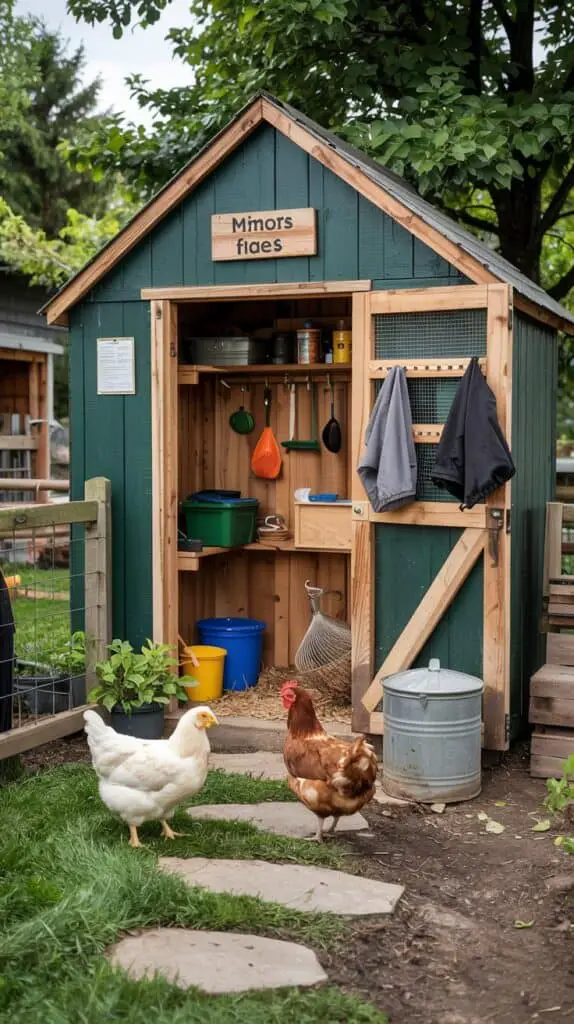
A mini farm layout sounds big, but it can be simple: where the shed sits, where you store supplies, and how you move. The goal is fewer back-and-forth trips and fewer chances to spill things.
Put the shed where you naturally walk already—near a gate, garden path, or driveway edge—so chores don’t feel like a trek. Store the most-used items closest to the door: scoop, treats, egg basket, small brush. Keep seasonal extras higher up or in a labeled tote.
If you have space, create a small “clean station” just outside the shed: a hook for gloves, a boot brush, and a lidded trash can for soiled bedding. This stops mess from traveling back into your house or garage.
Borrow clean lines from chicken house ideas buildings
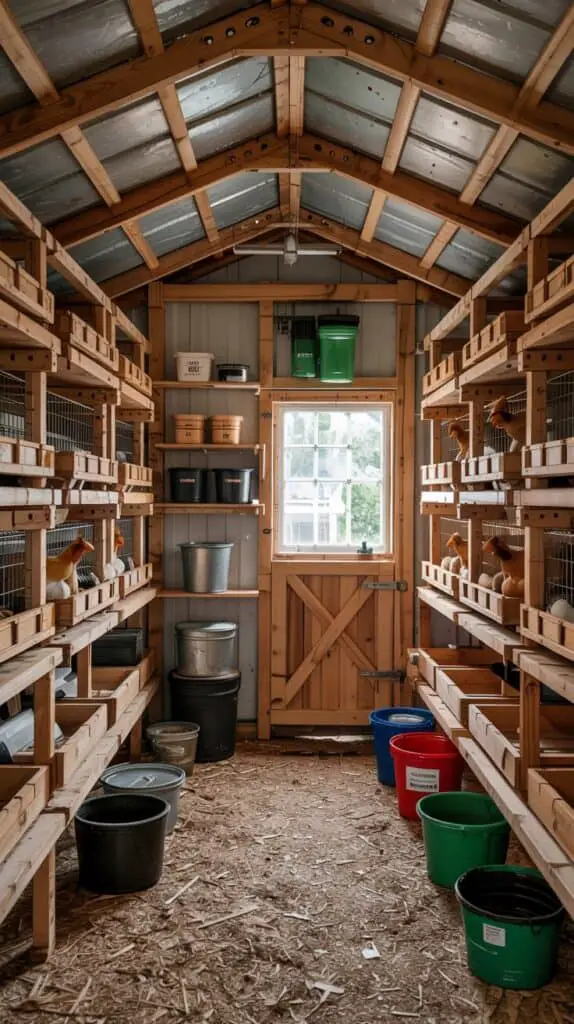
If you scroll chicken house ideas buildings online, the ones that look calm and tidy usually have the same thing: simple lines, repeating elements, and clear zones. You can recreate that without buying anything fancy.
Repeat materials. If your nesting rows are wood, keep the shelves wood too. Use matching bins or buckets (even if they’re inexpensive) so the space feels coherent. Hide the chaotic stuff—spare cords, random hardware—in one lidded tote.
This isn’t about aesthetics for social media. It’s about reducing visual clutter so you notice problems faster: a spill, a leak, a cracked egg, a pest issue. A shed that looks calm is usually easier to maintain.
Choose chicken house design details that make cleaning faster
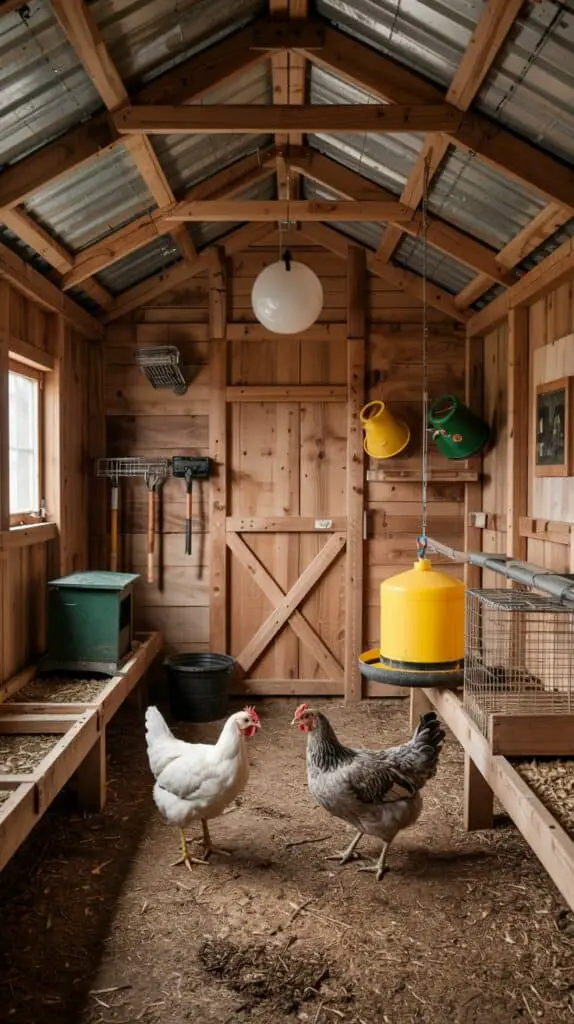
Chicken house design decisions can be tiny but powerful. Spring is the best time to tweak them because you’re already resetting routines.
Add hooks at shoulder height for tools, not low pegs you’ll ignore. Use one shelf with a raised edge so items don’t fall into bedding. If water spills are common, move the waterer to a spot where drips don’t soak litter—like a shallow tray or a washable mat.
Ventilation matters for cleanliness too. Good airflow reduces dampness, ammonia, and mildew. If your shed feels stuffy, add a simple vent near the top (covered with hardware cloth) and make sure it’s not blowing directly onto roosts.
Create a loafing shed chicken coop corner for daytime calm
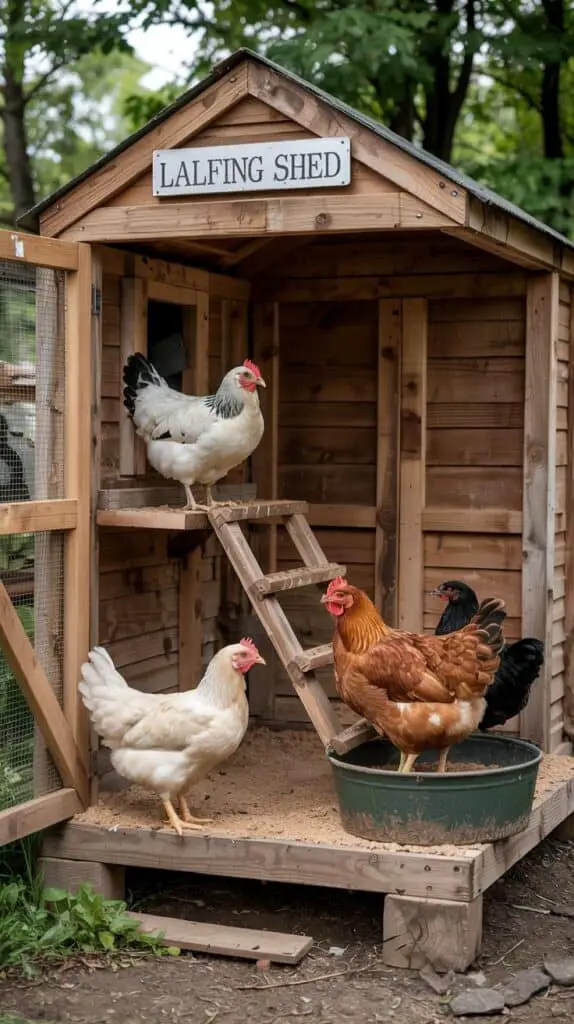
Not every shed needs to be strictly “sleep and lay.” A loafing shed chicken coop corner gives birds a place to get out of wind or light rain during spring weather swings. It also keeps them from crowding the doorway or perching in inconvenient places.
This can be as simple as a dry corner with a low platform, a dust bath tub, and a perch that isn’t the main nighttime roost. Keep it contained so dust bathing doesn’t become a shed-wide event—use a large tote or shallow bin with a lip.
A calm loafing zone can also reduce pecking and squabbles because birds have another place to go. In spring, when flock energy ramps up, that extra “room” helps.
Set up show chicken pens that stay tidy with minimal effort
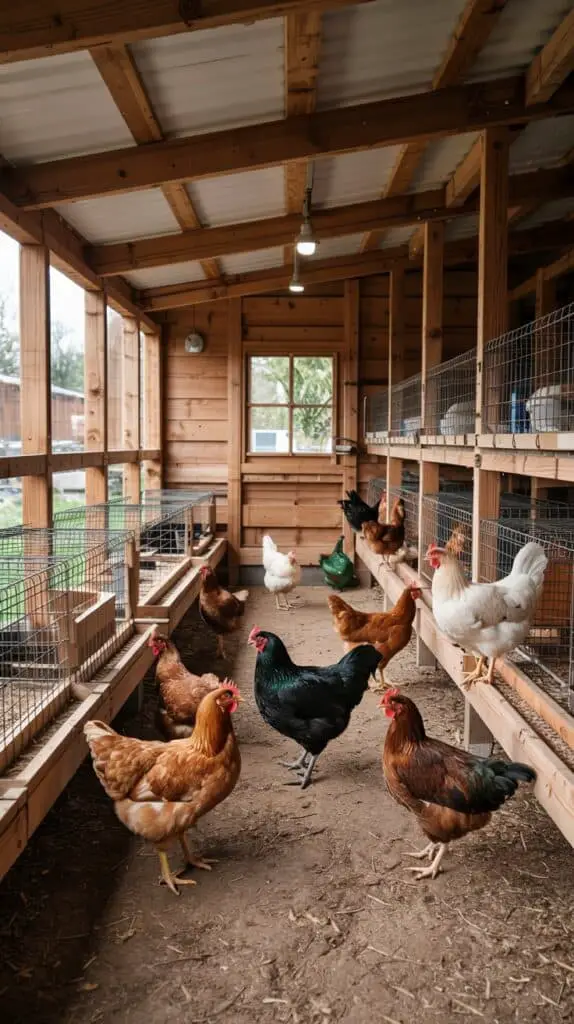
If you keep show birds or you just like a more controlled setup, show chicken pens can be integrated into a shed without turning it into a maze. The secret is modular panels and surfaces you can wipe.
Use wire panels that attach with clips so you can reconfigure seasonally. Keep bedding shallow and use removable trays or mats for faster changes. Place pens along one side wall so you can still maintain your walkway.
Even if you’re not showing, this style works well for broody hens, injured birds, or short-term separation. It’s a clean, flexible approach that fits many chicken shed ideas without requiring a permanent build.
Keep nesting rows and roosts aligned to prevent “mess drift”
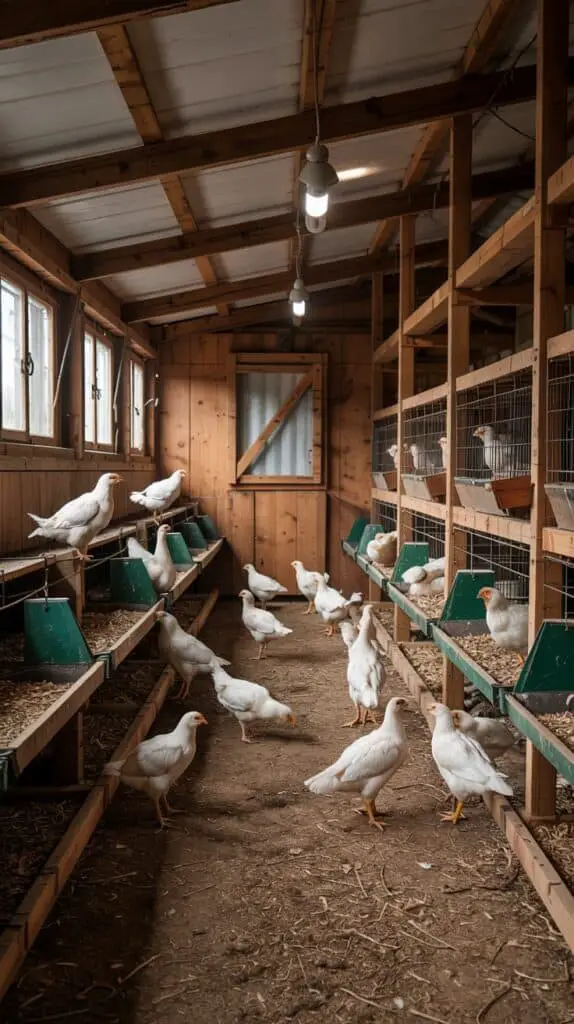
When roosts and nesting rows are placed randomly, the shed gets messy faster—droppings land where they shouldn’t, birds jump across zones, and bedding migrates everywhere. A simple alignment plan helps.
Put roosts on one wall and nesting rows on the opposite wall, or place nesting rows in a quieter, darker corner with roosts farther away. Keep the egg collection side accessible without stepping under roosts (you will regret it).
If you can only fit everything on one wall, arrange it vertically: nesting rows lower, then a clear buffer space, then roosts with a droppings board. That buffer keeps dust and debris from falling into nest boxes.
Make spring cleaning realistic with removable, repeatable systems
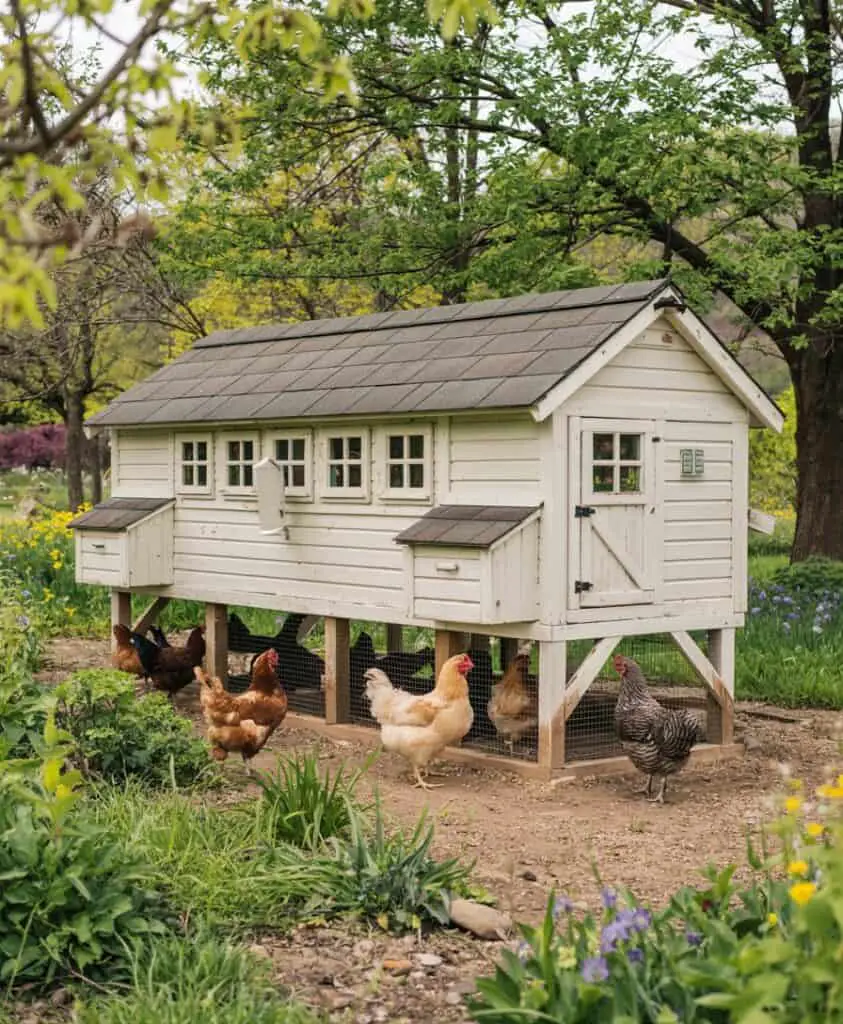
The best spring setup isn’t the one that looks perfect on day one—it’s the one you can reset in ten minutes. Removable parts make that possible.
Use a bedding system you can refresh quickly (shallow shavings you top off, or a removable liner in nest boxes). Keep one “cleaning kit” tote: scraper, gloves, extra liners, vinegar spray, small brush. Store it right where you’ll use it.
If you’re upgrading over time, prioritize in this order: droppings board under roosts, cleaner nesting rows, better feed containment, then exterior mud control (your chicken moat area). Each step builds on the last.
Conclusion
A spring-ready shed doesn’t have to be bigger or more expensive—it just has to be organized in a way that works with how chickens actually live. Clean nesting rows keep laying predictable, vertical chicken roost setups free up floor space, and a simple layout makes daily chores feel lighter. Start with one improvement you’ll notice immediately—like a droppings board or a cleaner nesting row—and let the rest build from there. By the time spring settles in, your shed can feel bright, calm, and easy to maintain in a way that fits real life.