
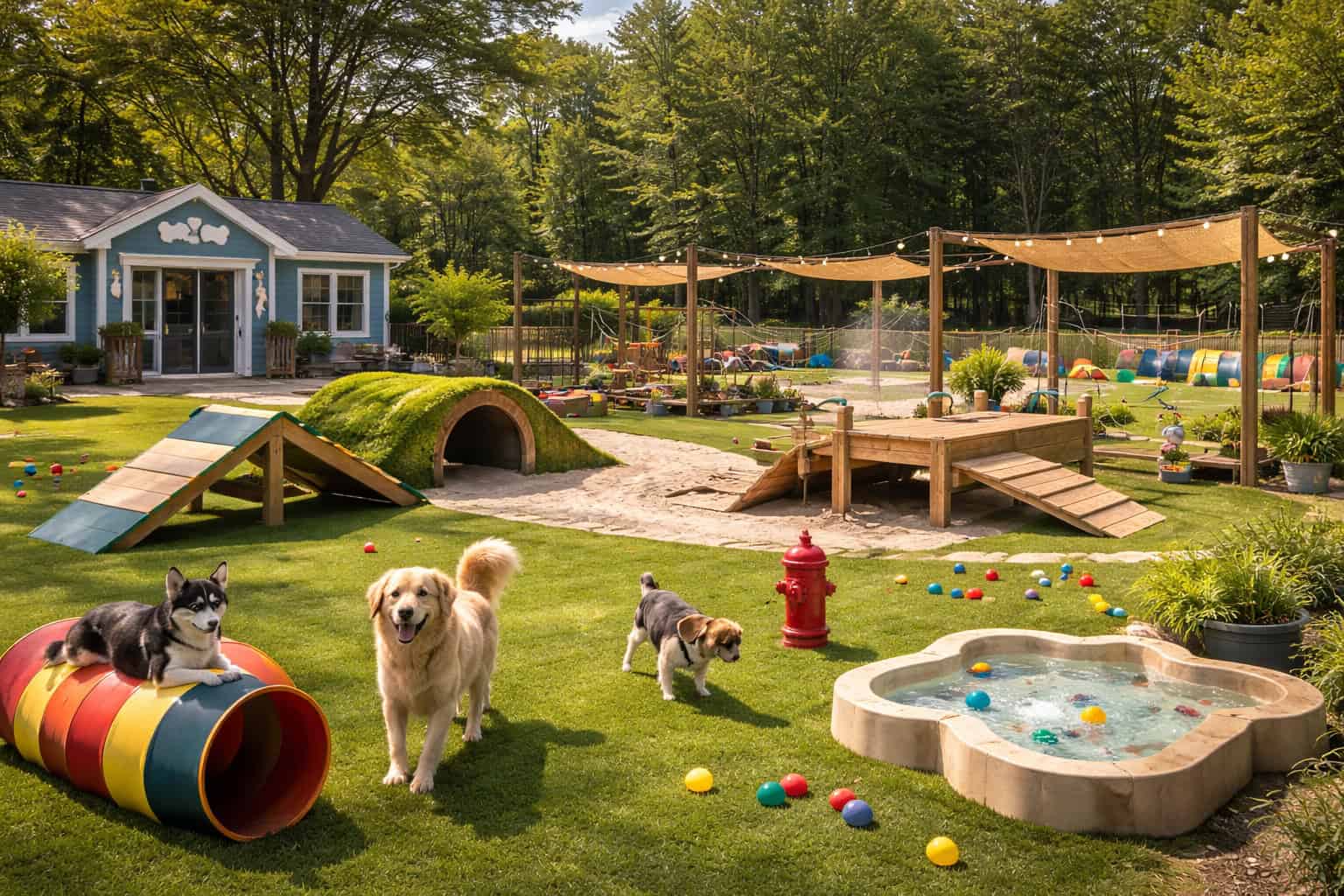
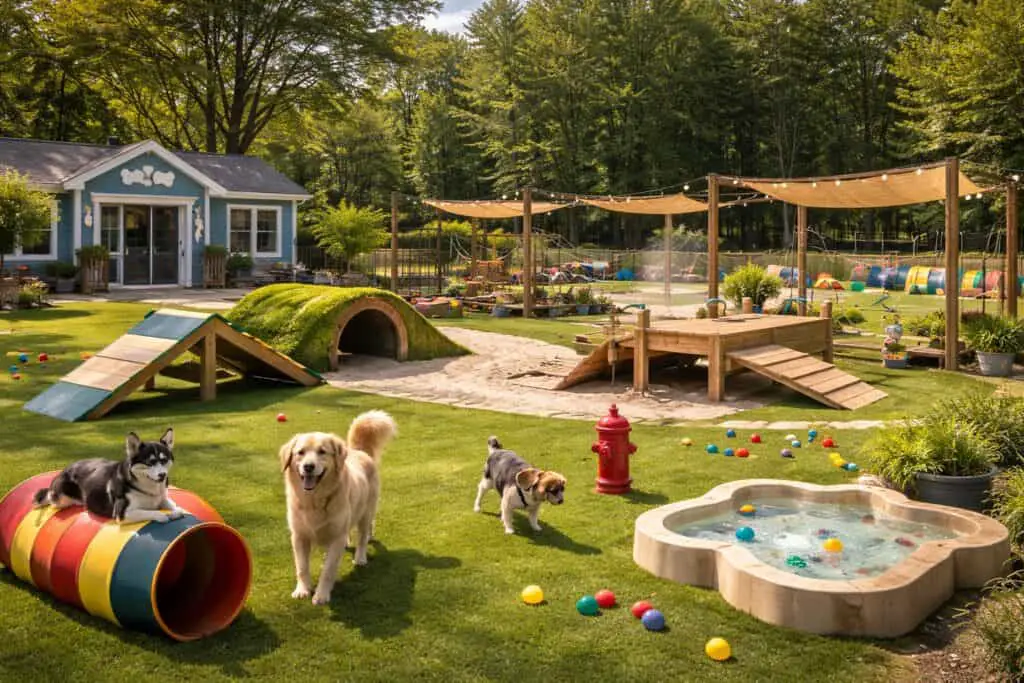
Designing a dog daycare or boarding yard isn’t just about fencing and open space. A well-planned outdoor dog area keeps dogs active, reduces stress, and makes supervision easier for staff. Thoughtful layouts also help separate different play styles, energy levels, and rest zones.
From shaded lounging spaces to splash zones and obstacle paths, the best dog daycare design ideas combine fun, safety, and structure. Here are creative dog play area designs that work beautifully for dog boarding facilities and outdoor dog daycare yards.
Separate Play Zones for Different Energy Levels
Not all dogs play the same way.
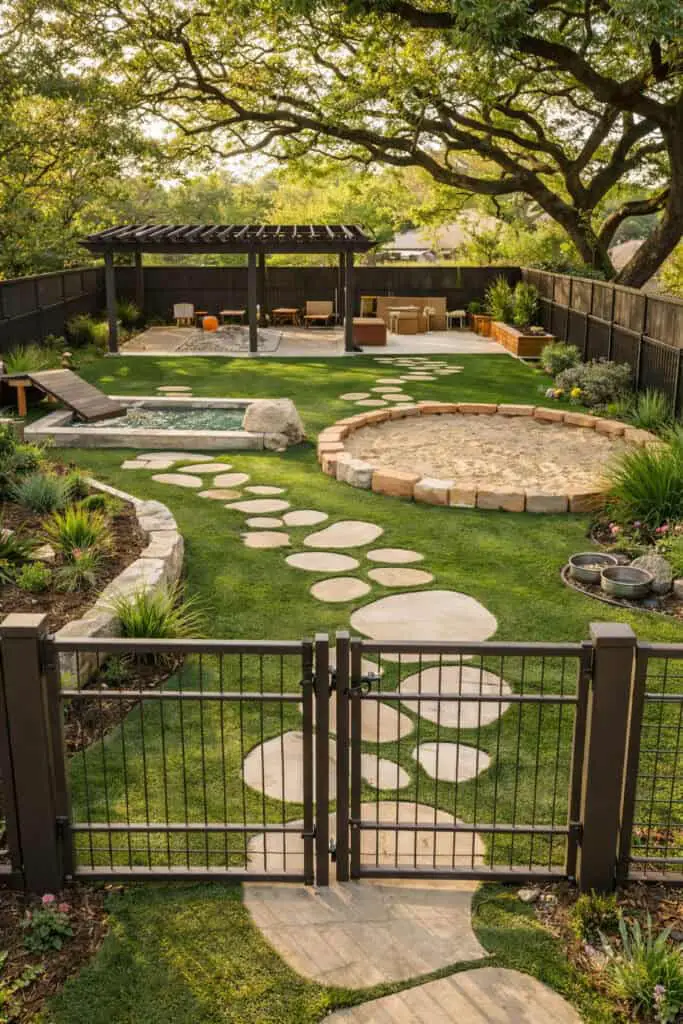
Creating separate play zones helps keep high-energy dogs from overwhelming calmer ones. In a dog daycare design, dividing the yard into sections allows staff to group dogs by size, temperament, or activity level.
Use fencing, landscaping borders, or raised planter beds to visually divide spaces while still maintaining an open layout. This type of backyard dog area design keeps playtime organized and reduces conflicts between dogs.
Shaded Relaxation Areas for Rest Breaks
Even the most playful dogs need downtime.
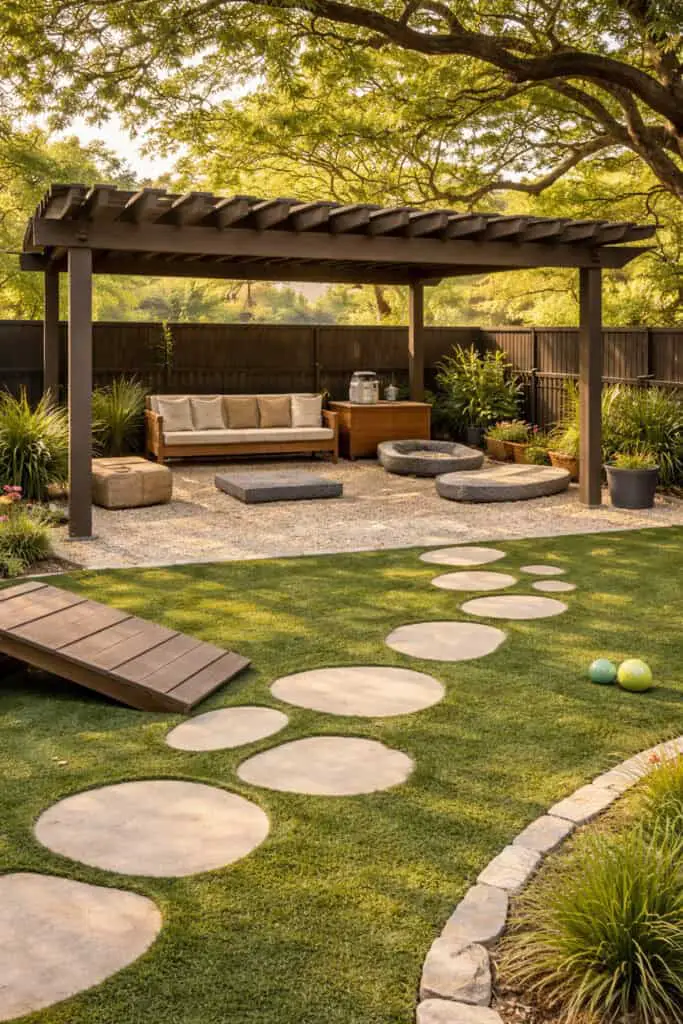
Adding pergolas, shade sails, or covered patios creates comfortable resting areas within an outdoor dog area. These shaded zones give dogs a place to cool down during warm weather and provide relief from direct sun.
In dog boarding facilities, shaded seating areas also allow staff to supervise play while offering dogs a calm environment to recharge before returning to activity.
Water Features and Splash Zones
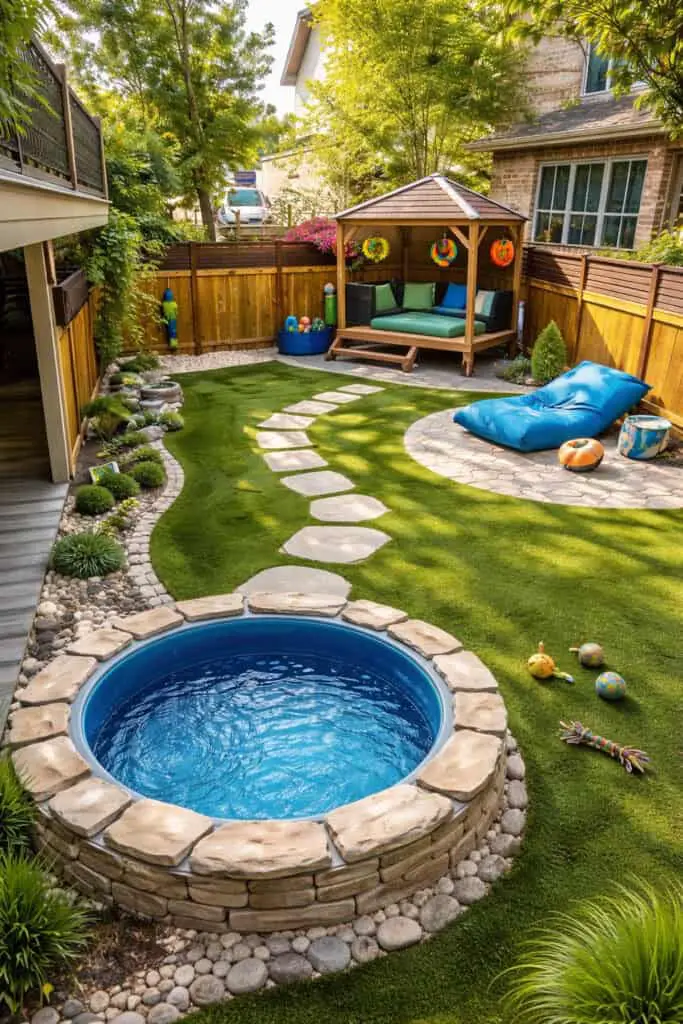
Water play is one of the best ways to enrich a dog play area.
Shallow splash pools, small fountains, or built-in dog splash pads make excellent additions to dog daycare design. These water zones help dogs cool off while also encouraging playful interaction.
A dedicated splash area works best when placed on a slightly lower section of the yard so water stays contained. This keeps the rest of the dog backyard dry and reduces muddy areas.
Sand and Digging Areas for Natural Behaviors
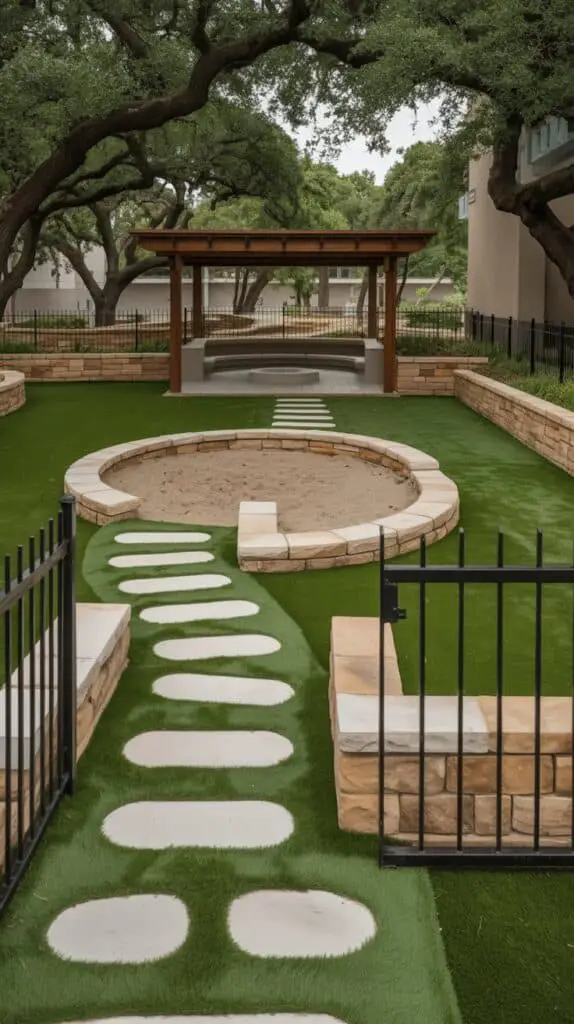
Digging is natural for many dogs.
Instead of fighting the instinct, many dog boarding facilities create designated digging pits filled with sand or soft soil. A circular sand area bordered with stone or wood helps keep digging contained.
This type of dog play area provides enrichment and helps redirect dogs away from landscaping or turf areas where digging could cause damage.
Obstacle Paths and Enrichment Trails
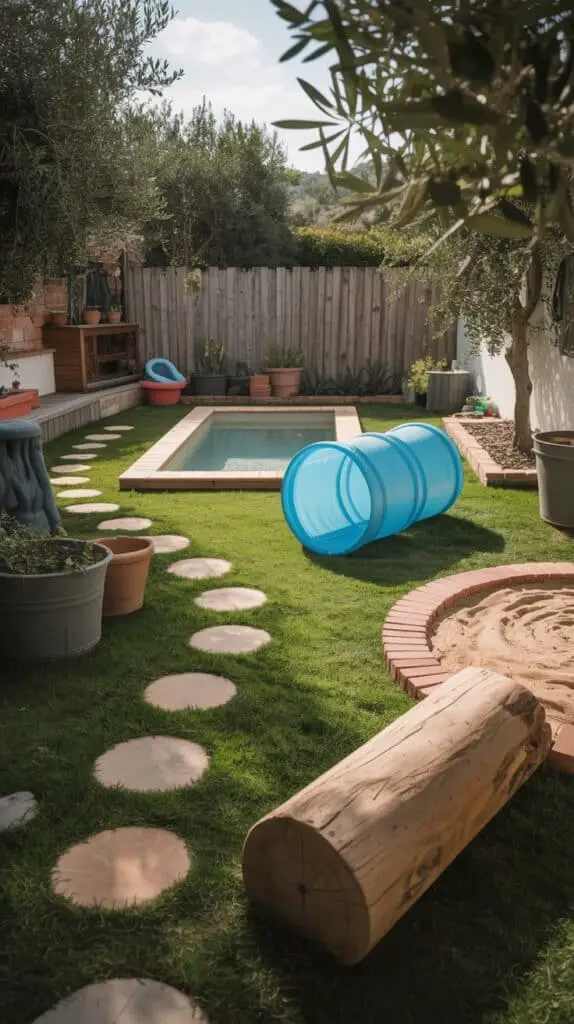
Activity pathways add movement to the yard layout.
Curved stepping stone paths, agility ramps, tunnels, and balance platforms encourage dogs to explore their surroundings. These simple elements turn a regular outdoor dog area into an interactive dog playground.
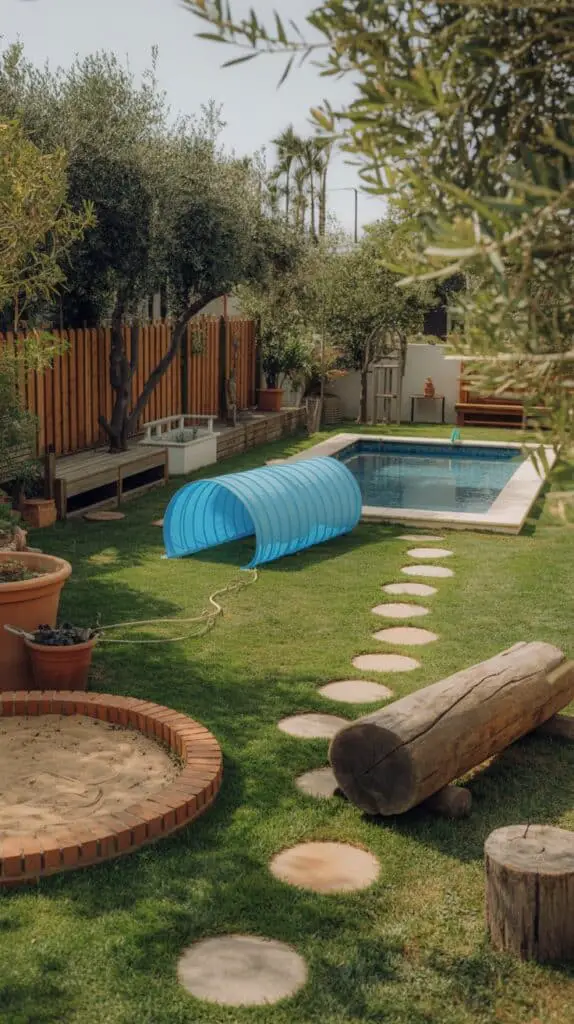
Obstacle trails also work well in dog daycare design because they guide dogs around the yard naturally, spreading activity across the space instead of clustering in one area.
Soft Ground Surfaces for Safe Play
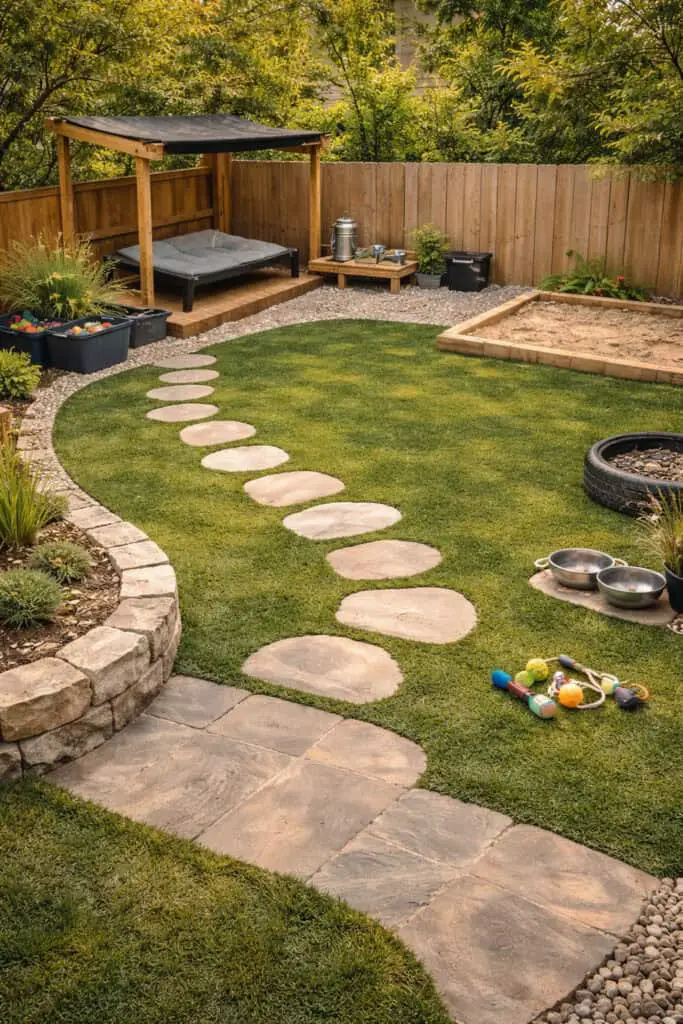
Surface materials play a huge role in safety.
Artificial turf, rubber mulch, or compacted decomposed granite provide softer footing than concrete or gravel. These materials help prevent injuries during running or rough play.
In a dog friendly backyard or boarding yard, combining turf play areas with natural stone paths creates both visual appeal and functional durability.
Observation Decks and Staff Zones
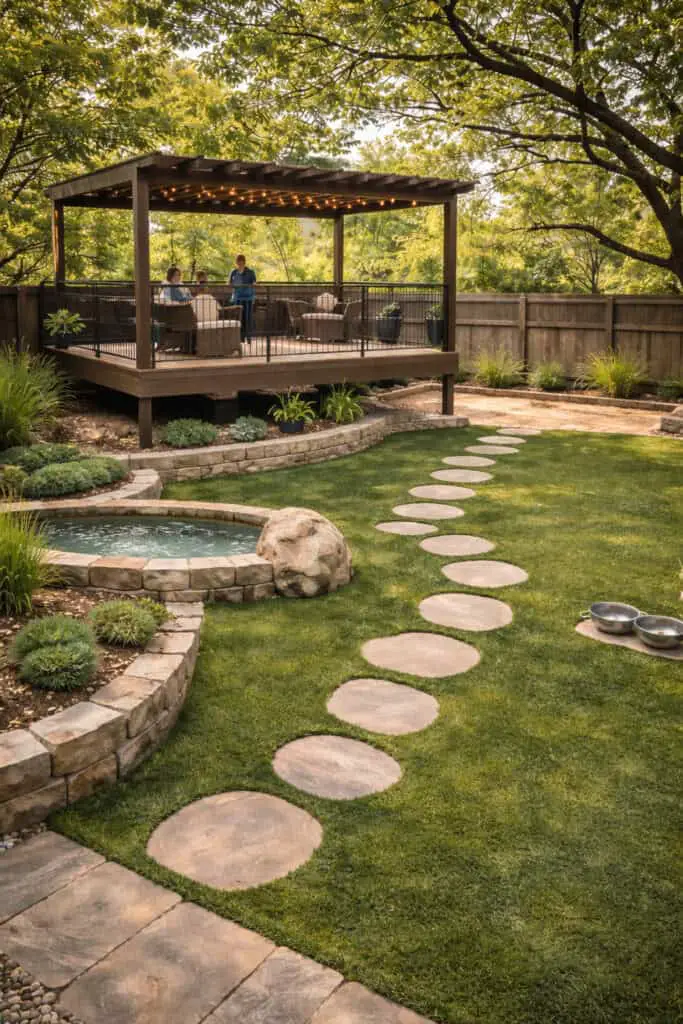
Good visibility improves safety.
Elevated observation spots or central seating areas allow staff to monitor the entire dog space easily. In larger dog boarding facilities, a pergola lounge or raised platform helps staff keep an eye on multiple sections of the yard.
This layout also provides a place for quick dog check-ins, hydration breaks, or calm interactions with dogs who may need extra supervision.
A great dog daycare design balances play, rest, and supervision. By combining interactive features, thoughtful layouts, and safe surfaces, dog boarding facilities can create outdoor spaces where dogs stay active, relaxed, and happy throughout the day.