
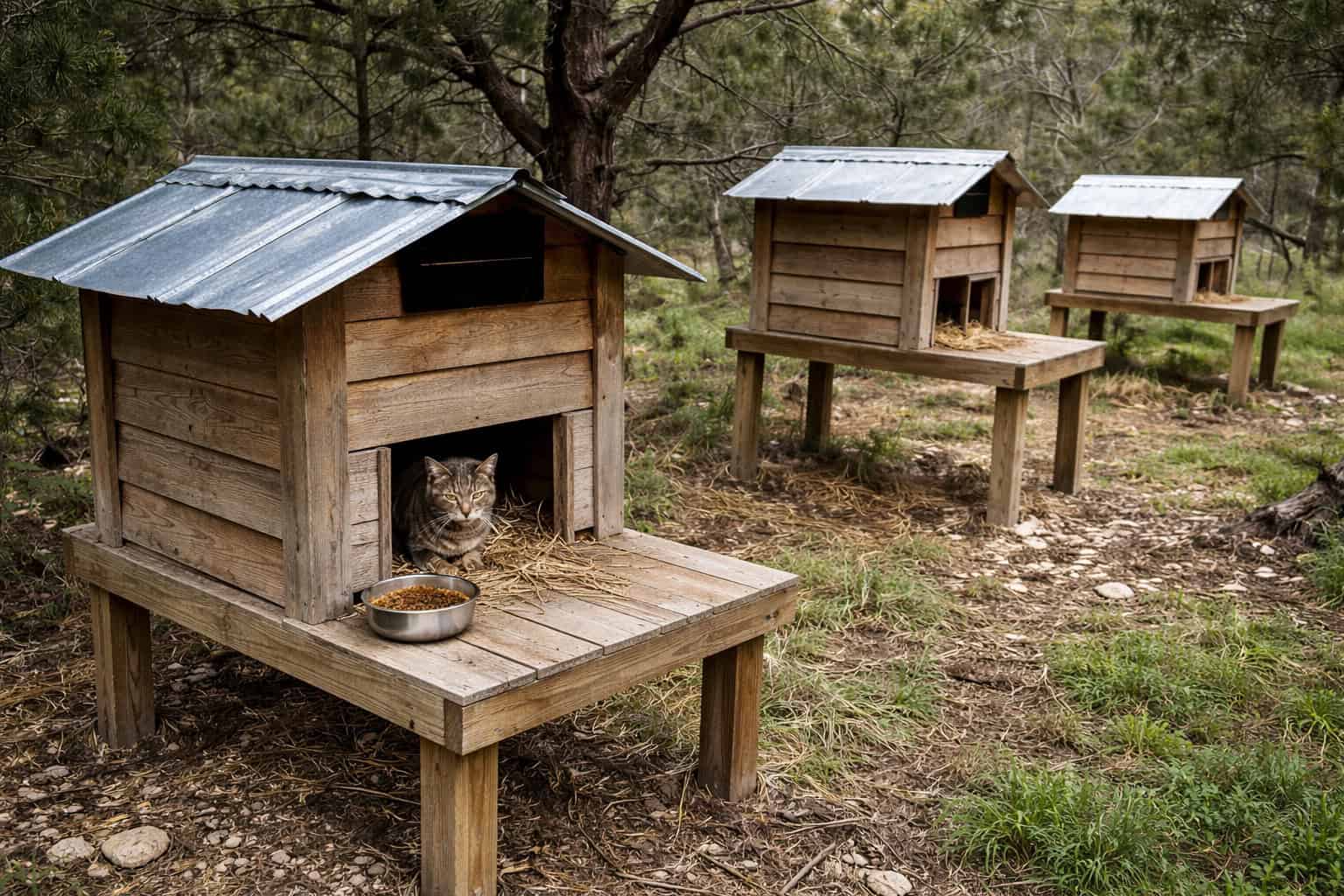
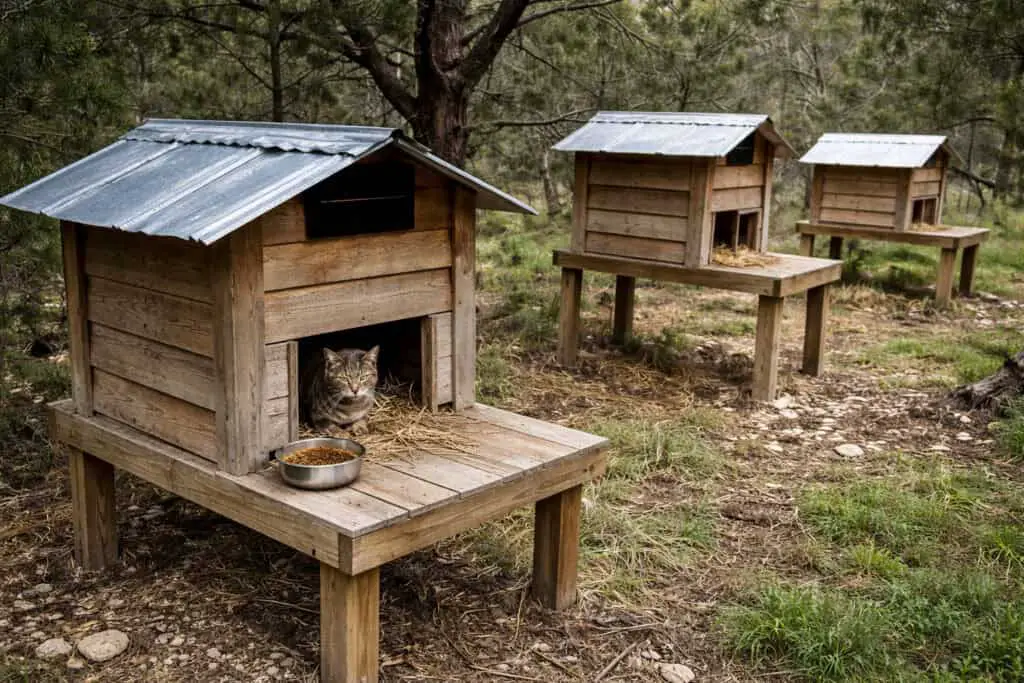
There’s something deeply meaningful about building a safe place for a stray cat. A simple pallet structure can offer warmth, protection, and dignity to outdoor cats who have nowhere else to go. With a little creativity and care, reclaimed wood becomes more than a project — it becomes shelter, safety, and compassion in action.
Raised Two-Level Pallet Cat Shelter
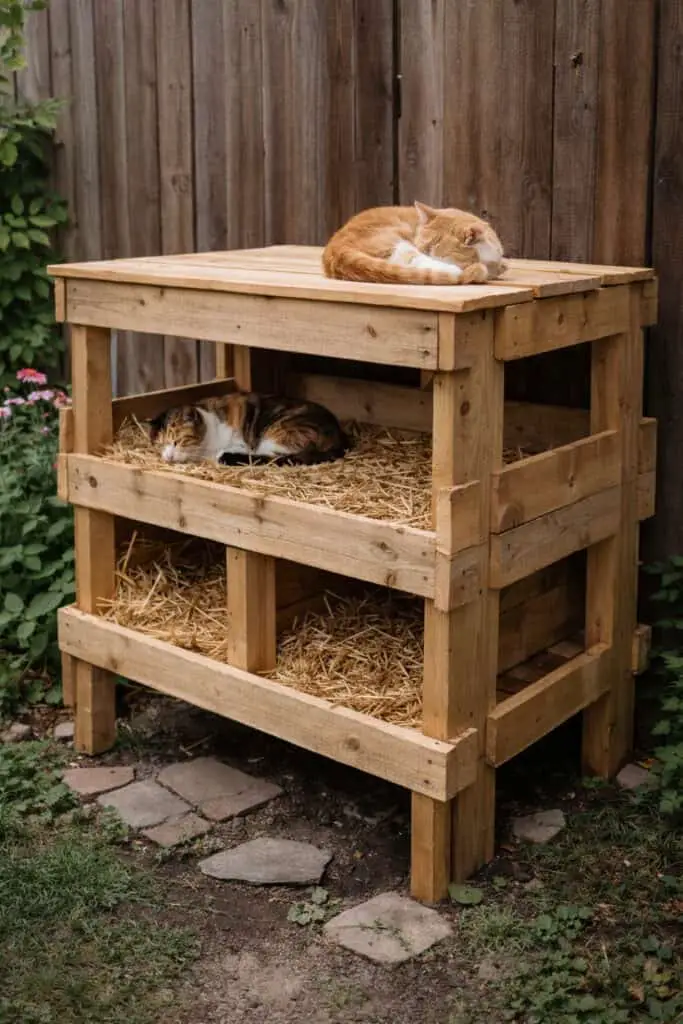
Height adds protection and comfort.
A two-level pallet animal shelter keeps stray cats off damp ground while offering layered sleeping zones. The lower cubbies can be filled with straw for insulation, while the upper platform provides a cozy resting spot. Elevating the structure also protects against rain runoff and helps deter small predators. This style works beautifully along fences, decks, or garden edges where community cats naturally seek cover.
Insulated Pallet Cat House for Cold Weather
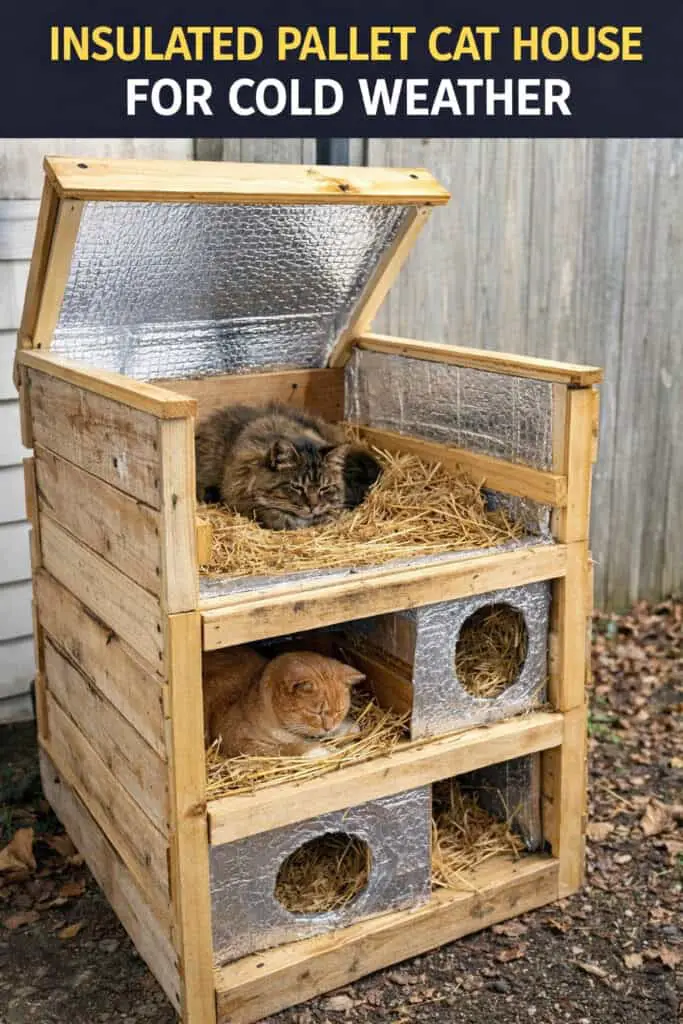
Warmth is critical for outdoor survival.
Lining the interior walls with foam board or reflective insulation helps trap body heat during colder months. A simple pallet cat house outdoor design can be upgraded with a removable roof for easy straw replacement. Keeping entrances small reduces wind exposure while maintaining airflow. For feral cat helpers, this practical design balances comfort and function without overcomplication.
Dual-Entrance Pallet Shelter for Safety
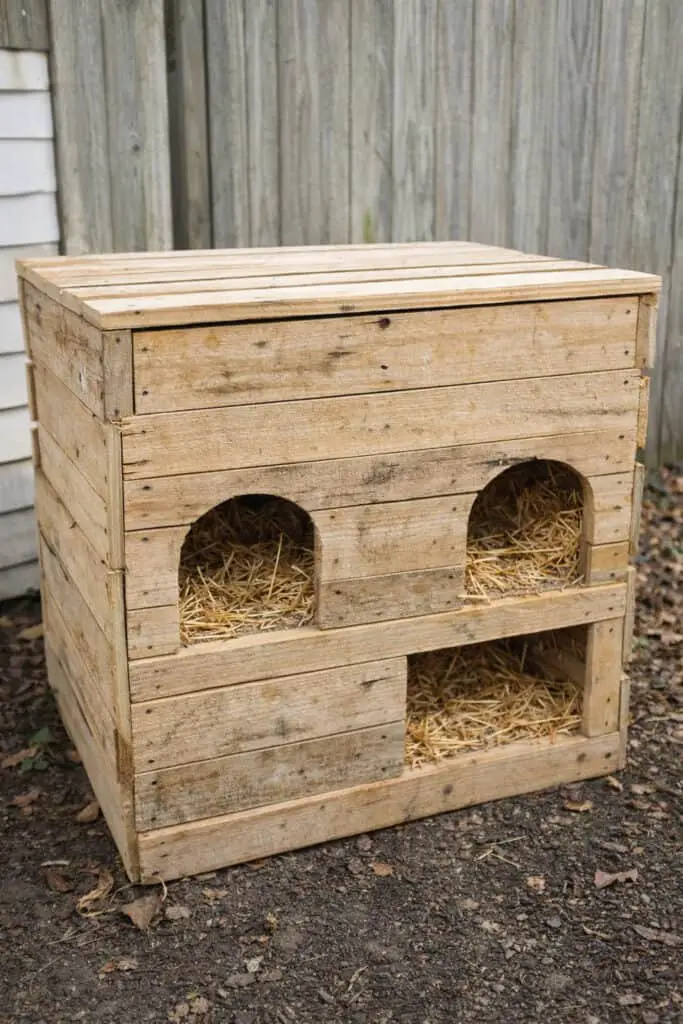
Escape routes matter.
When building a DIY pallet cat house for stray cats, consider adding two openings. This prevents a cat from feeling trapped and offers a quick exit if another animal approaches. A cat house from pallets with dual entry holes increases safety and reduces stress for outdoor cats. Placement against a wall or fence adds extra protection while maintaining easy access.
Covered Porch-Style Pallet Cat House
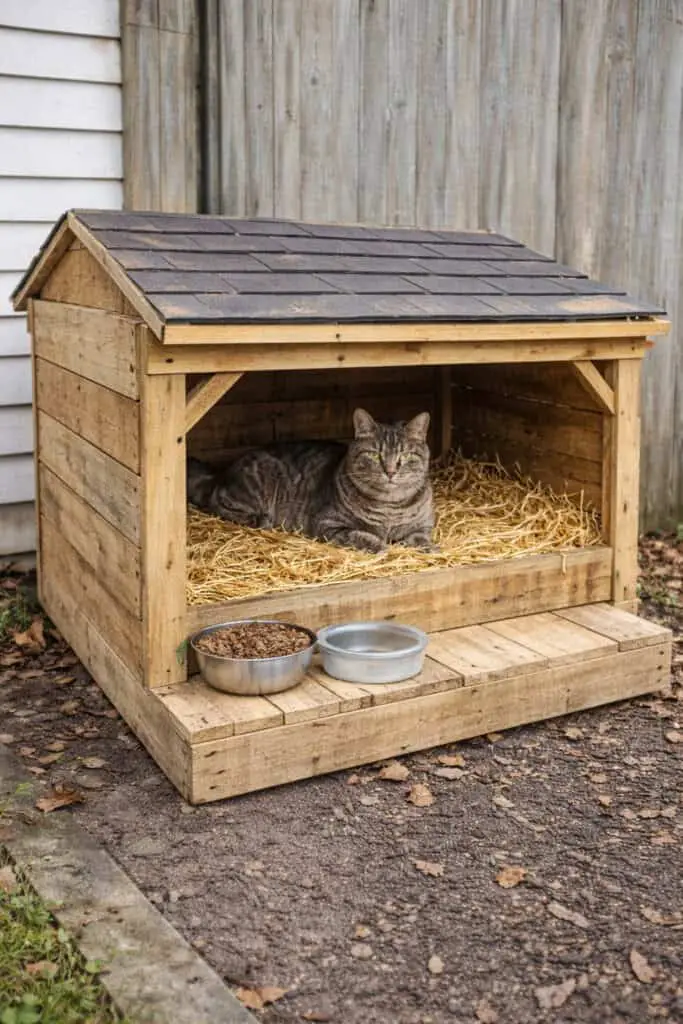
Shelter doesn’t have to feel closed in.
Adding a small overhang or porch-style front creates additional rain protection and shade. This pallet animal shelter idea works especially well in backyards where cats are fed daily. The covered entry keeps bedding drier and offers a semi-open resting space. Simple pallet cat house designs with thoughtful details can dramatically improve comfort.
Straw-Filled Pallet Shelter for Natural Insulation
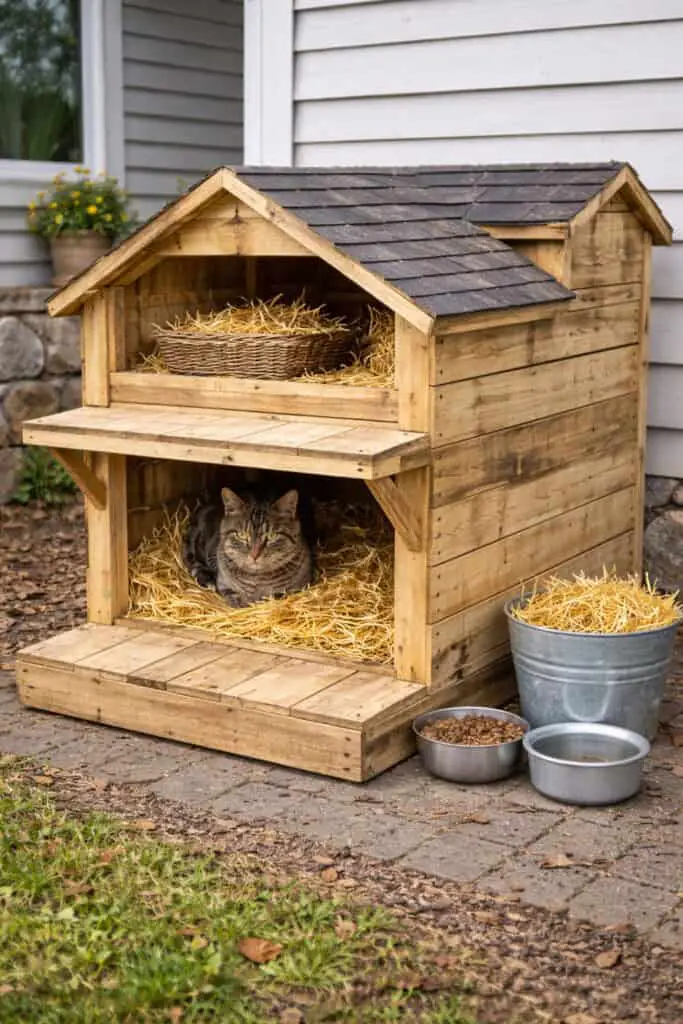
Straw is affordable and effective.
Unlike blankets, straw repels moisture and holds warmth. Filling the lower section of a cat house pallet build with fresh straw creates a dry nesting area ideal for outdoor cats. Replace straw seasonally to maintain cleanliness. For those supporting community strays, this is one of the easiest pallet animal shelter plans to implement.
Compact Corner Pallet Shelter for Small Spaces
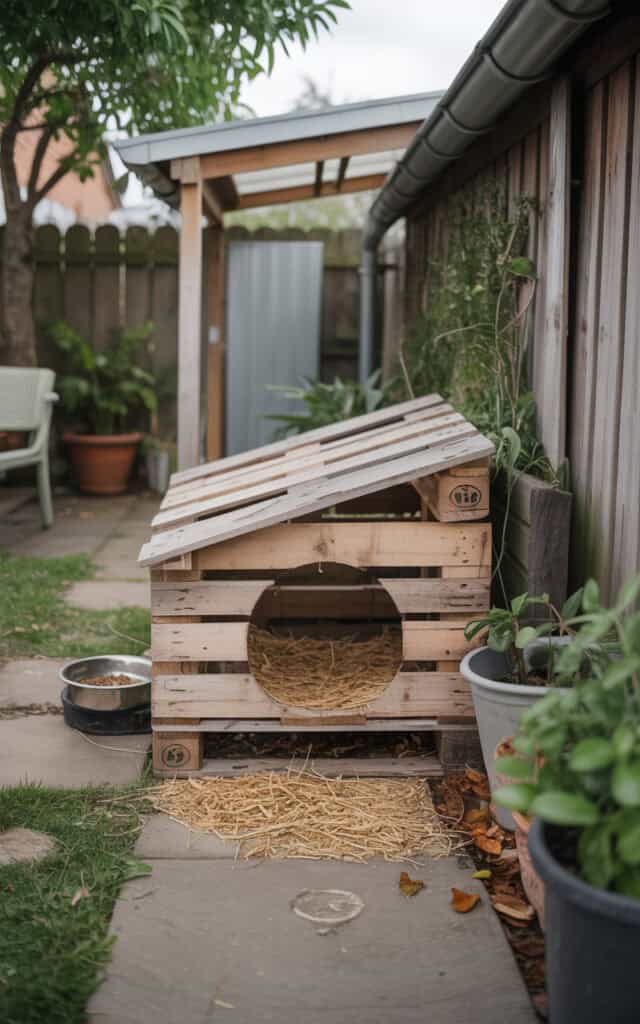
Even small yards can make a difference.
Not every outdoor cat house from pallets needs to be large. A compact design tucked into a quiet garden corner or beneath a covered patio can provide just enough protection from wind and rain. This style is perfect for suburban neighborhoods where supporting stray cats must blend subtly into existing outdoor spaces.
Building pallet animal shelters isn’t about perfection — it’s about providing stability and care. With simple materials and thoughtful placement, a pallet animal shelter can become a life-changing refuge for stray cats in your community.
Pallet Cat Shelter for Stray Cats
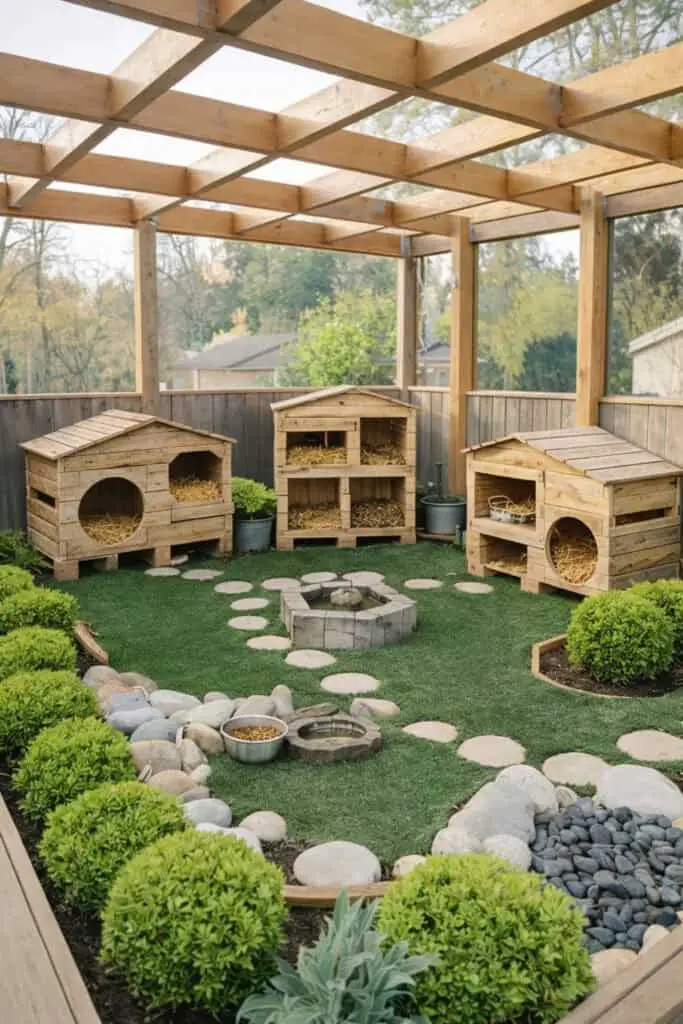
Simple structures can make a big difference.
Pallet cat houses like these create a safe, sheltered resting space for stray or community cats. Built from stacked wooden pallets, the design forms several cubbies where cats can curl up away from wind and rain. Filling each compartment with straw helps trap warmth and keeps the sleeping areas dry.
This style works well as a DIY insulated cat house for outdoor rescue spaces because pallets are easy to find and simple to assemble. The raised design also keeps cats off cold ground while giving them multiple quiet spots to rest. Placing the shelter against a wall, fence, or in a covered garden corner helps it blend naturally into a cat garden outdoor setup.
For anyone caring for neighborhood strays, a pallet shelter like this offers a practical solution. It functions as a compact cat outside enclosure alternative, giving community cats a reliable place to sleep while staying protected from harsh weather.
