
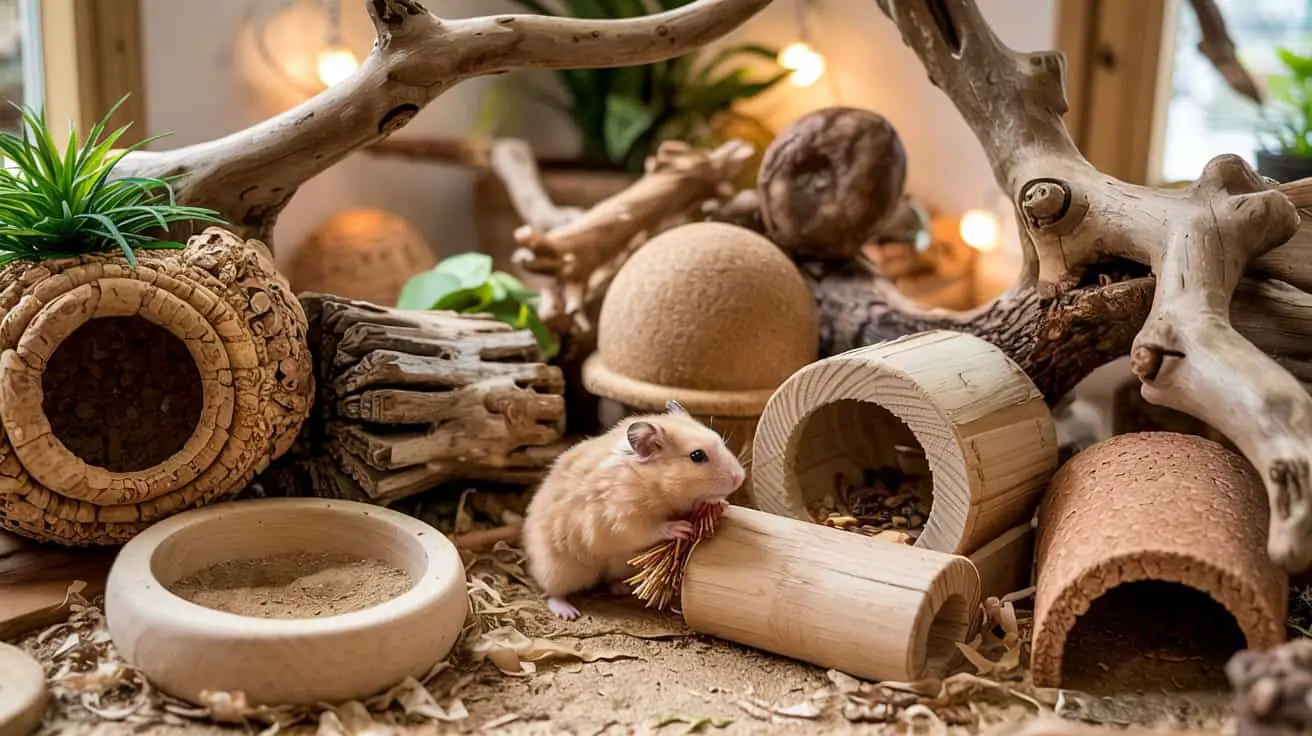
If you’ve ever watched your hamster burrow into their bedding and thought, they’d probably love their own little world, then a hamster terrarium might be exactly what you need. Unlike wire cages, a terrarium feels calm, clean, and more natural — a tiny landscape instead of a box of plastic tubes.
I built my first one because I was tired of cleaning bedding that kept flying out of the cage. Turns out, a glass tank makes life easier for both you and the hamster. You can layer the bedding as deep as you want, decorate it like a miniature forest, and actually see them dig and explore without worrying about escapes.
Here’s a simple, cozy way to create a beautiful, safe home that looks as good on your shelf as it feels for your tiny roommate.
1. Pick the Right Terrarium or Tank

You’ll need a glass or acrylic enclosure that’s spacious enough for digging and play. Bigger really is better — aim for something around 100×50 cm or more if you can. Tanks made for reptiles or aquariums often work perfectly once you add a secure mesh lid for airflow. Avoid small, colorful cages that look cute but don’t give your hamster room to move naturally.
2. Start With the Layers

Layering is what makes a terrarium feel alive. Start with a deep base of paper or hemp bedding so your hamster can tunnel freely. Mix in textures like dried moss, cork bark, or a little sand to create areas that feel different under their paws. Think of it like landscaping — a few uneven sections and small mounds instantly make it more interesting.
3. Add a Cozy Little Home

Instead of buying plastic accessories, build your hamster a small wooden or ceramic hide. You can repurpose a tissue box, an old mug, or even a miniature drawer. Add soft nesting material inside and tuck it halfway under the bedding so it looks like a natural burrow. The goal is to make the space feel enclosed and safe without taking up too much room.
4. Create Texture and Character
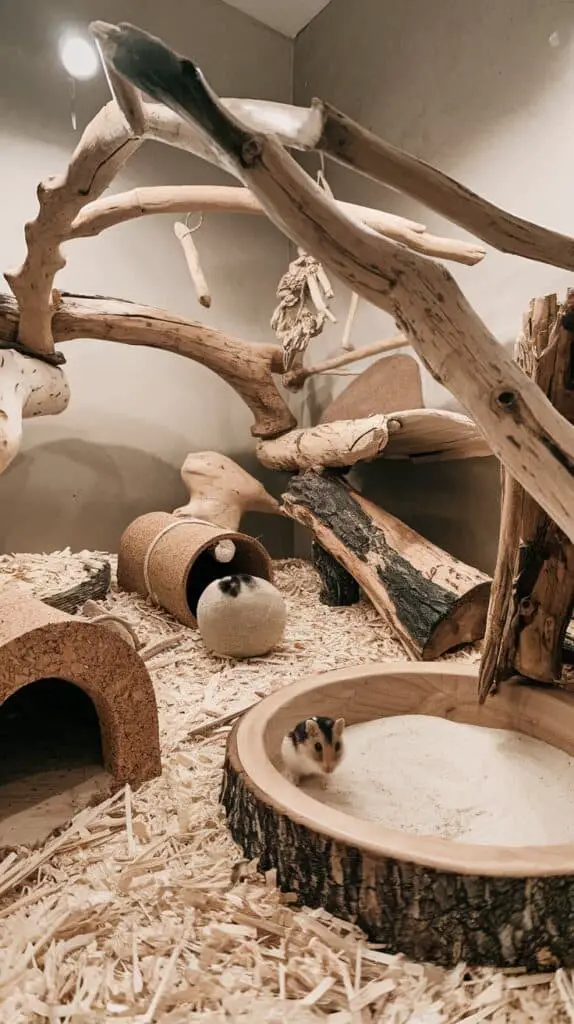
Now for the fun part — decorating. This is where hamster-scaping comes in. Arrange driftwood, smooth stones, and little tunnels to make the enclosure look organic rather than staged. Try to keep everything low to the ground and stable so it won’t shift when your hamster digs. Soft, earthy tones — beige, brown, green — give the setup that calm, natural feel.
5. Make It Interactive

Add a wheel with a solid surface, a small sand bath, and some chew-safe toys made from cardboard or apple wood. You can make your own using things around the house — a cardboard tube becomes a tunnel, or a small box turns into a digging pit. Keep changing little details every few weeks to keep your hamster curious and active.
Final Thoughts
A hamster terrarium isn’t about being fancy — it’s about giving your pet a space that feels close to nature. Once you set it up, you’ll start noticing how much more they dig, climb, and explore. It’s quiet, peaceful, and surprisingly relaxing to watch. And honestly? Seeing your hamster live their best tiny life in a home you built yourself feels like its own kind of therapy.
