
Starting with backyard ducks is exciting, but one of the first challenges new duck owners face is figuring out where their ducks will live. The good news is that ducks don’t need complicated housing. In fact, many backyard duck keepers build a simple DIY duck coop in a single weekend using basic tools and affordable materials.
The best beginner coop focuses on practicality rather than complicated construction. Ducks need shelter, ventilation, dry bedding, and protection from predators. When those basics are covered, a simple coop can work extremely well for a small backyard flock.
If you’re planning your first coop, these beginner-friendly DIY duck coop ideas are some of the easiest builds to start with.
What Ducks Actually Need in a Coop
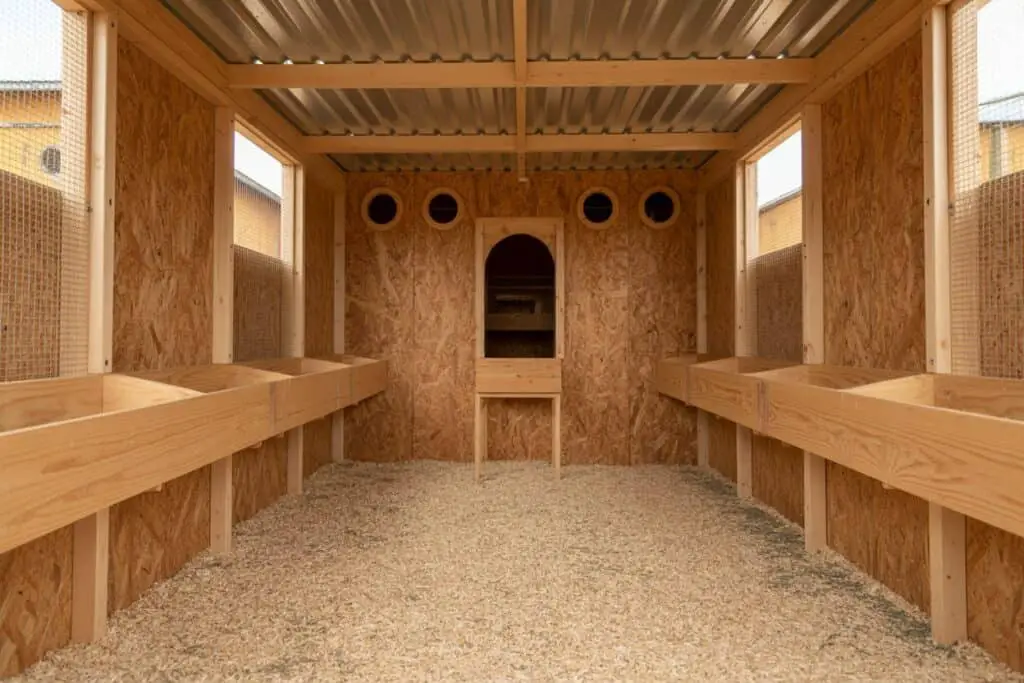
Before building anything, it helps to understand what ducks actually need from their housing. Ducks are different from chickens in a few important ways. They do not roost on bars and they don’t usually use nesting boxes. Instead, they prefer a simple ground-level space where they can rest comfortably at night.
A good duck coop should include enough floor space for the flock, proper ventilation so moisture doesn’t build up, secure walls to protect against predators, and easy access so you can clean it regularly. Dry bedding such as straw or pine shavings is also essential because ducks spill water frequently.
Keeping the coop simple and easy to maintain is usually the best approach for beginners.
The Simple Wooden Frame Duck Coop
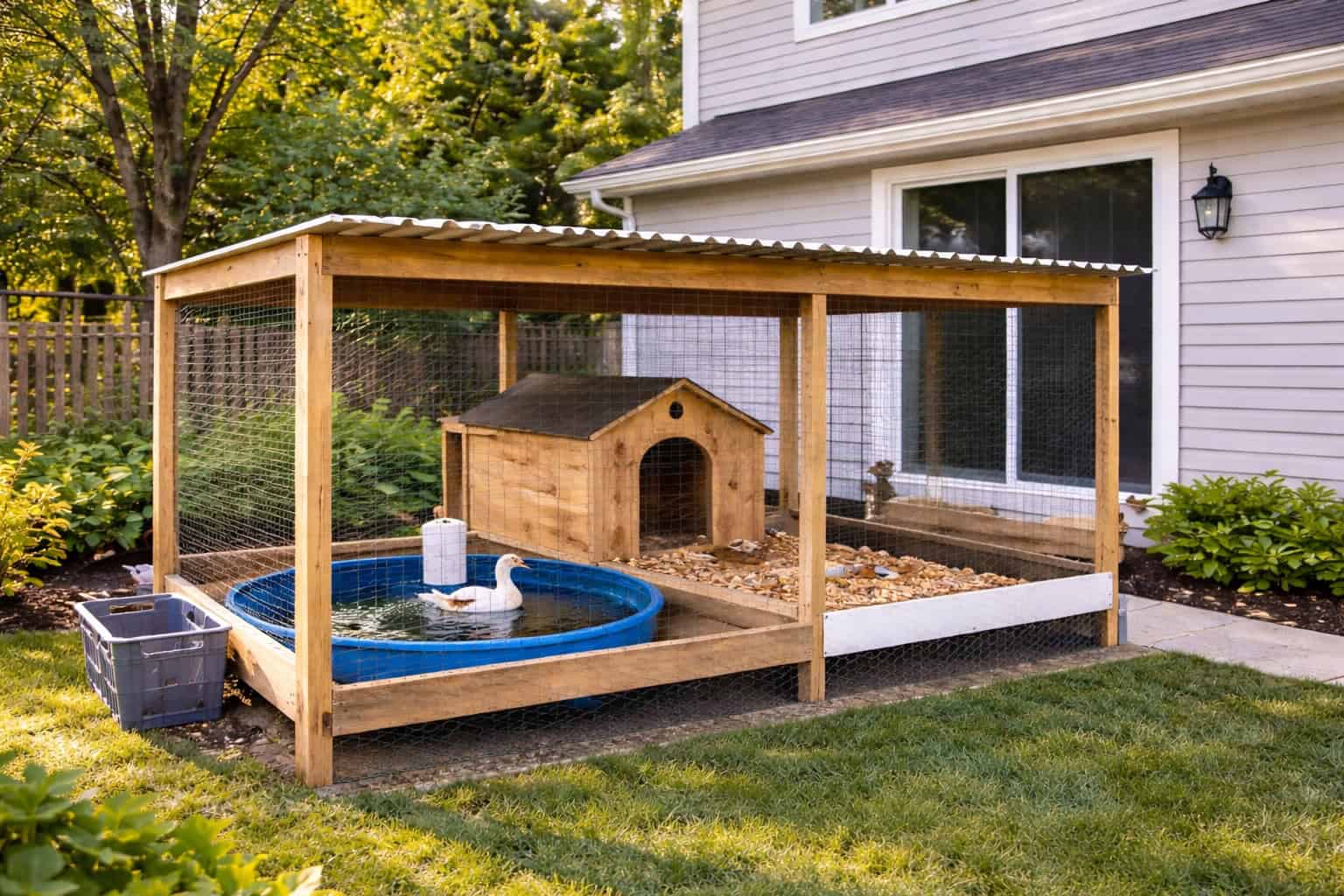
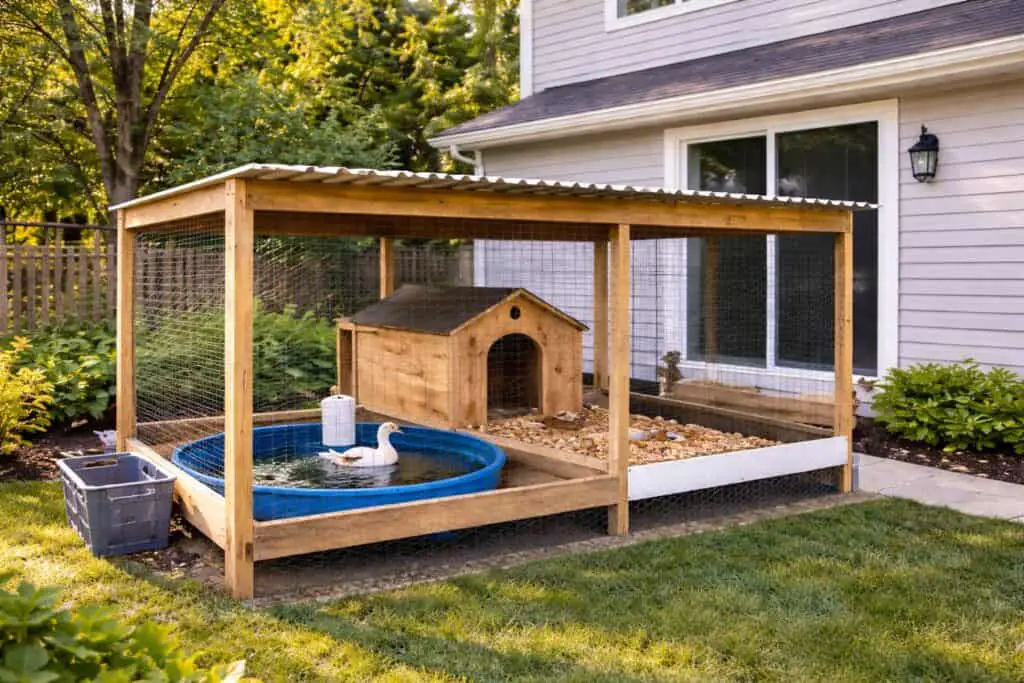
One of the most popular beginner builds is a simple wooden frame coop with wire sides and a covered roof. This design works well because it is easy to build, inexpensive, and provides plenty of airflow.
The structure is usually made from basic framing lumber with wire mesh panels attached to the sides. A small wooden duck house sits inside the enclosure to give ducks a sheltered sleeping area. Many people also include a shallow kiddie pool so the ducks can splash safely inside the run.
This type of coop is ideal for backyard beginners because it provides shelter, water access, and predator protection in one simple build.
The Pallet Duck Coop Build
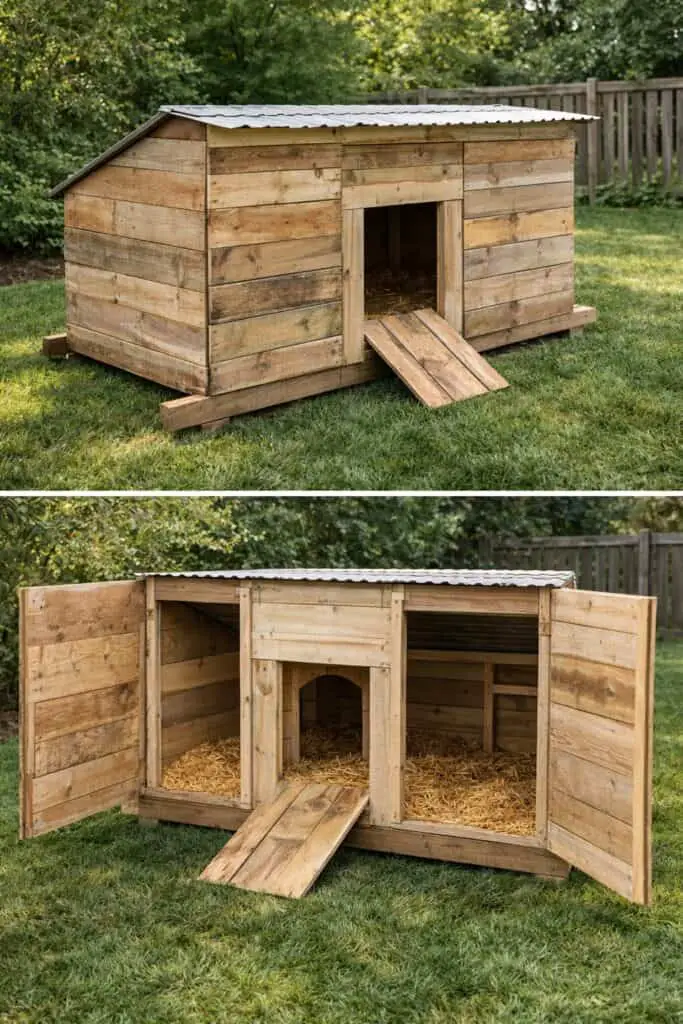
For an even more budget-friendly option, many duck owners build coops using reclaimed pallets. Pallets can be turned into walls, flooring, and roof supports with very little cutting required.
Pallet builds are popular because they reduce costs and can often be assembled quickly. The gaps between boards also help with ventilation, which ducks need to prevent damp conditions inside the coop.
When building a pallet coop, it’s still important to add sturdy wire mesh to protect the ducks from predators and include a covered roof so rain cannot soak the bedding.
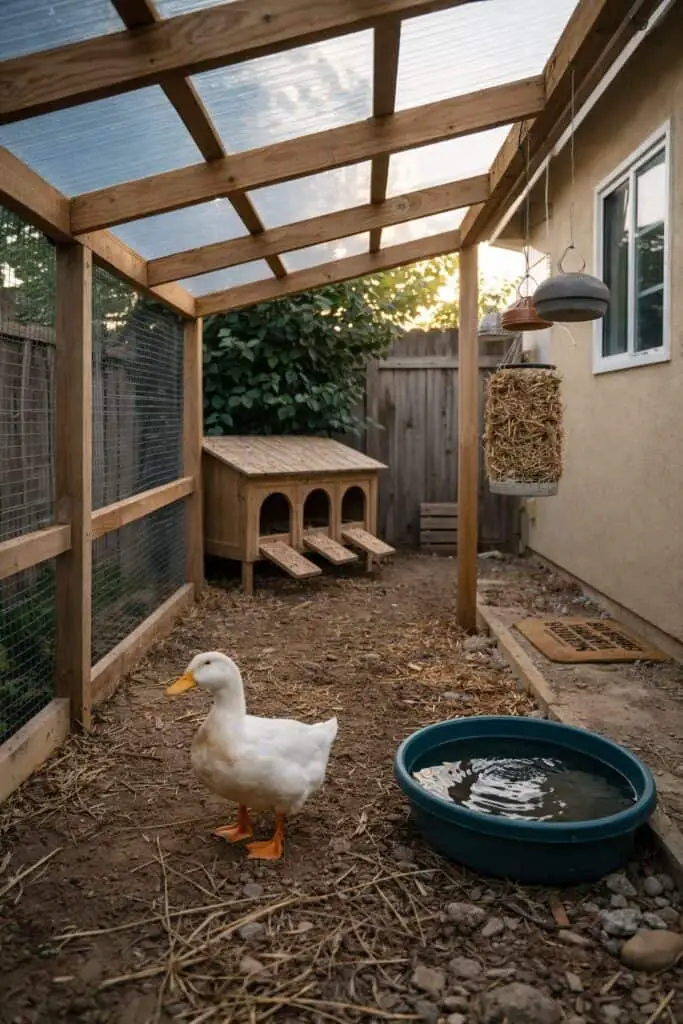
Duck Coop With Pond and Filter System
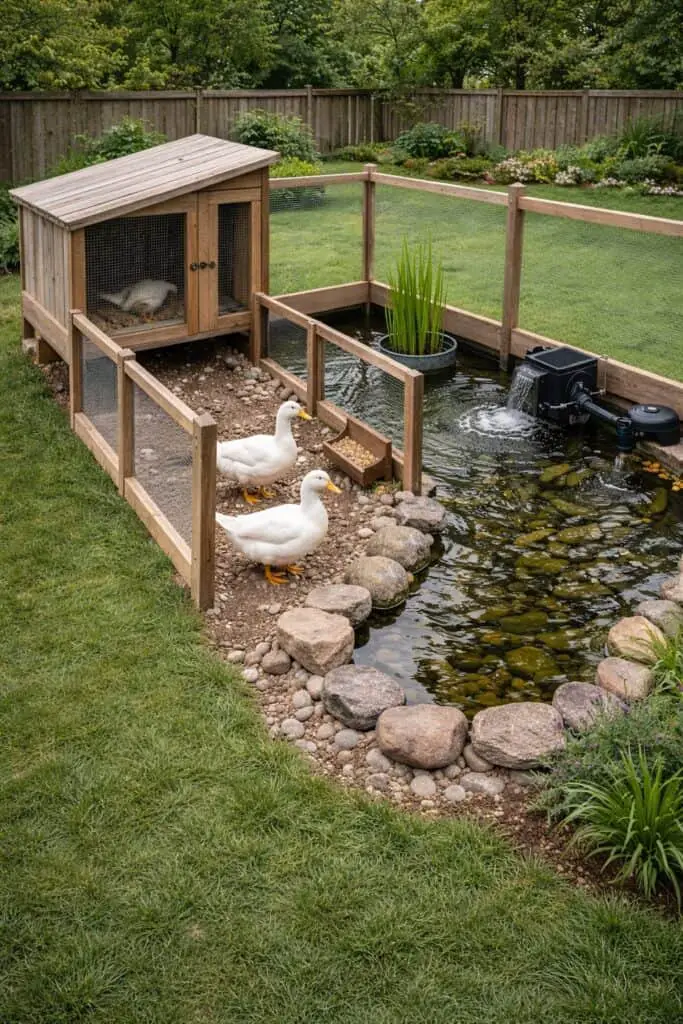
One of the biggest challenges with backyard ducks is managing water. Ducks love to splash, rinse their bills, and bathe frequently, which can quickly turn a small coop area into a muddy mess if the setup isn’t planned carefully. Adding a dedicated pond area with basic filtration is one of the most practical ways to keep both the ducks and the yard healthier.
In this type of layout, the pond sits inside the enclosure but is separated from the dry walking area. The ducks still have easy access to water for swimming and cleaning, while the rest of the run stays drier and easier to maintain. A simple filtration system or pond pump helps circulate the water, which reduces odor and slows down the buildup of debris.
The surrounding gravel or stone border also plays an important role. It allows spilled water to drain away instead of soaking directly into the soil, which is what usually creates muddy duck runs. With the coop positioned nearby and the pond contained within fencing, the whole setup becomes much easier to manage for everyday backyard duck keeping.
For many small backyard flocks, this type of design offers a good balance between practicality and enrichment. Ducks still get a proper place to swim, while owners benefit from a cleaner, more manageable coop and run area.
The Small Backyard Duck Coop
If you have a small yard, a compact coop design can work surprisingly well. Many backyard duck keepers build smaller coops that include an attached run so ducks have a safe outdoor area without needing a large space.
These coops often use vertical space efficiently and include hinged roofs or doors so the inside can be cleaned easily. Even a small flock of two to four ducks can live comfortably in a compact backyard coop when it is designed properly.
A smaller structure also makes cleaning and maintenance much easier for beginners.
The Raised Duck Coop
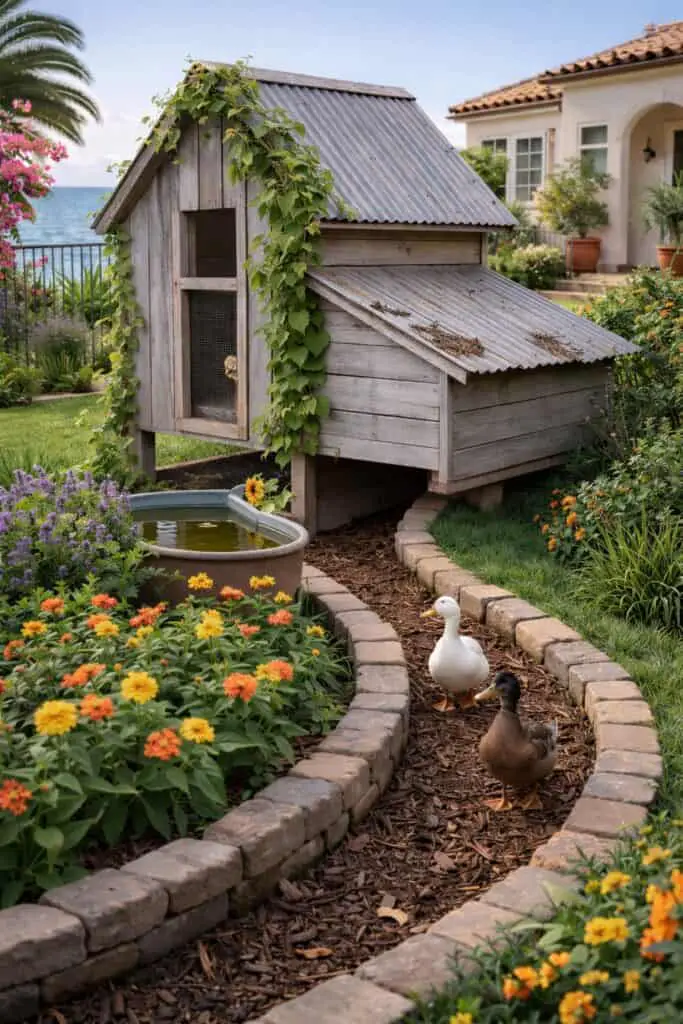
Some backyard duck keepers prefer to build coops slightly elevated above the ground. A raised coop allows for better drainage underneath and can help keep the structure dry during wet weather.
In this design, the sleeping shelter sits on a raised platform while the ducks access it through a short ramp. The surrounding run stays on ground level and provides space for water dishes or a small duck pool.
Raised coops are particularly useful in areas with heavy rain because they help prevent standing water around the sleeping area.
The DIY Duck Coop With a Pool Area
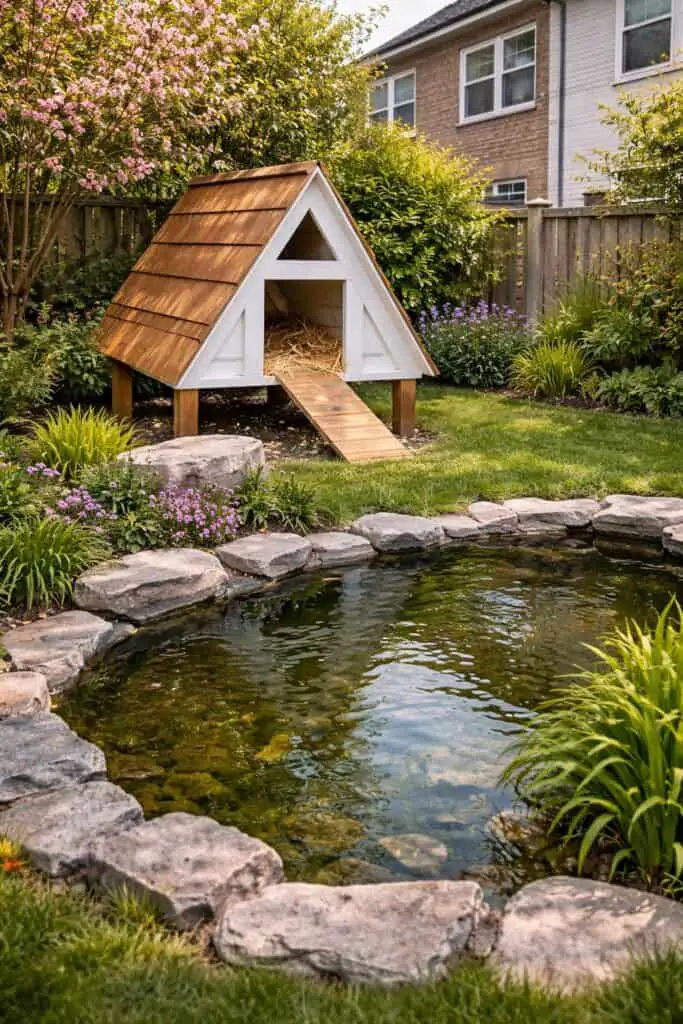
Ducks love water, and many backyard owners choose to include a small pool inside the coop run. A simple plastic kiddie pool works perfectly and gives ducks a place to splash and clean their feathers.
When designing a coop with a pool, it’s helpful to place the pool slightly away from the sleeping shelter. This keeps water from soaking the bedding and helps reduce mud around the coop entrance.
Adding gravel or sand beneath the pool area can also help with drainage and keep the run much cleaner. If you have a pond thats suitable, even better.
A Simple Layout That Works for Beginners
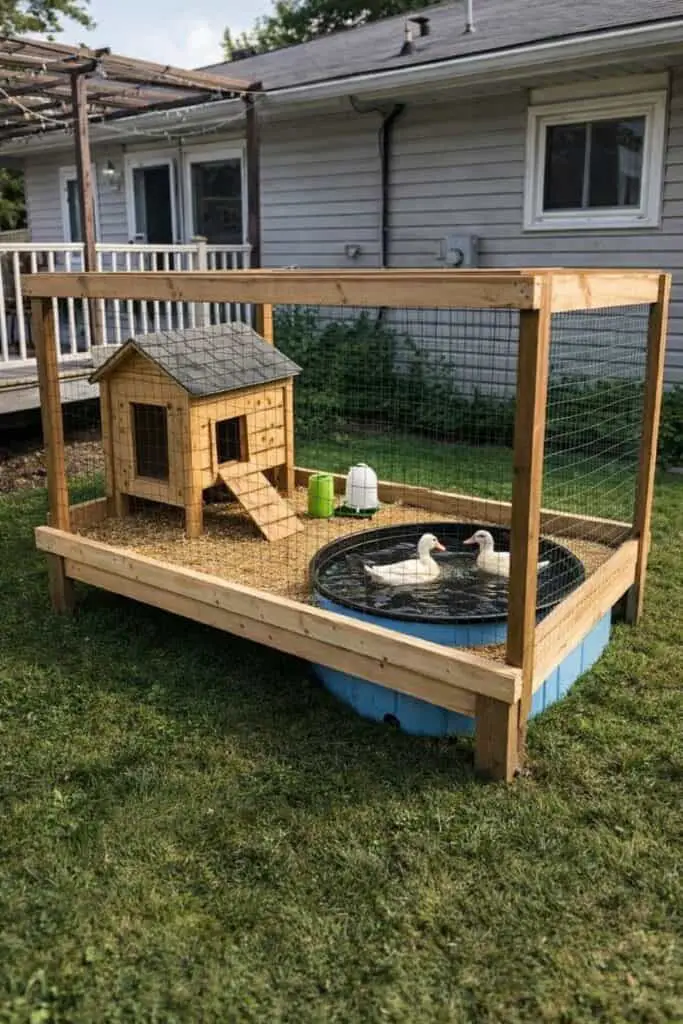
A good beginner coop layout usually includes two main sections: a sheltered duck house and an attached run. The duck house provides protection at night, while the run allows ducks to move around safely during the day.
For a small flock, a run that measures roughly six to eight feet long with a smaller enclosed shelter works well. Inside the shelter, dry bedding and good ventilation are the most important features.
Keeping the layout simple makes it much easier to clean and maintain as you learn more about raising ducks.
Why Simple Coops Often Work Best
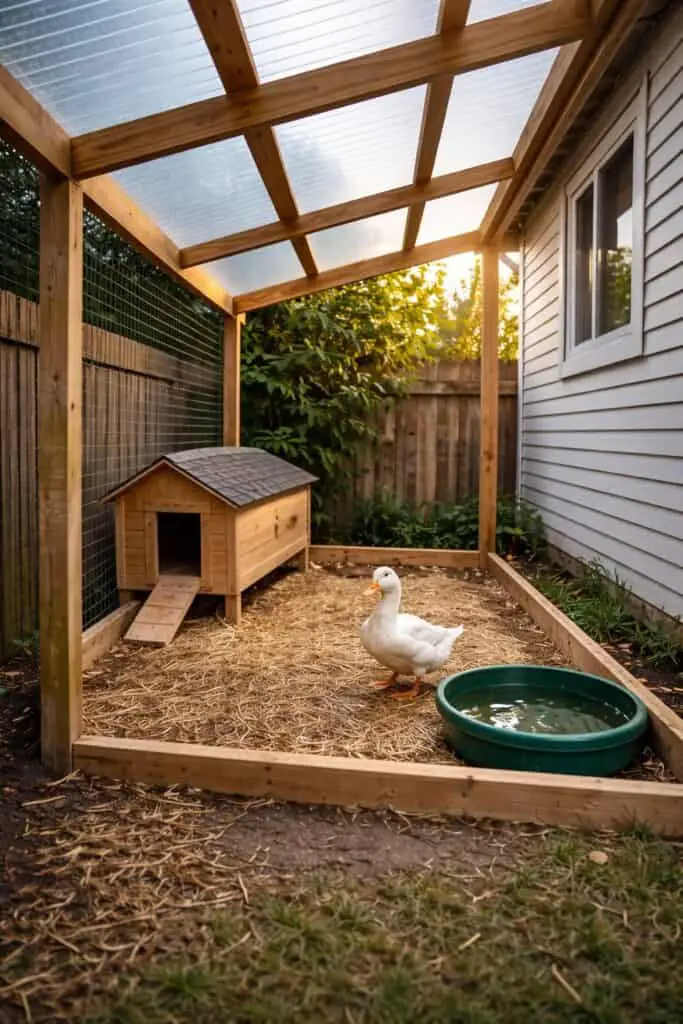
Many new duck owners assume they need large, complicated coops, but simple designs often work better. Ducks mainly need protection from predators and weather, along with enough space to move comfortably.
Simple coops are easier to clean, easier to repair, and easier to expand if your flock grows. They also cost much less to build, which makes them perfect for beginners testing out backyard duck keeping.
Starting with a basic DIY coop allows you to learn what works best for your ducks before investing in larger or more permanent structures.
Final Thoughts
Building a DIY duck coop doesn’t have to be complicated. Many backyard duck keepers successfully build their first coop in a single weekend using simple materials and beginner-friendly designs.
By focusing on good ventilation, predator protection, and dry bedding, you can create a coop that keeps your ducks safe, comfortable, and easy to care for.
Once you’ve built your first coop, it often becomes the foundation for future improvements as your flock grows and your backyard duck setup evolves.