
So, let me guess—you swore you’d only have “a few” outdoor pets. And now, just like the rest of us soft-hearted backyard animal collectors, your rabbit hutch is somehow one hutch, two rabbits, three fleece blankets, and a whole Pinterest board later.
Winter’s arriving fast, and while your rabbit might look cute bouncing around a frosty garden, they’re not exactly built for snowstorms and sleet. And I get it—you want a hutch that’s cozy, rustic, and doesn’t make your backyard look like a farm supply depot.
Let’s make your rabbits’ space warm enough for winter naps and cute enough to photograph next to your gravel patio and that shady tree you’re weirdly proud of. These 5+ ideas are simple, budget-friendly, and totally doable—even if your garden’s got more cottagecore vibes than farmyard function.
1. Add a Clear Plastic Wind Barrier (But Keep It Cute)
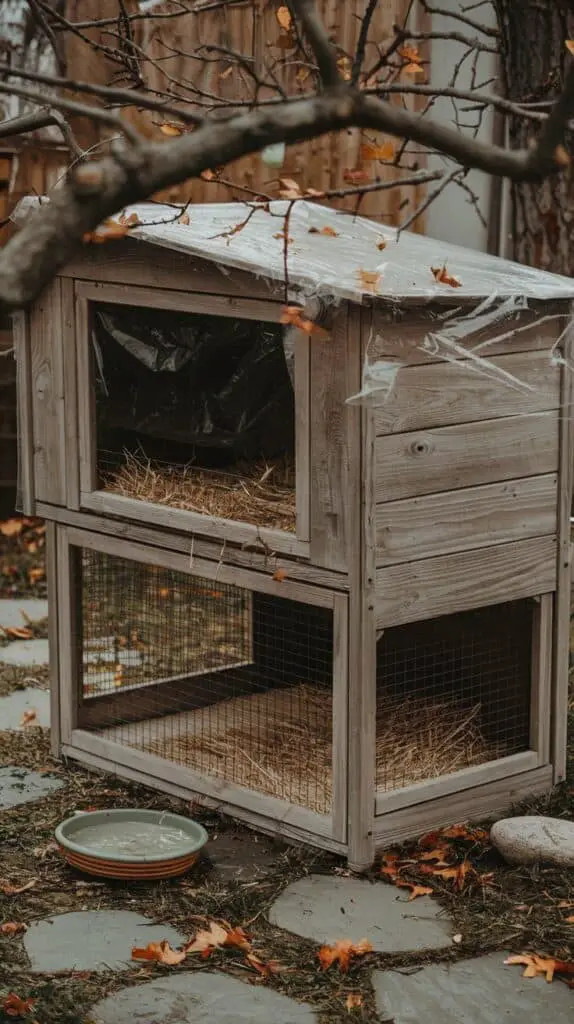
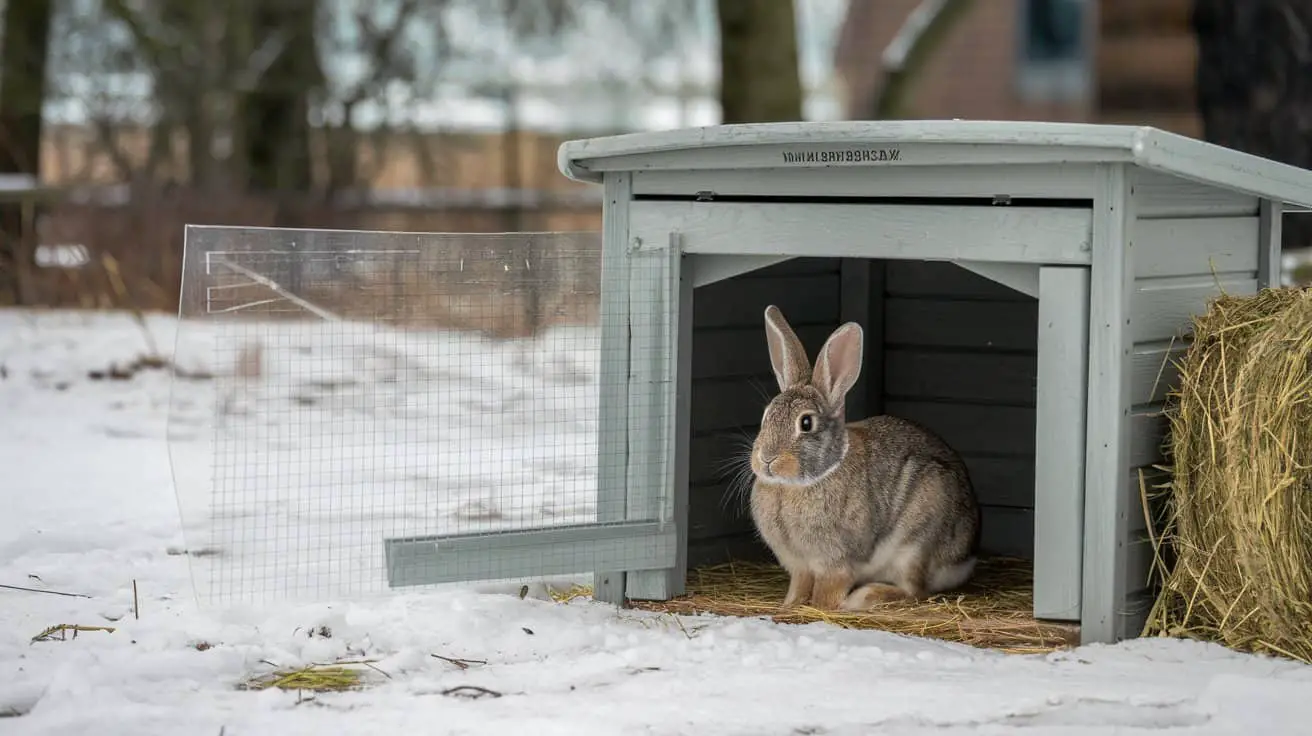
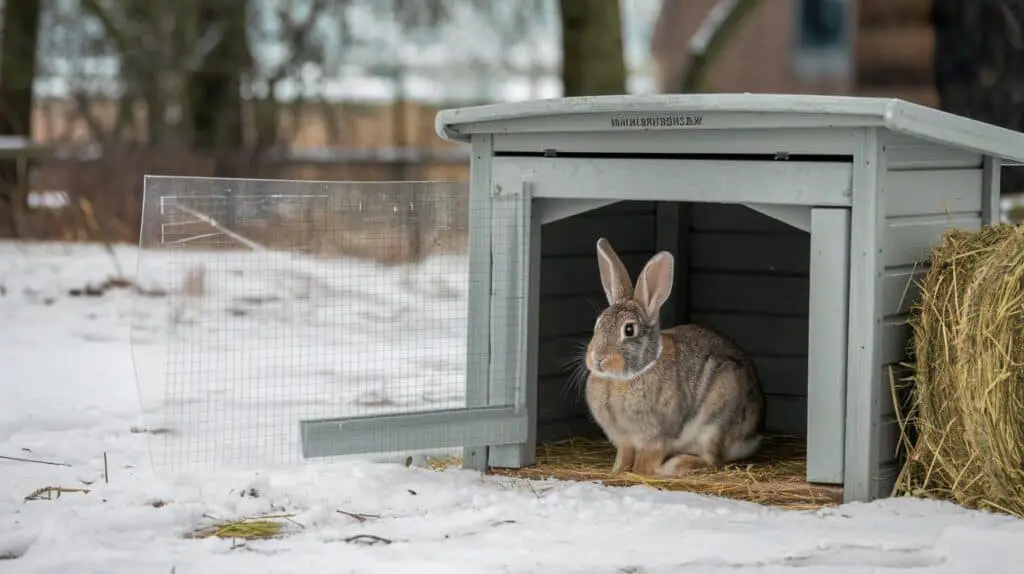
Let’s start with the obvious. Wind is not your rabbit’s friend. If your hutch has mesh walls (which most outdoor rabbit hutches do), grab some clear plastic panels or even just a heavy-duty shower curtain and staple it around the exposed sides.
✨ Bonus Emily trick: use rustic wood trims or old pallet slats to frame the plastic sheets. You’ll block the wind, keep visibility, and it won’t ruin your whole romantic cottage aesthetic.
2. Insulate with Old Blankets + Straw (Think Rabbit B&B)
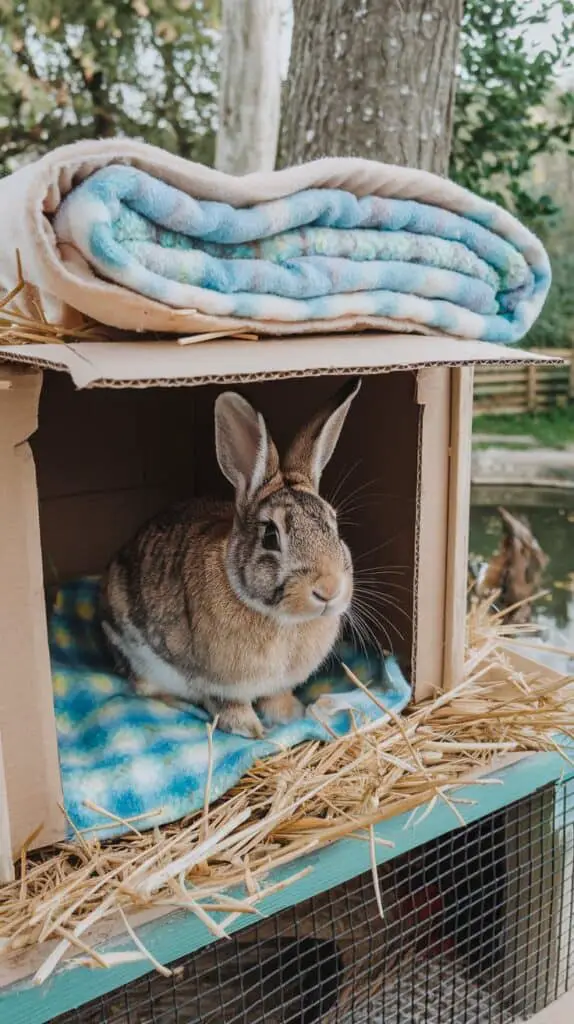
No, you don’t need to buy fancy hutch insulation rolls unless you’re in literal Arctic conditions. Layer the inside of the hutch with:
- A thick pile of straw (better than hay for warmth)
- A folded fleece blanket on one end (tucked safely so they don’t chew it)
- A cardboard box hideaway inside the hutch for extra shelter
Straw’s your MVP here—cheap, warm, and chew-safe. And it goes well with rustic hutches, especially the kind that sit tucked under a shady tree or next to a small pond. (You know your backyard’s getting cottagecore.)
3. Elevate the Hutch (Gravel + Bricks Work Wonders)

Soggy ground = cold feet and moldy bedding. Raise the hutch off the ground using bricks, cinderblocks, or even a pallet base filled with gravel underneath. It improves drainage and keeps the whole thing warmer.
If your hutch is sitting directly on grass or soil, this one tweak alone will change everything—especially after those long winter rains.
4. Choose a Hutch with a Solid Back Wall or Add One
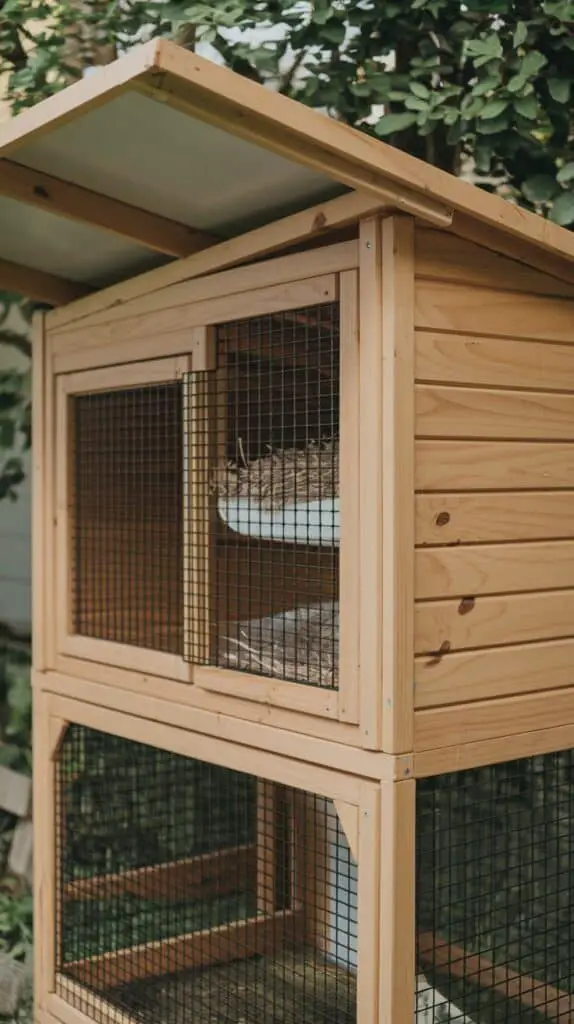
A lot of rabbit hutches are half-mesh for airflow, which is fine in summer but brutal in wind. If your hutch doesn’t already have a solid back wall, you can screw in a wooden panel or use leftover garden fence boards.
It makes a big difference—and when combined with a thick roof overhang, it helps the whole structure feel more like a rustic garden shed than a wire cage. Think: storybook hutch under bare trees kind of vibe.
5. Use a Tarp the Right Way (Not Ugly Farm Style)
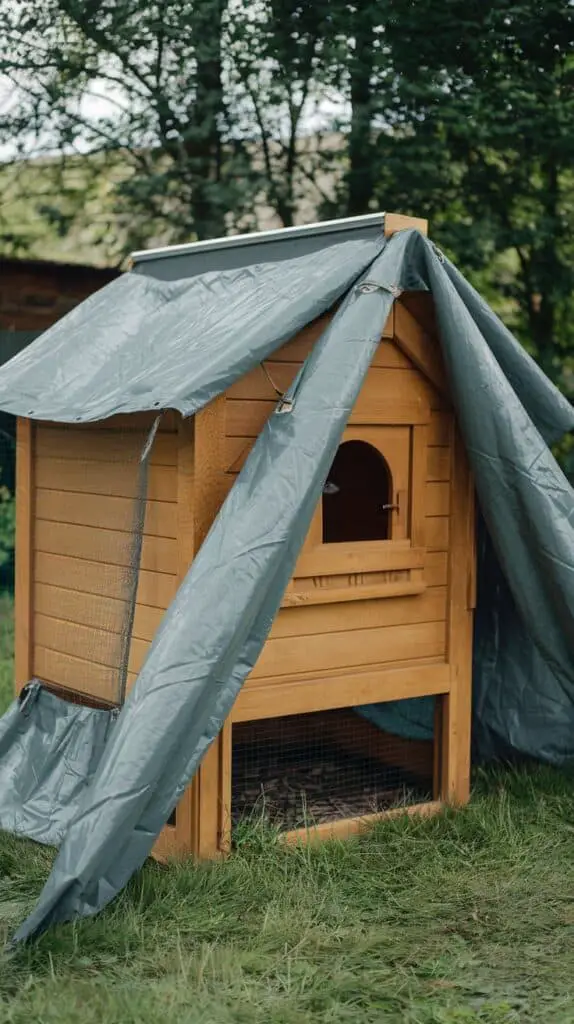
Tarps can get… tacky. But they also work. The trick is to use a neutral-toned tarp (brown, green, or gray) and secure it tightly over the top and sides of the hutch like a little tent.
Leave enough airflow on one side, and it basically becomes a weatherproof mini cabin for your bunnies. Some people even build a removable wooden “cover house” or lean-to style frame to drape the tarp over—hello, DIY winter rabbit spa.
Bonus Idea: Temporary Garden Greenhouse
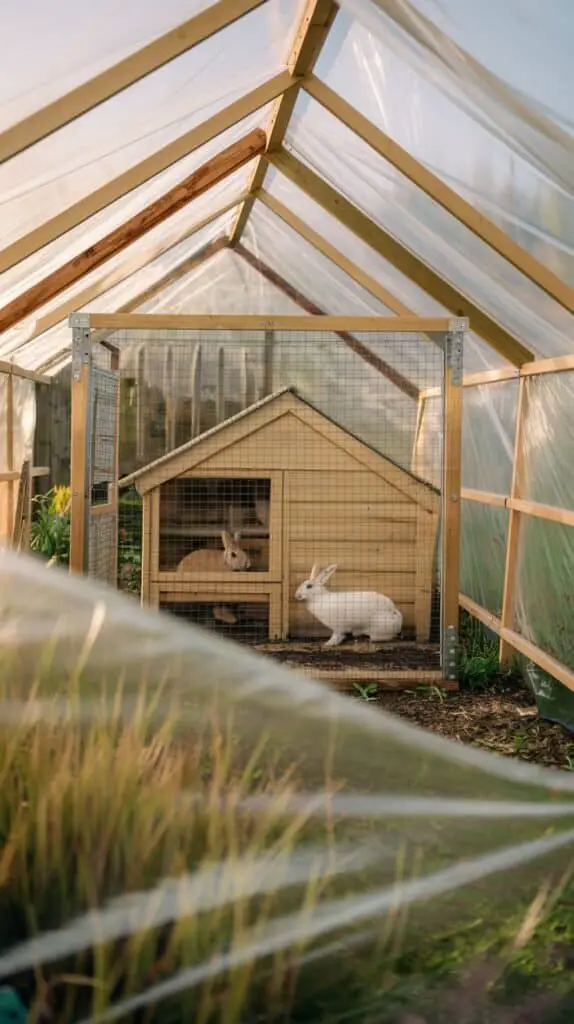
If you’re all in and want to go next level, pop a cheap plastic greenhouse over the whole rabbit hutch. It acts like a windbreaker, keeps rain off, and traps a little warmth during the day. Just make sure you have lots of ventilation on sunny days.
Plus, it’ll look intentional. Like your garden rabbits are thriving in their own private conservatory while you drink coffee on your frost-covered patio.
