
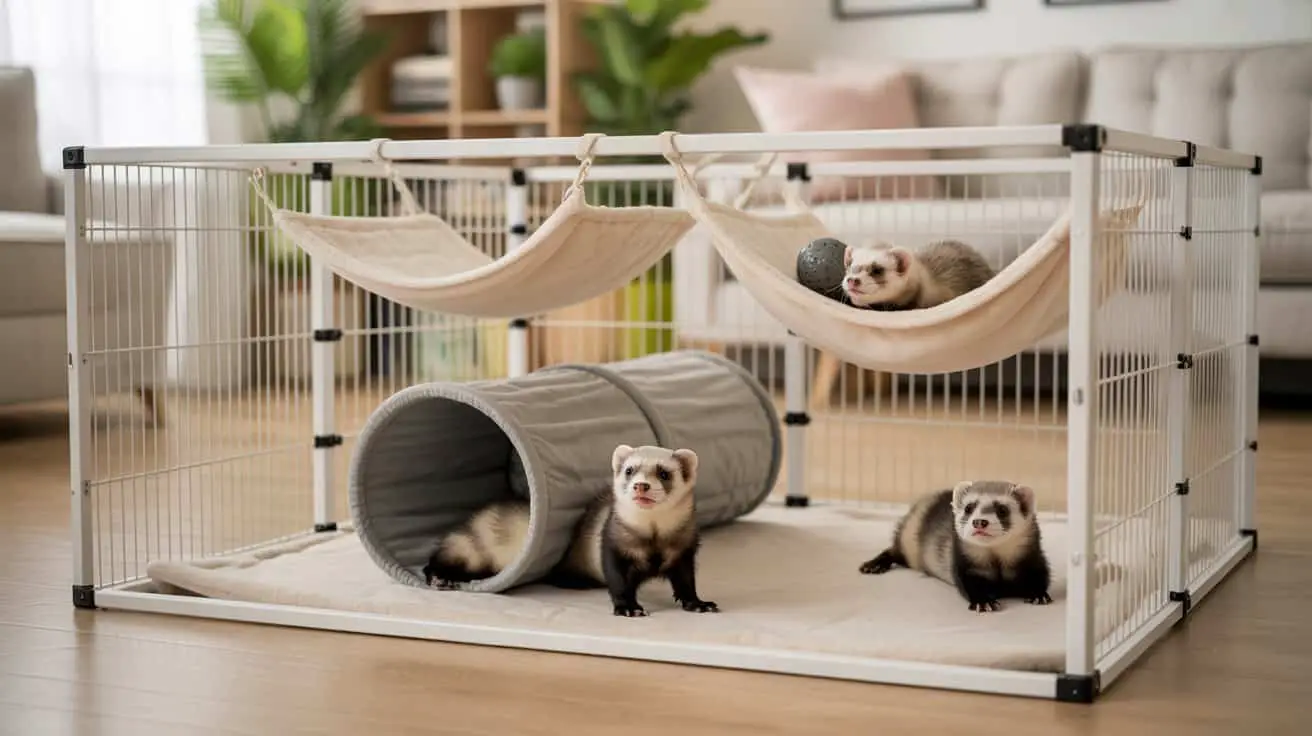
Ferrets are equal parts hilarious and chaotic — if you’ve ever watched one sprint sideways, leap into a tube, and vanish under a blanket, you already know what I mean. They’re tiny bundles of curiosity that need space to explore, nap, and (let’s be honest) cause a bit of mischief. But finding the right ferret cage that’s both roomy and easy to clean? That can feel like hunting for the perfect apartment in a city where every listing is “cozy.”
When I got my first pair of ferrets, I learned fast that cramped cages and hard-to-reach corners turn cleaning into a workout. A good setup makes all the difference — not just for hygiene, but for their happiness. Ferrets need multi-level play zones, soft bedding, tunnels, and fresh airflow. And because they’re natural explorers (and escape artists), it’s all about combining fun with function.
These ferret cage ideas are practical, affordable, and designed to fit real homes — whether you live in a small apartment or have a spare room just for your furry tornadoes. Each one balances space, style, and sanity — because a clean cage means more time for the fun stuff (like laughing at their ridiculous zoomies).
1. The Multi-Level DIY Ferret Mansion
If you’ve got a bit of DIY energy and love to customize, this idea turns a simple wire cage into a ferret paradise. Start with a tall metal enclosure (like a chinchilla or rat cage) and add your own levels using wooden or acrylic shelves. You can connect them with flexible tunnels or plastic ramps, giving your ferrets room to climb, explore, and nap at different heights.
Keep cleaning in mind — removable trays on each level are lifesavers. Line them with washable mats or fleece to catch debris and keep odors down. Add small hammocks and hideouts made from fabric scraps for that cozy factor.
To make it even more fun, install a “play deck” on top — a small open area surrounded by short mesh walls where they can safely play under supervision. It’s perfect for bonding time without needing to dismantle the entire cage.
This design suits multi-ferret households, especially baby ferrets that love to explore. It’s creative, customizable, and easy to clean — a setup that grows with your ferrets and your imagination.
2. The Convertible Ferret Playpen and Living Space
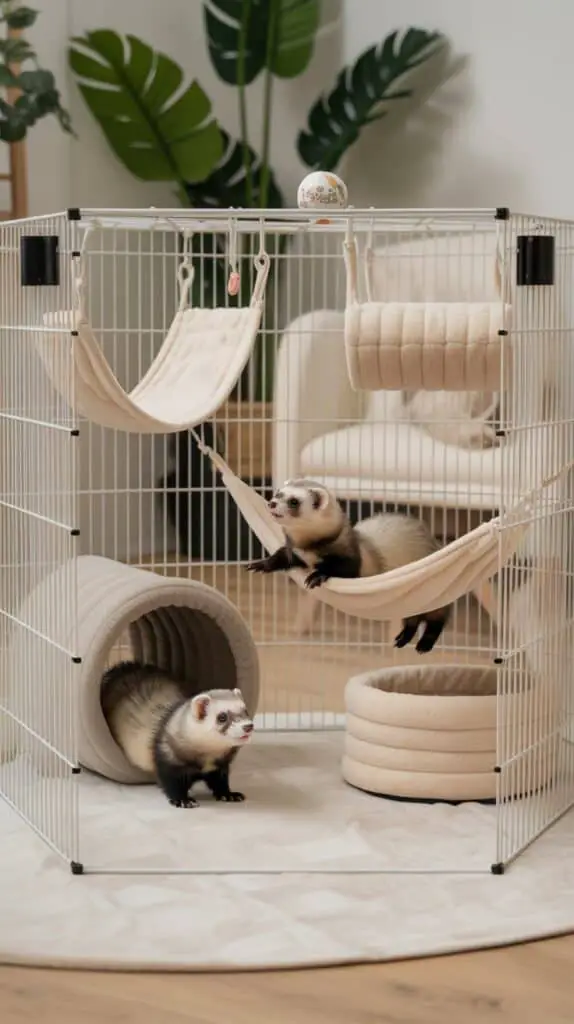
For anyone tight on space, a modular ferret playpen doubles as both a cage and a free-range area. The design is simple: lightweight metal panels that can be rearranged into a rectangular or circular enclosure. Add a soft mat underneath, and you’ve got a comfy, easy-to-clean base.
During the day, open one side and attach it to their larger cage — creating an “indoor playground.” At night or when you’re out, close it off and let them rest safely. You can hang water bottles, attach tunnels, or add stacking cubes for hideouts.
The best part is flexibility — you can fold it away when not in use. It’s the ferret equivalent of having a pop-up apartment: fun, safe, and quick to clean. It’s also a smart option for small pets like sugar gliders, guinea pigs, or rats if you adapt the flooring.
Ferrets are smart, so rotate toys often to keep them interested. A playpen like this is less about walls and more about freedom — a design that feels open, breathable, and always ready for another round of zoomies.
3. The Easy-Clean Glass Enclosure Setup
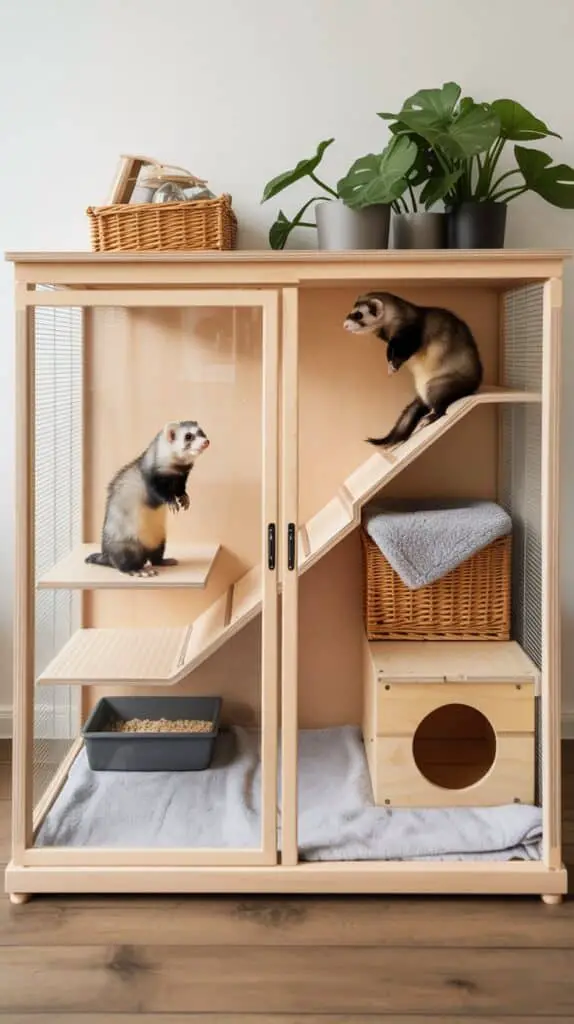
If you’ve ever envied the look of modern reptile or chinchilla enclosures, this is the ferret version — sleek, bright, and surprisingly practical. A glass-fronted enclosure with sliding doors offers great visibility and easy access for cleaning.
Start with a solid wood or PVC frame and mesh top for airflow. Inside, use platforms made of removable acrylic sheets or sealed wood. Ferrets love climbing, but they also have messy habits, so smooth surfaces are easier to wipe clean than wire floors.
Line the bottom with washable pads, and add a litter box in one corner (ferrets are picky about bathroom spots). You can build small dens using wooden boxes or wicker baskets, and tuck fleece blankets inside for warmth.
This setup is ideal for keeping everything organized and odor-free. It feels more like part of your home décor than a cage — stylish, functional, and surprisingly easy to maintain.
4. The Minimal Apartment Ferret Setup
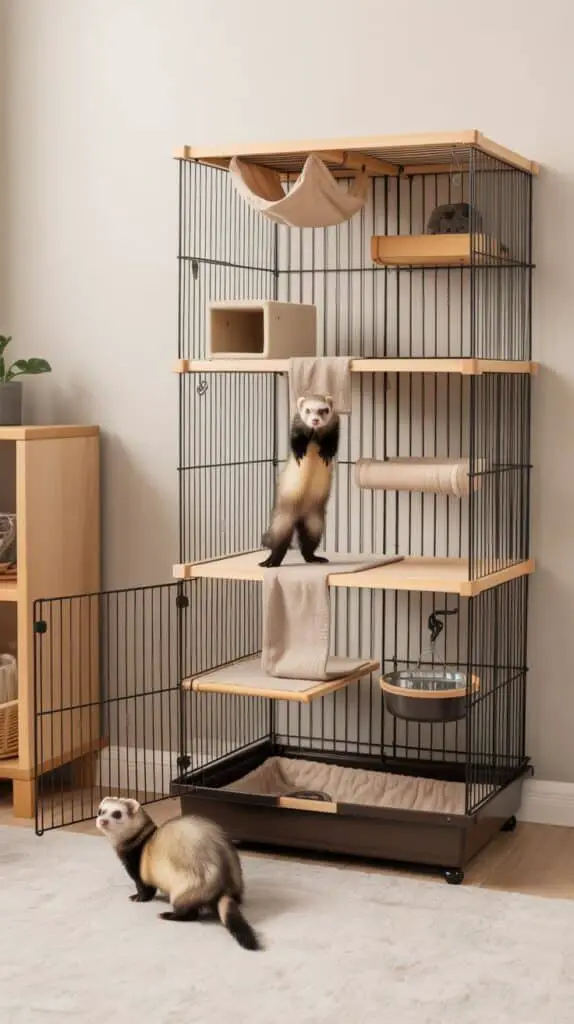
Living in an apartment doesn’t mean your ferrets can’t have space to play. The key is vertical design — tall enclosures with multiple layers rather than wide footprints. Start with a medium-sized ferret cage and extend upward using modular shelves, baskets, or suspended tunnels.
Inside, add soft fleece hammocks, a sleeping cube, and a shallow litter tray. A small suction-hook bowl can hold water without spilling. For easy cleaning, stick to removable liners and wipeable surfaces.
During playtime, let your ferrets out to roam in a safe, ferret-proofed area. When they’re done, the cage becomes their clean, comfy retreat.
It’s a minimalist approach, but it works beautifully. Compact, neat, and easy to maintain — a setup made for apartment living without sacrificing fun or comfort.
5. The Outdoor Ferret Enclosure with Shade and Airflow
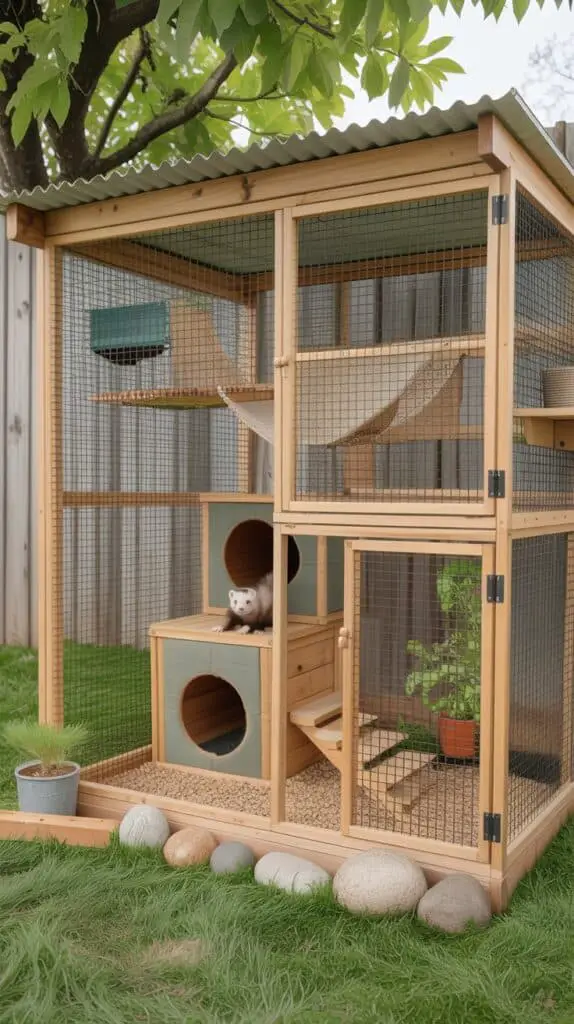
For those with a bit of outdoor space, an outdoor ferret enclosure gives your pets fresh air and sunlight (supervised, of course). Think of it as a mini aviary or “ferret greenhouse” — a secure area with mesh walls, a shaded roof, and elevated sleeping boxes.
Use sturdy wire and add a buried mesh border around the base to prevent digging escapes. Inside, create platforms, tunnels, and hanging hammocks for play. Include one enclosed section with insulation and soft bedding for naps.
It’s not meant to replace an indoor cage — more of a weekend retreat. Ferrets love the variety, and it’s a great way to let them explore safely. Cleaning is simple: hose it down, replace the bedding, and you’re done.
Add some natural elements like smooth rocks, small logs, or plant-safe greenery. It turns a plain space into a ferret playground that’s both enriching and easy on the eyes.
6. The Repurposed Furniture Ferret Condo
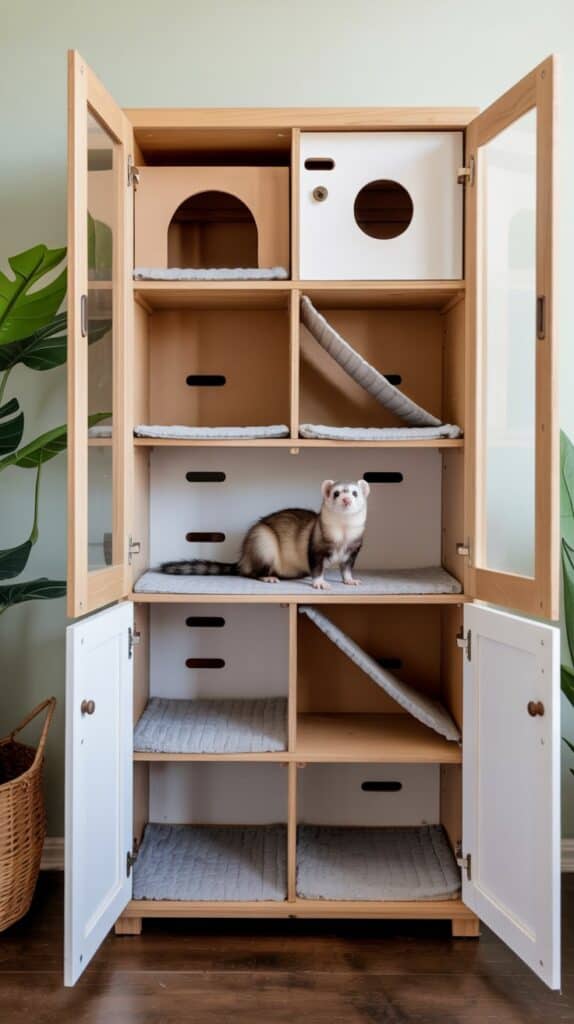
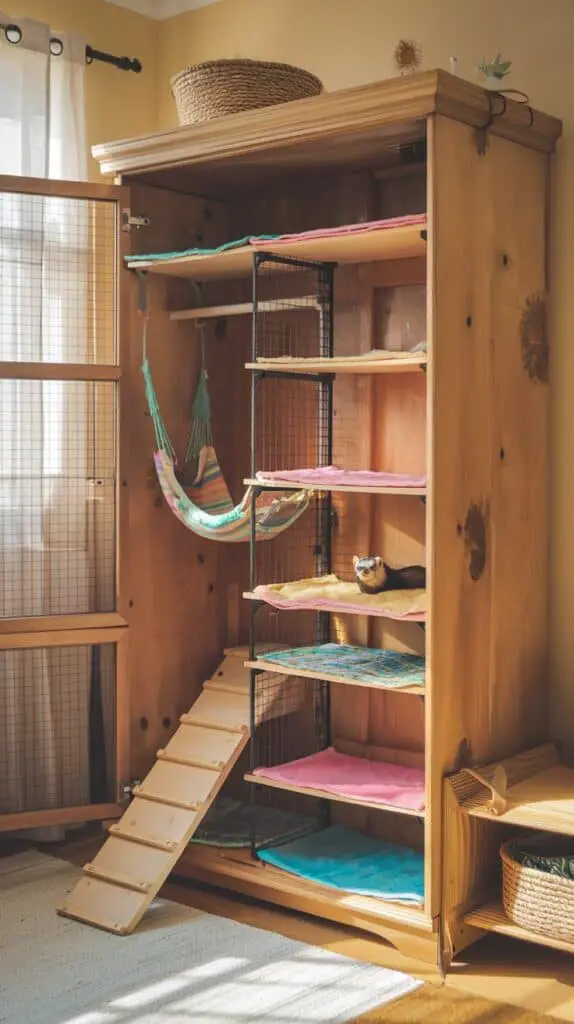
This one’s for the creative DIY crowd. You can transform an old wardrobe, shelving unit, or cabinet into a spacious ferret condo with multiple levels and plenty of personality.
Remove doors, cut openings between shelves, and line each level with washable pads. Add ramps or flexible tunnels to connect the floors. The bottom can hold litter and water bowls, while the upper levels are perfect for naps or hideouts.
For ventilation, cut out portions of the back panel and attach mesh or perforated panels. The front can have clear acrylic doors for easy access.
It’s affordable, fun to design, and surprisingly chic once finished — especially if you paint it in soft neutral colors or natural wood tones. It’s part home décor, part ferret paradise.
Final Thoughts
Ferrets may be small, but their personalities are huge — and their homes should reflect that. Whether you go DIY, repurpose furniture, or build something sleek and modern, the goal is simple: give them space to play, rest, and just be their funny little selves.
A spacious, easy-to-clean setup isn’t just about convenience. It makes your daily routine smoother and your ferrets happier. Because when their world is well-designed — airy, fun, and functional — you get to enjoy the best part of ferret life: those goofy leaps, gentle cuddles, and the endless moments that make you smile.