
If you’ve ever found yourself scrolling through videos of beautifully designed hamster setups at midnight, you’re not alone. There’s something weirdly relaxing about seeing tiny tunnels, mossy corners, and perfectly placed bridges inside a little glass tank — it’s like a miniature world where everything makes sense. But let’s be honest, most of us start out with a basic plastic cage and a water bottle that squeaks louder than the hamster.
That’s where hamster scaping comes in — turning your pet’s enclosure into a living landscape. It’s part design, part art, and completely addictive once you start. The best setups don’t just look cute; they make your hamster happier and healthier. Tunnels, textures, hides, and natural materials all mimic the wild, giving your tiny explorer a place that feels alive.
Whether you’re using a simple tank or building your own DIY hamster house, these cage ideas will help you create a setup that blends beauty with function. From rustic wood terrariums to minimalist sandscapes, each one turns everyday hamster care into a creative project that’s surprisingly fun (and honestly, kind of calming).
Here are seven hamster cage ideas that prove your little fluffball deserves a home that’s as cozy and creative as they are.
1. The Natural Desert Hamster Terrarium
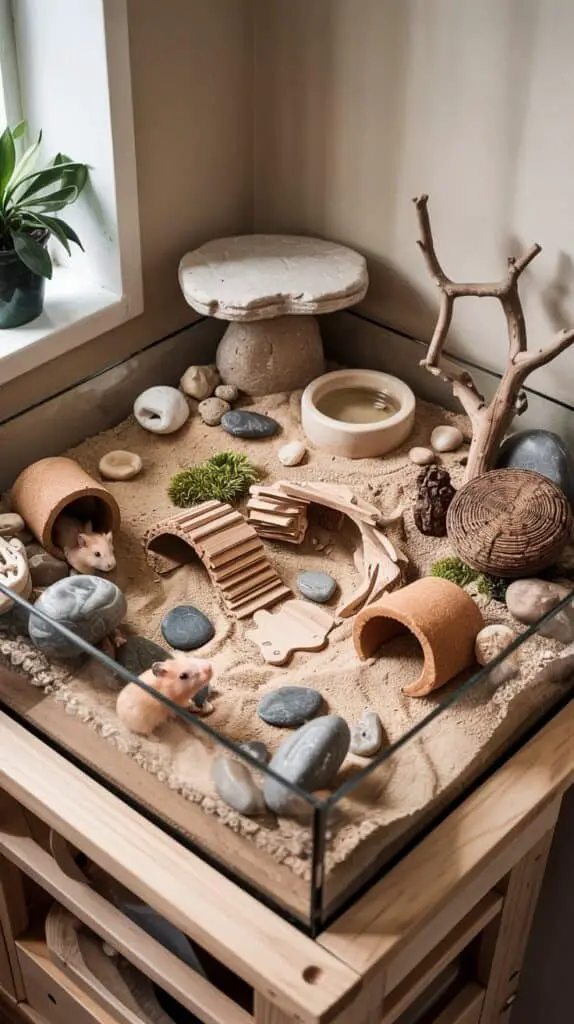
This design is all about texture, color, and space — a setup inspired by desert landscapes. Picture a wide glass hamster tank with a layered base: sand, soft bedding, and small rocks forming gentle slopes. Add driftwood, cork tunnels, and a few patches of dried moss to create natural terrain.
The hideouts can be made from smooth stones or wood pieces shaped into caves. Use a large flat rock as a lookout spot (because yes, hamsters love a good view). A shallow water dish tucked into the corner and a wooden wheel complete the look.
From above, it feels calm and balanced, like a tiny desert oasis. It’s ideal for Syrian hamsters who love to dig and explore. And with the right lighting and placement, it becomes a surprisingly aesthetic addition to your living room — part pet home, part art piece.
2. The DIY Wooden Hamster House Setup
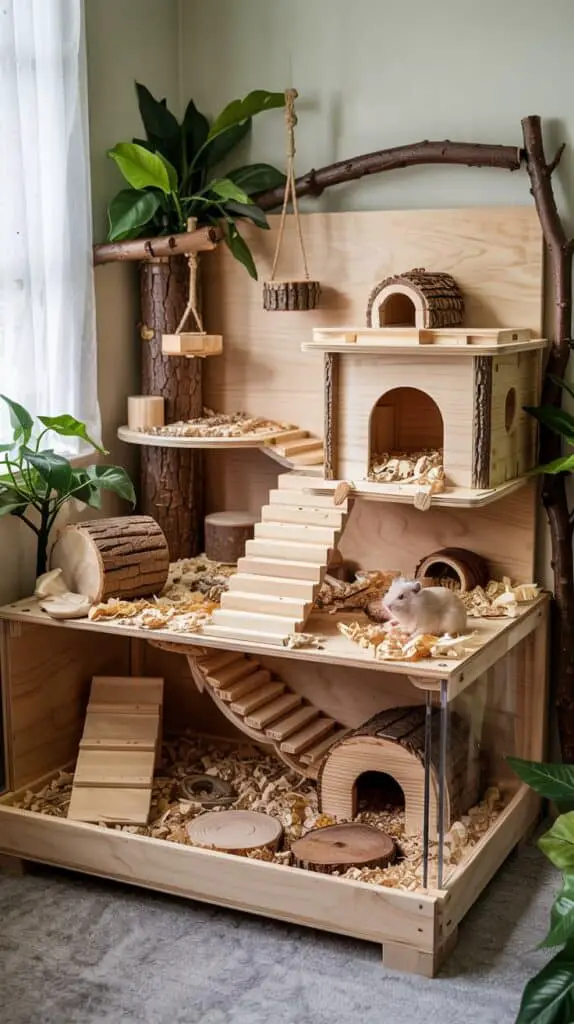
If you love crafting, this one’s for you. The base structure can be a wooden box or homemade frame with transparent acrylic walls for viewing. Divide the space into zones — one for digging, one for eating, and one for sleeping.
Use natural pine or birch wood to build tunnels, bridges, and platforms. Add ramps connecting different levels and fill the digging area with paper bedding or coconut fiber. Hang tiny rope ladders or wooden swings for enrichment.
The key is layering — build upward instead of outward. It saves space and gives your hamster multiple levels to explore. You can decorate with bark, pebbles, and a few faux plants for realism.
This layout feels warm and cozy, like a miniature cabin in the woods. It’s durable, easy to clean, and completely customizable — perfect for anyone who enjoys a good weekend DIY project.
3. The Minimalist Scandinavian Tank Design
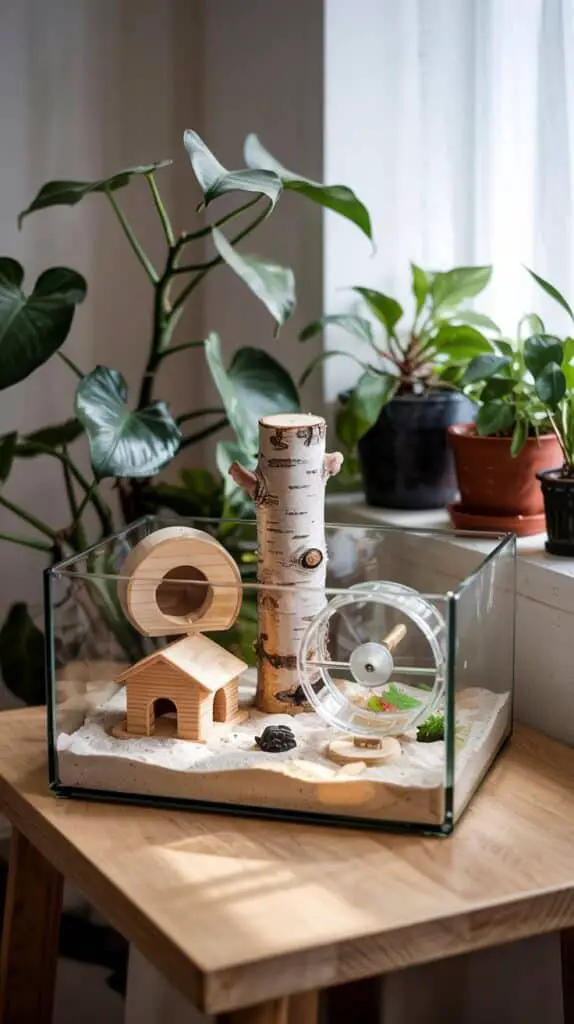
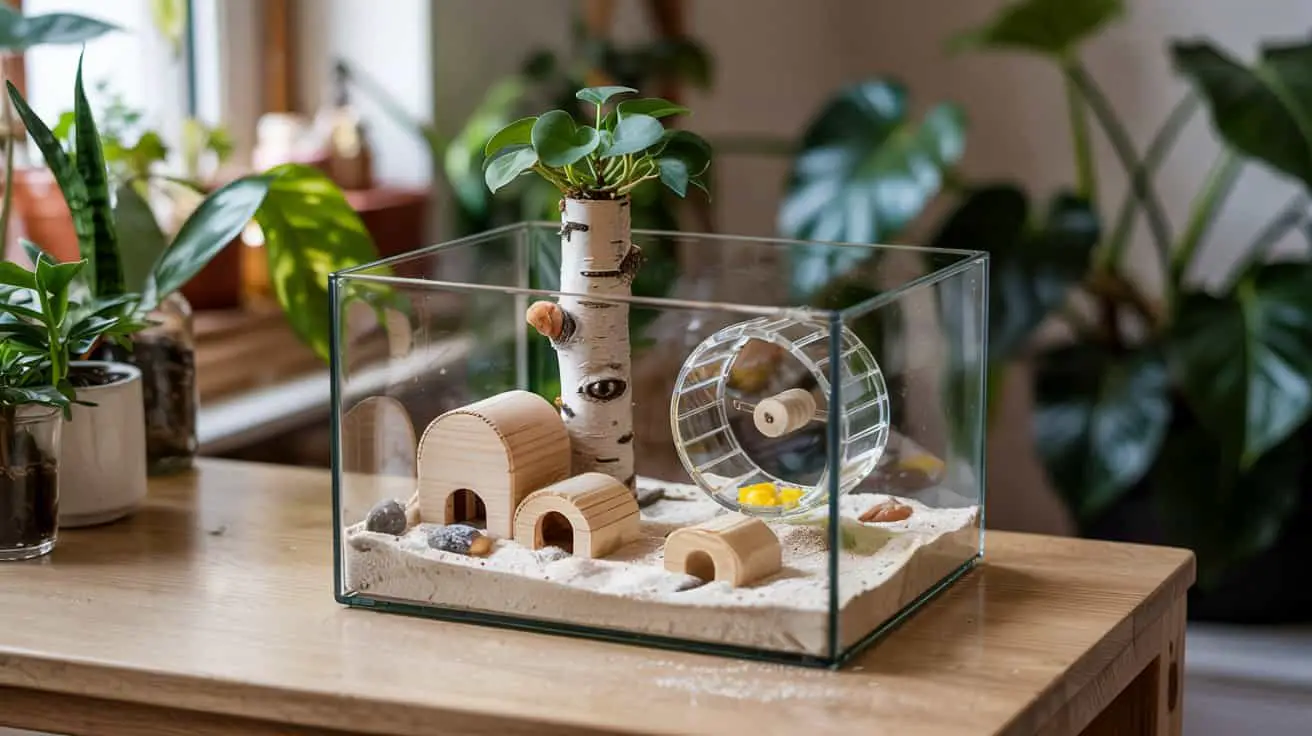
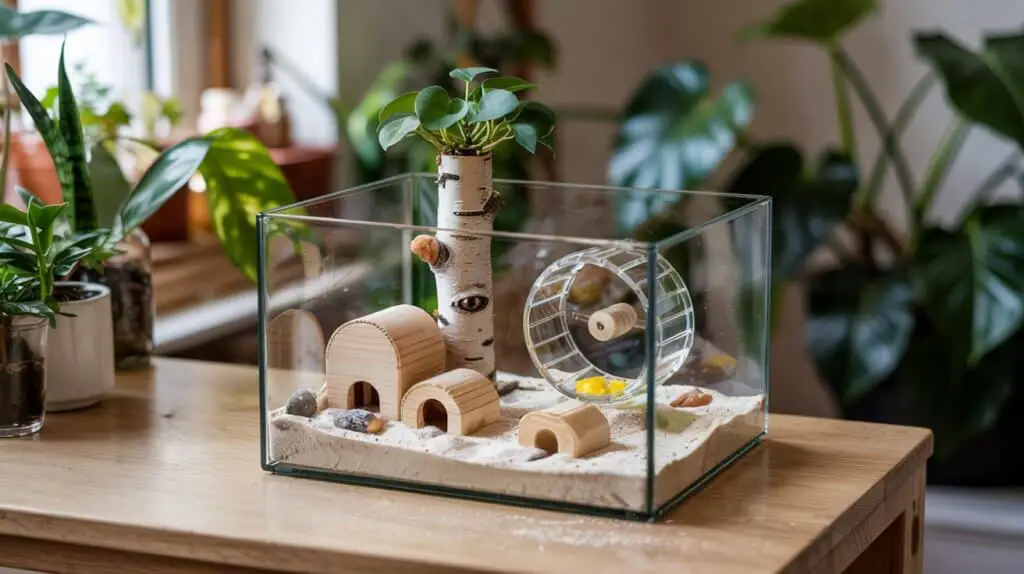
Clean, calm, and functional — this setup takes inspiration from Scandinavian interiors. The tank is clear and uncluttered, with pale sand or fine bedding creating a neutral base. Wooden houses, bridges, and hideouts are simple and geometric, all in light oak or birch tones.
A single climbing log or branch acts as a natural centerpiece, while glass bowls hold seeds or treats. Lighting should be soft — maybe placed near a window or under a gentle LED bar to highlight the setup’s texture.
This layout fits beautifully into modern homes and looks more like a piece of décor than a cage. It’s also practical: easy to maintain and perfectly suited for dwarf hamsters who prefer smaller spaces and clean layouts.
It’s the definition of peaceful hamster living — organized, elegant, and stress-free.
4. The Jungle-Themed Hamster Enclosure
For hamster owners who love a bit of creativity, the jungle theme is always a winner. Imagine a lush setup filled with ferns, mossy textures, and earthy tones. The floor base is deep — at least six inches of soft bedding for burrowing — topped with scattered twigs, bark, and a few sturdy plants (safe ones, of course).
The hideouts can be small clay pots or hollow logs, with natural bridges connecting different areas. A mix of sand and soil in certain spots gives a realistic terrain change. Add climbing branches and tunnels that mimic fallen trees for enrichment.
It feels wild and vibrant — a perfect little world for an adventurous hamster. The best part? It’s easy to tweak over time, adding new materials or re-scaping the space just like you would with an aquarium.
5. The Modern Glass Hamster Tank with Split Levels
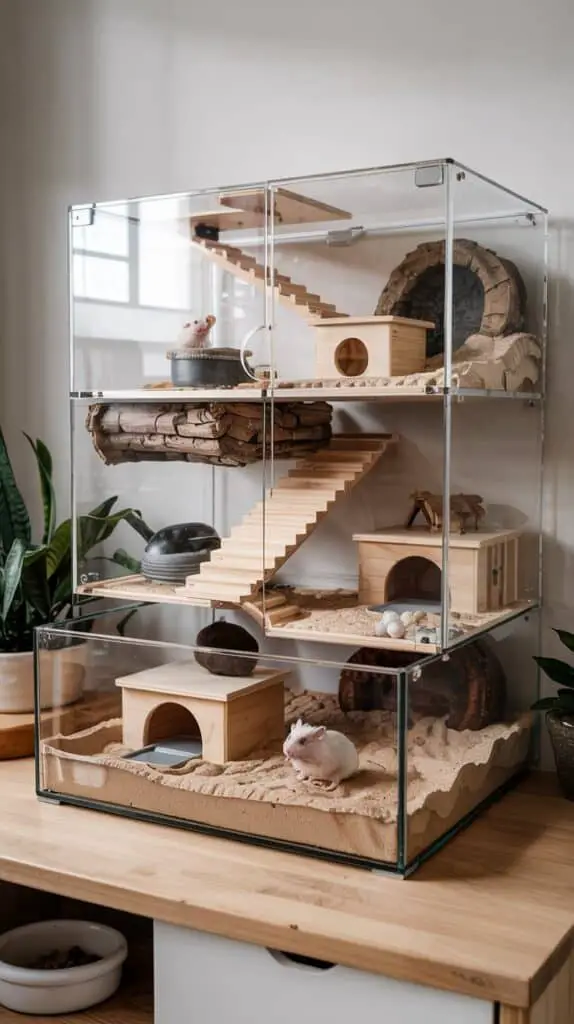
If you’re short on space but still want something visually stunning, this design combines vertical and horizontal zones. The tank base holds a deep layer of bedding for burrowing, while the top section features wooden shelves and ramps for play.
Transparent acrylic walls make the whole structure feel open and airy. One corner might hold a small feeding platform, while another features a lookout tower or mini house. Natural wood, sand, and white stones create a modern, earthy palette.
This setup not only keeps your hamster active and stimulated but also doubles as a beautiful centerpiece. It looks polished, intentional, and very “Pinterest-ready” — proof that pet care and good design can absolutely coexist.
6. The Cozy DIY Glass-and-Wood Hybrid Cage
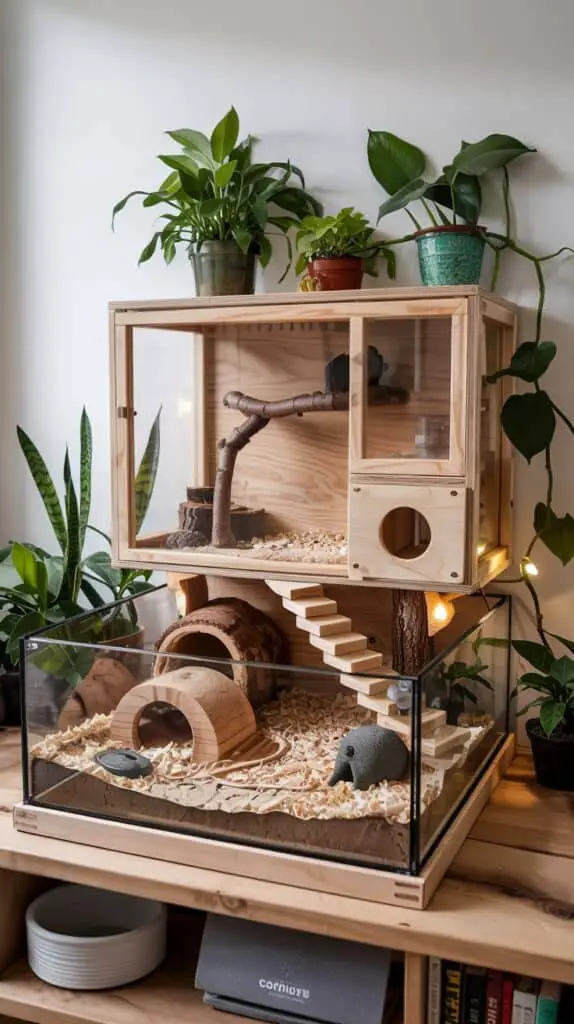
This design blends the best of both worlds — the open visibility of a glass tank with the warmth and texture of a wooden frame. It’s ideal if you want something that looks custom-built without needing a full workshop to make it happen.
Start with a large clear glass tank or terrarium as the base. Build a wooden frame around the top, adding ventilation panels and small openings for easy feeding. Inside, layer soft paper bedding deep enough for burrowing, then add smooth rocks, bark tunnels, and a wooden hideaway for nesting.
A little wooden staircase or branch leads up to a small platform for food and water dishes. Use subtle fairy lighting along the outer edge if the setup is in your living room — it’ll make it look like a tiny glowing forest at night.
This hybrid setup feels balanced — practical, cozy, and stylish enough to fit right beside your houseplants or bookshelf. It’s a space where your hamster can dig, climb, and explore, while you get to enjoy a little slice of calm design magic.
Final Thoughts
A well-designed hamster cage isn’t just a container — it’s a tiny world where creativity and care meet. Whether you go for minimalist design or a wild forest scape, the goal is simple: to make a space your hamster loves as much as you love looking at it.
Hamster scaping isn’t about perfection; it’s about personality. Every little bridge, tunnel, and mound of bedding adds to a story your pet will explore every night. And once you see your hamster burrow under a mossy arch or peek out from a handmade hideaway, you’ll realize — it’s not just décor. It’s home.
So grab that bag of sand, a few sticks, and maybe an old jar or two. With a bit of imagination, you’ll turn a plain cage into something beautiful, functional, and full of life — proof that even the smallest pets deserve big design dreams.