
When we first started thinking about building stables, I imagined something quite traditional—rows of wooden boxes, practical and nothing more. But once you actually live with horses day in, day out (and in my case, with two toddlers following me everywhere), you realise how much the space affects everything. How easy it is to move around, how calm it feels, how it fits into your surroundings. Some of the most beautiful setups I’ve seen aren’t the biggest or most expensive, they’re just thoughtfully designed. These are the mistakes worth avoiding, and some ideas that genuinely made me stop and think “that’s something special.”
Ignoring how the space feels
More than just function
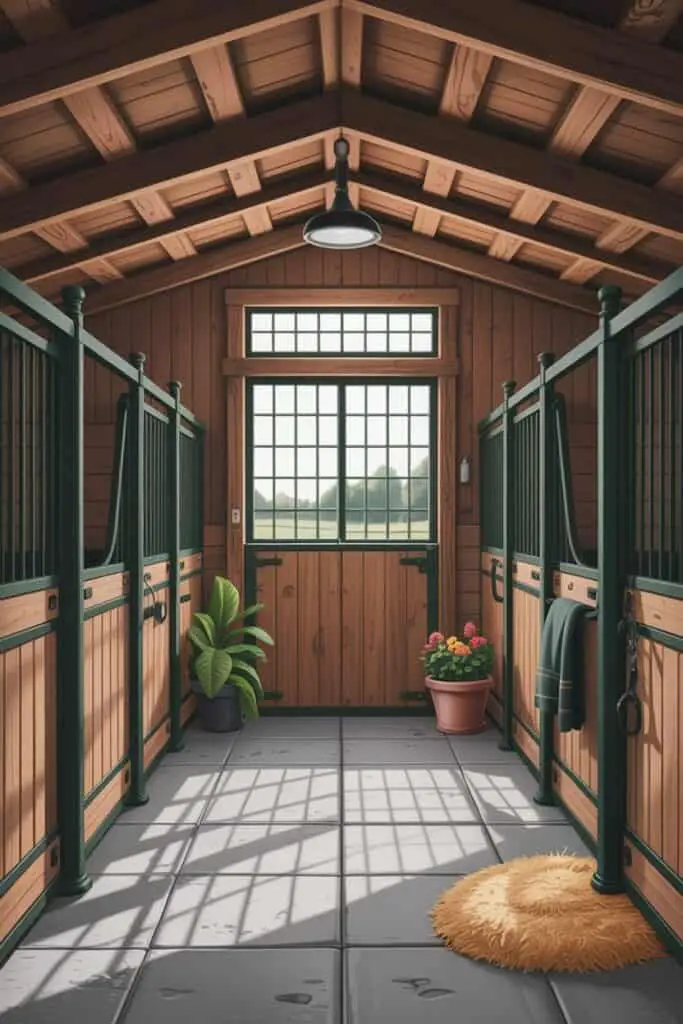
It’s easy to focus purely on layout and forget how a place actually feels to spend time in. Dark, closed-off stables can feel quite draining, especially in winter when you’re already battling short days and bad weather. Even small things—like adding natural light, keeping sightlines open, or softening edges with plants—can completely change the atmosphere. When a space feels calm and open, everything else seems easier, and you’re far more likely to enjoy being there rather than rushing through jobs.
Designing without considering the setting
Let the land lead
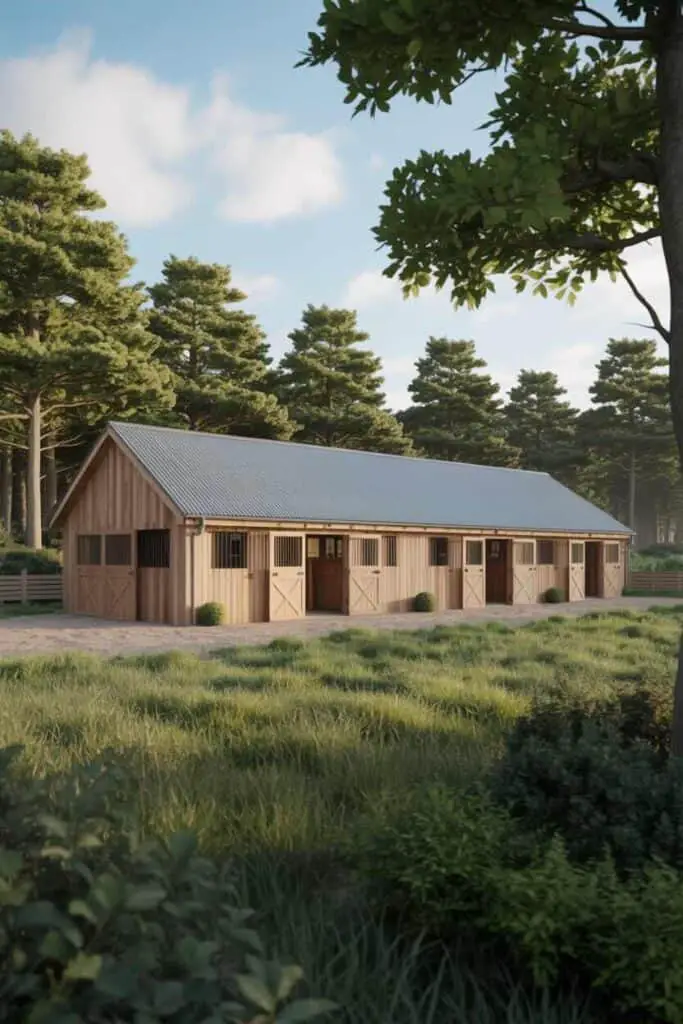
One of the biggest missed opportunities is ignoring the natural surroundings. A stable that works beautifully in open countryside might feel completely out of place tucked into woodland or near the coast. When you take cues from what’s already there—materials, colours, layout—you end up with something that blends in rather than fights against the landscape. It doesn’t have to be complicated, just thoughtful enough to feel like it belongs.
Overcomplicating everything
Simple often works best
It’s so easy to get carried away with ideas, especially when you start looking at inspiration online. But overly complex layouts often create more work in the long run. If you have to walk further, carry more, or constantly adjust your routine, it quickly becomes frustrating. The most effective designs tend to be the ones that feel almost obvious once they’re built—everything exactly where you need it without overthinking it.
Aztec-inspired courtyard stables
Warm, enclosed, and striking
This style is completely different from the typical British setup, and that’s exactly why it stands out. Think a central courtyard surrounded by stables, with textured walls and warm, earthy tones. It creates a sheltered, private space that feels calm and contained, while still being very practical for moving between stables. Even if you don’t go fully into the aesthetic, the idea of wrapping your layout around a central working space is incredibly useful.
Woodland forest stables
Blending into nature
There’s something really peaceful about stables tucked into a wooded area, using natural materials that soften the overall look. Instead of clearing everything out, this approach works with the trees and landscape already there. It creates dappled light, shelter from wind, and a quieter atmosphere overall. It might not be the most polished look, but it feels natural and settled, which often suits horses beautifully.
Coastal open-air stables
Light, airy, and relaxed
In more open or coastal areas, enclosed stables can sometimes feel heavy and unnecessary. Open-fronted designs with plenty of airflow make the most of the surroundings and keep everything feeling fresh. It’s a more relaxed approach, where the environment becomes part of the stable itself. Even in less coastal areas, introducing more openness can help reduce that boxed-in feeling.
Modern minimalist barn design
Clean and uncluttered
This style is all about simplicity—clean lines, neutral materials, and everything in its place. It works especially well if you prefer a tidy, organised space where nothing feels chaotic. There’s very little visual clutter, which somehow makes everyday tasks feel more manageable. It’s also surprisingly practical, as everything tends to be designed with efficiency in mind.
Cottage garden stable style
Soft, lived-in, and welcoming
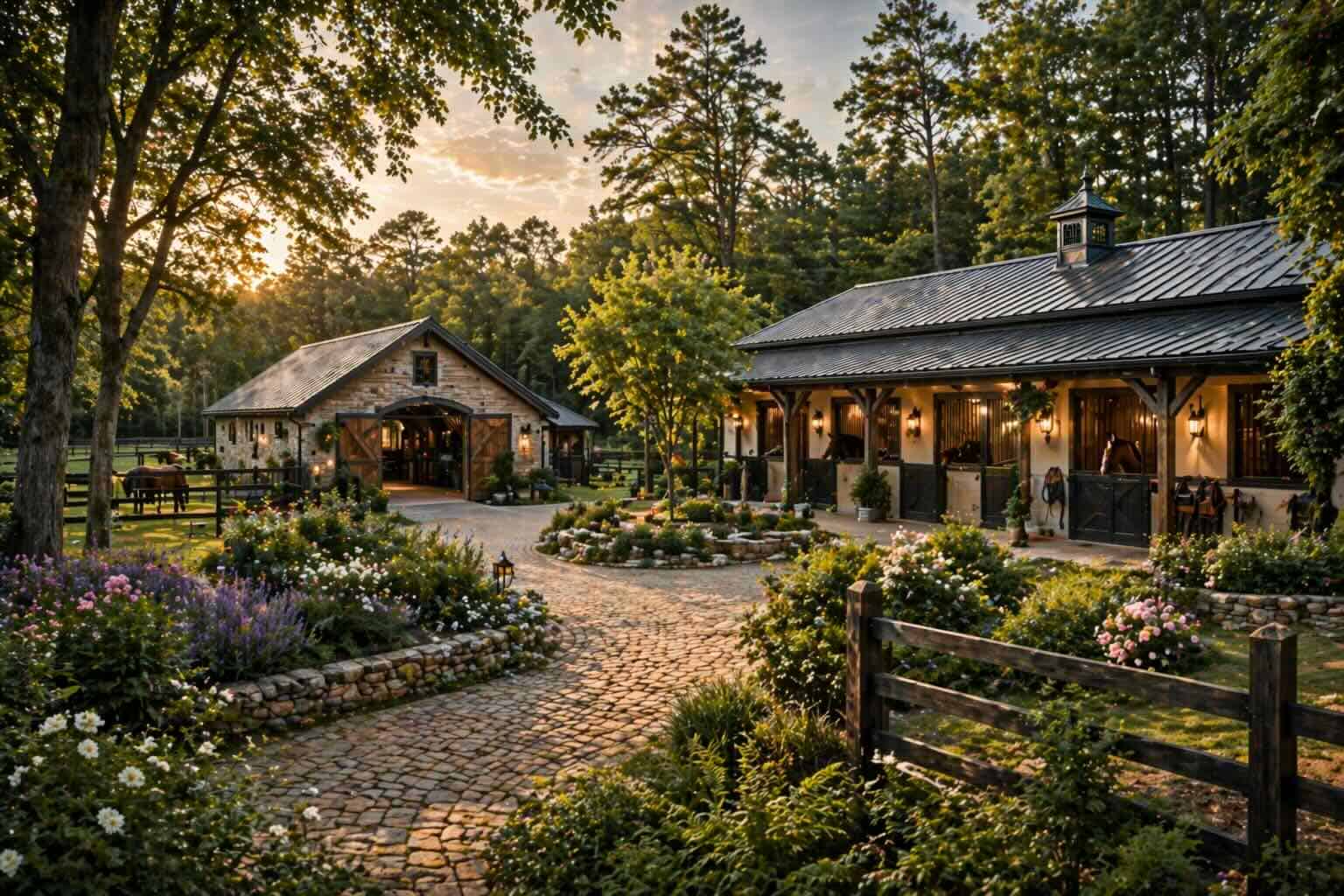
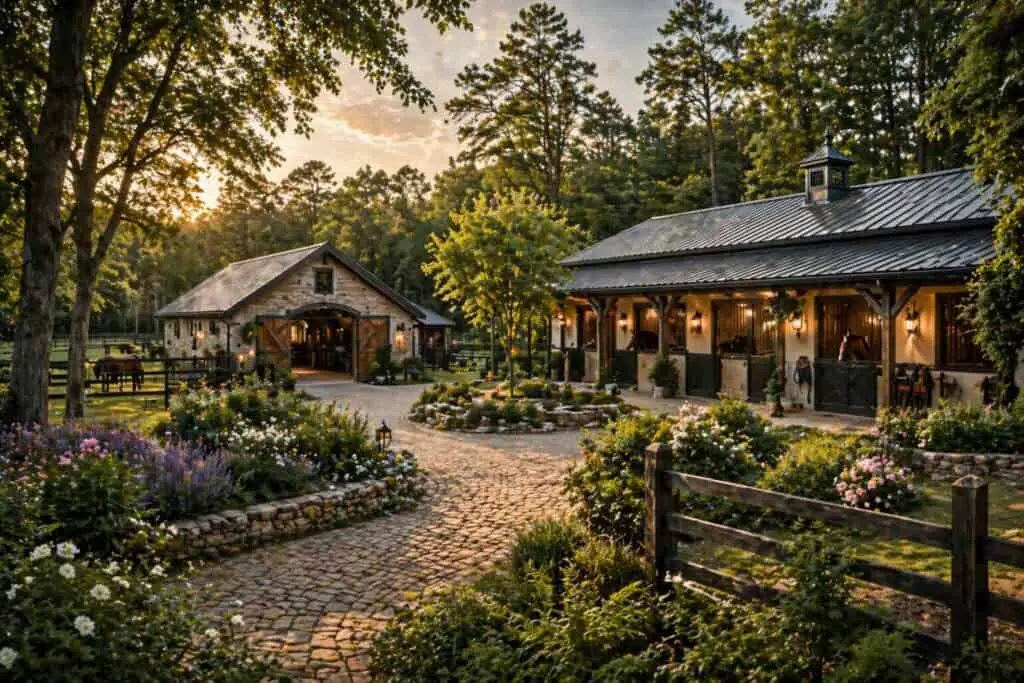
This is probably the most “home-like” approach, where stables are surrounded by planting, flowers, and softer landscaping. Instead of feeling like a separate working area, it blends into the garden and overall property. It doesn’t need to be perfect—in fact, a slightly relaxed look adds to the charm. It’s especially lovely if you’ve got children around, as it feels gentler and more inviting.
American ranch-style layout
Open and easy to manage
This layout focuses on space and simplicity, with buildings spread out rather than tightly grouped. It allows for easy movement of horses and reduces that cramped feeling you sometimes get with smaller yards. There’s a sense of flow between areas, which makes daily routines feel less rushed. It works best if you’ve got the space, but even smaller versions can take inspiration from the openness.
Scandinavian light-filled stables
Calm and airy
Inspired by Scandinavian design, this approach focuses on light, pale materials, and a sense of openness. Large openings, light wood, and uncluttered spaces create a calm environment that feels easy to be in. On darker days, which we get plenty of, this kind of design can make a noticeable difference. It’s less about decoration and more about creating a space that feels balanced.
Indoor-outdoor hybrid stables
Flexible and practical
This design combines shelter with freedom of movement, allowing horses to move between covered areas and outdoor spaces more easily. It reduces the need for constant handling and gives you more flexibility depending on the weather. It’s also helpful when you’re short on time, as it simplifies daily routines. The balance between structure and openness makes it one of the more practical modern approaches.
Compact urban equestrian setup
Making small spaces work
Not everyone has acres of land, and some of the most impressive designs come from making the most of limited space. Clever layouts, defined zones, and using vertical space where possible can make a smaller setup feel organised rather than cramped. It’s about being intentional with every part of the design so nothing feels wasted.
Mediterranean courtyard stable design
Warm and inviting
This style has a softer, lighter feel than the Aztec-inspired look, with pale walls, warm tones, and a central open space filled with light. It feels relaxed and welcoming, almost like an extension of the home rather than a separate working area. The layout is still incredibly practical, but the overall atmosphere is what makes it stand out.
Designing your stables doesn’t have to mean copying what everyone else is doing. Some of the most memorable setups come from blending ideas, adapting them to your space, and thinking about how you actually live and work day to day. When it feels right as well as works well, it makes all the difference.